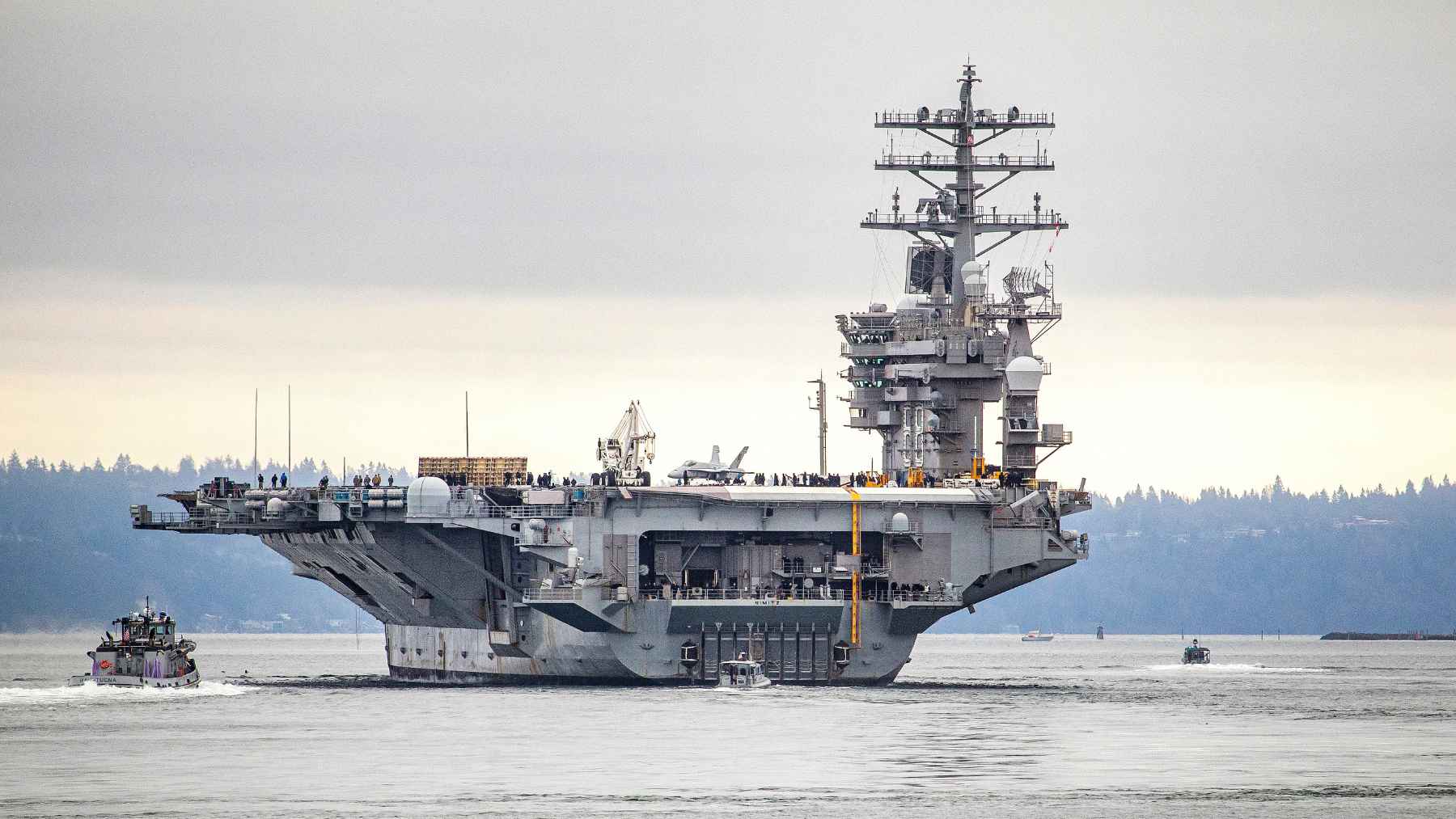
The USS Nimitz was supposed to be nearing the end of the line. Instead, the 51-year-old nuclear-powered aircraft carrier will remain in service until March 2027, giving the U.S. Navy more time to keep its legally required force of 11 operational carriers while the next Ford-class carrier moves toward delivery.
That decision is not only a military story. It is also an environmental and industrial one, because retiring a nuclear-powered carrier is not like parking an old ship and cutting it up for scrap. The same timeline that keeps Nimitz at sea also starts the careful planning for inactivation and nuclear defueling at Newport News, Virginia.
Why Nimitzis staying
So why keep such an old carrier going? The answer is partly written into federal law, which says the Navy’s combat forces must include “not less than 11 operational aircraft carriers.” That makes the Nimitz more than a symbol of past wars, at least for now.
The timing also lines up with the delayed arrival of the future USS John F. Kennedy (CVN 79), the second Gerald R. Ford-class carrier. The Navy said Kennedy completed builder’s sea trials in February 2026, but USNI News reported that its delivery is expected in March 2027.
In practical terms, Nimitz is acting like a bridge. It keeps the carrier count steady while the next generation of ships catches up, but every extra month also adds work for sailors, maintainers, planners, and shipyards.
One last route
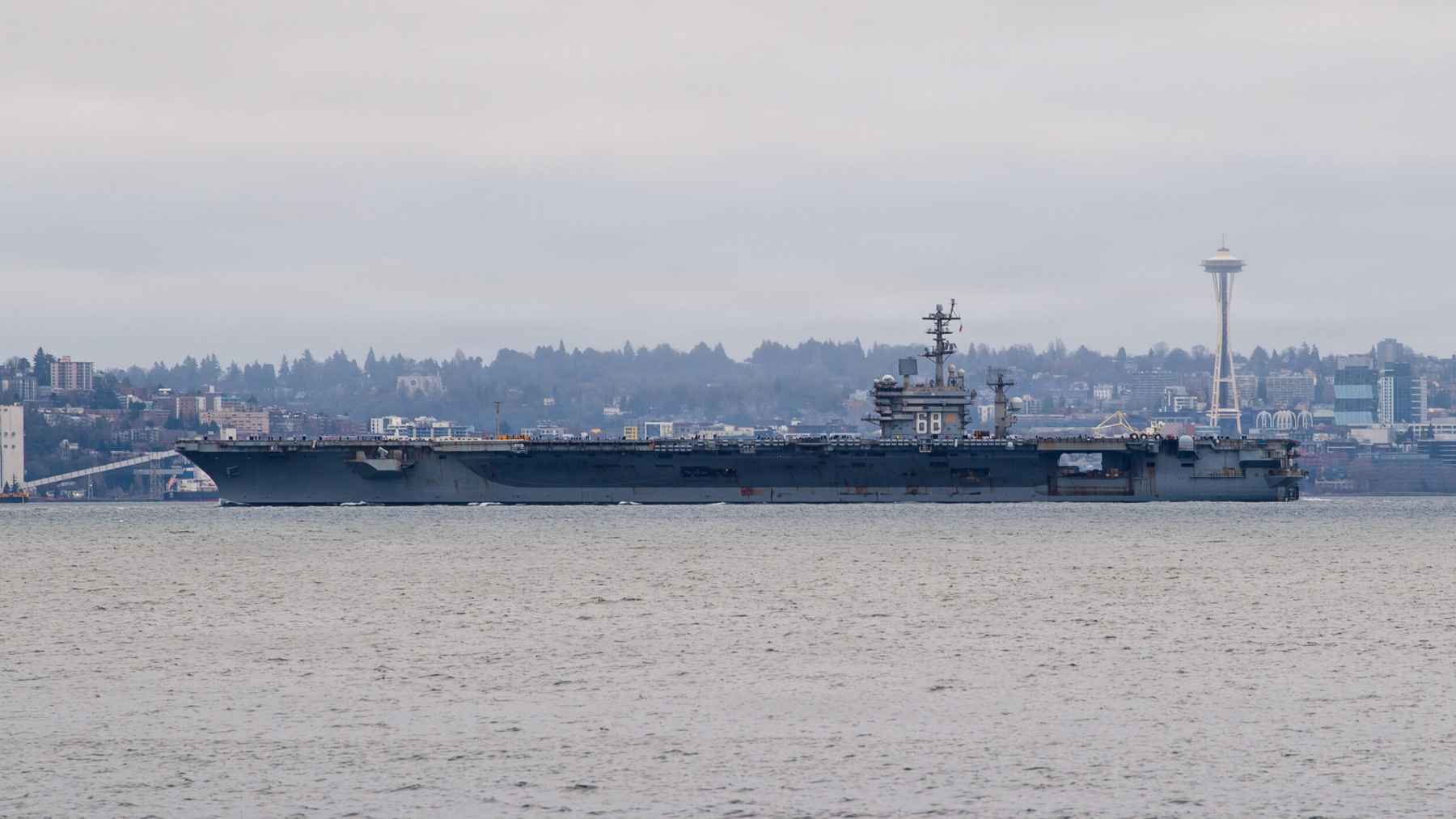
Nimitz left Naval Base Kitsap in Bremerton, Washington, for the last time on March 7, 2026, as part of a scheduled homeport shift to Naval Station Norfolk, Virginia. The Navy called it the final departure from Bremerton in the ship’s 51-year service history.
This spring, the ship was assigned to Southern Seas 2026 under U.S. Naval Forces Southern Command and U.S. 4th Fleet. Nimitz and the guided-missile destroyerUSS Gridley are scheduled to work with partner navies while circumnavigating South America.
For the most part, the mission is being presented as a partnership and training deployment. There will be exercises, exchanges, and port visits, the kind of naval presence that looks calm from shore but depends on a massive moving city at sea.
The cleanup begins early
The Pentagon’s contract notice shows how early the retirement process begins. Huntington Ingalls Inc. received a $95,703,960 modification for advance planning and long-lead-time material procurement to prepare for the inactivation and defueling of USS Nimitz, with the work expected to be completed by March 2027.
That does not mean the carrier is being dismantled tomorrow. It means the Navy is buying time, expertise, equipment, and planning capacity before the ship’s final shutdown. With nuclear vessels, the paperwork and preparation can be just as important as the physical work.
NAVSEA has already created a dedicated Aircraft Carrier Inactivation and Disposal Program Office for the former USS Enterprise and future Nimitz-class retirements. One Navy official described the task as being a “responsible steward of the environment,” which is exactly the point here.
What defueling means
What happens to a nuclear carrier when the mission ends? The Navy’s own disposal material says nuclear-powered ships go through inactivation first, then later steps such as reactor compartment disposal and recycling of the rest of the ship.
That process is highly controlled because it can involve radioactivity, lead, asbestos, PCBs, and other hazardous materials. The Navy says waste is handled under state and federal regulations, using trained workers, controlled areas, licensed transportation contractors, and approved disposal sites.
This is not curbside recycling. It is heavy industrial work, with cranes, packaging, transport, metal recovery, and strict safety rules. For nearby communities, that is where the environmental stakes become real.
A long record
Nimitz was commissioned on May 3, 1975, and named for Fleet Admiral Chester W. Nimitz. Over five decades, it has been tied to major chapters of U.S. naval history, from the Cold War to post-9/11 operations.
Its recent record also shows why the Navy still values the ship. After a nine-month period underway, the Navy said the Nimitz Carrier Strike Group completed more than 8,500 sorties, logged 17,000 flight hours, carried out 50 replenishments at sea, and sailed more than 82,000 nautical miles, which is about 94,000 regular miles.
Numbers like that sound technical, but they tell a simple story. This carrier has been used hard, and now the country has to decide how to retire it just as carefully as it operated it.
Why it matters
For environmental readers, a carrier extension may feel far removed from daily life. But military fleets are also enormous industrial systems, and their end-of-life phase raises questions about waste, worker safety, recycling, public trust, and long-term planning.
The Navy has not announced every final disposal decision for Nimitz. What is confirmed is the new countdown. The ship stays in service until 2027, while the machinery of retirement is already moving in the background.
At the end of the day, Nimitz is being asked for one more chapter. The harder question comes after the flag is lowered. How do you retire a nuclear-powered icon safely, affordably, and with the least harm to workers and nearby communities?
The official contract notice was published on U.S. Department of War.