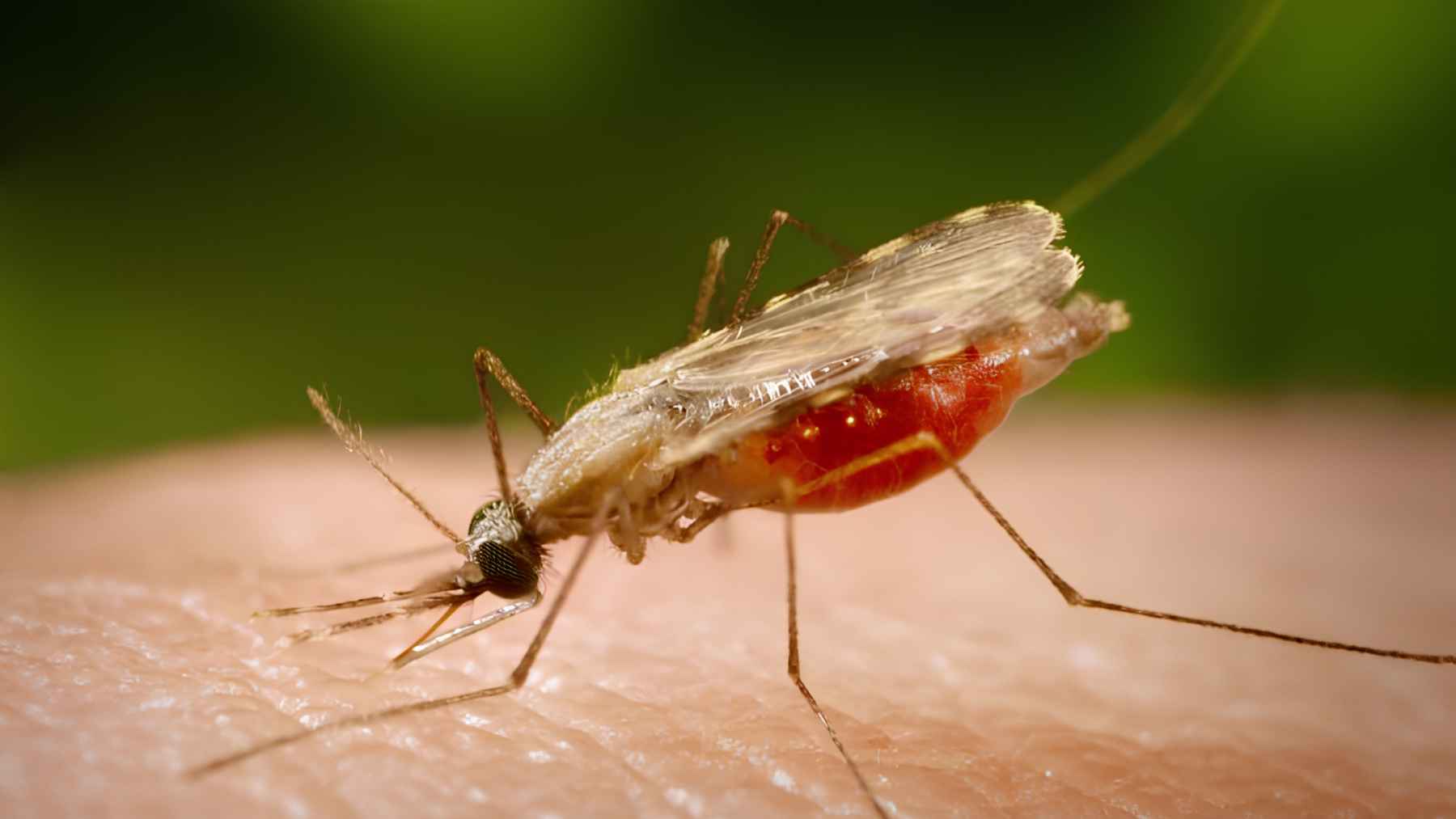
Malaria control often comes down to a frustrating race against mosquitoes. Nets, sprays, medicines, and vaccines all matter, but the insects keep adapting, and the locations where they bite are not always confined within the four walls of a bedroom.
A new mathematical study suggests another way to think about the fight. Instead of trying to wipe out every Anopheles mosquito directly, sterile male releases may only need to push the population below a critical tipping point, where the remaining mosquitoes struggle to find mates and the collapse can continue on its own.
Malaria still has a grip
The World Health Organization estimated 282 million malaria cases and 610,000 deaths in 2024. That is not just a public health number. It means clinics, families, missed school days, and lives cut short, especially in parts of Africa where the burden remains heaviest.
One reason the problem is so stubborn is resistance. WHO says resistance to several major insecticide classes is widespread in malaria and dengue-endemic countries, including among Anopheles and Aedes mosquitoes. That makes tools such as treated bed nets and indoor spraying a lot less effective.
Sterile males and mosquito birth control
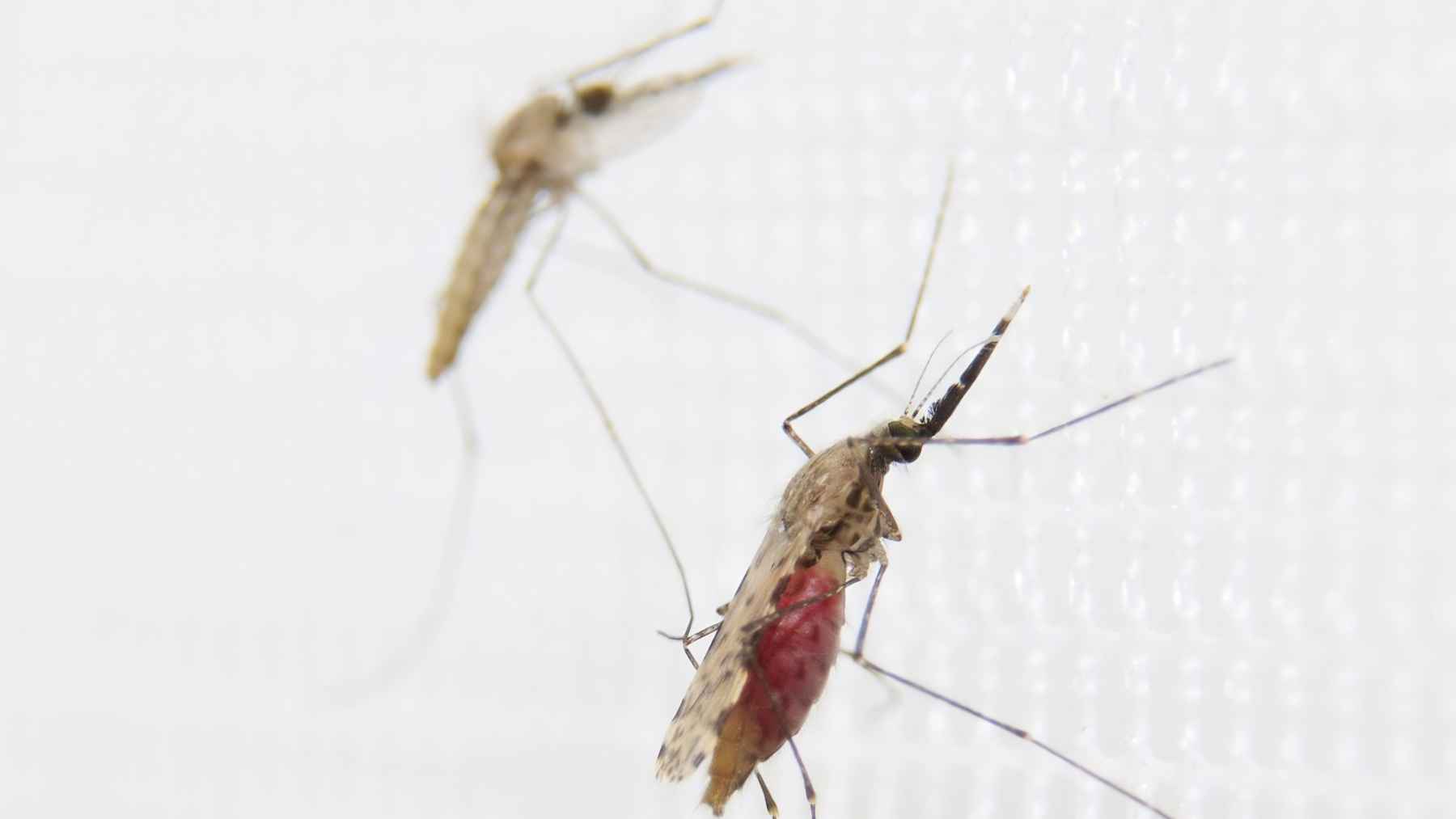
The sterile insect technique is basically mosquito birth control. Scientists rear male insects, sterilize them, and release them so they compete with wild males for females. If a female mates with a sterile male, her eggs do not produce offspring.
That sounds simple, but field programs are anything but simple. Released males need to survive, fly, find mating swarms, and compete with wild males. In practical terms, bad-quality males are like sending weak players into a championship game.
The tipping point
The new study was written by Abba Gumel and C. Alex Safsten, with affiliations listed for the University of Maryland, the Institute for Health Computing, and the University of Pretoria. Their model tracks Anopheles mosquitoes by sex and life stage, including aquatic young, adult males, unmated females, and females that mated with wild or sterile males.
The key idea is called an Allee effect. Put simply, some animal populations do worse when they become too small, because individuals have trouble finding mates or cooperating in other ways. For mosquitoes, that can mean fewer males and females meeting at the right time.
A switch in the math
The study also uses the idea of a saddle node bifurcation. In everyday language, that is a sudden change in a system after pressure builds past a threshold. Think of a chair balanced on two legs. For a while, it wobbles. Then one small push changes everything.
In the model, when habitat capacity is high and larval competition is weak, the mosquito population can settle into two possible states. One is persistence. The other is extinction. Between them sits an unstable Allee threshold that acts like a boundary line.
The best release plan was mixed
The researchers compared constant sterile-male releases with releases that respond to the size of the wild population. A constant plan keeps pressure on the mosquitoes. A population-responsive plan adjusts the release rate as the wild population changes.
The most efficient option in the model was a hybrid strategy. It used a responsive push early on and steady pressure near the threshold. That approach reduced the number of sterile males needed by about 5 percent compared with the best constant-only strategy and about 39 percent compared with the best population-responsive-only strategy.
Not a field trial yet
This is important. The new work is a model, not proof that a real community can eliminate malaria mosquitoes this way next summer. Models help researchers test strategies before anyone spends money, builds insectaries, or runs a release program.
The International Atomic Energy Agency notes that the sterile insect technique is not yet fully developed for malaria mosquitoes, even though interest in using it as a complementary tool is growing. That is a careful warning. The math may be promising, but the fieldwork still has to catch up.
Earlier work built the runway
There has already been progress. A 2008 Malaria Journal study in Sudan examined irradiation, transport, and field-cage experiments with Anopheles arabiensis, one of the malaria-carrying mosquitoes targeted in sterile insect research. The work showed that transported mosquitoes could survive well enough for testing and that mating occurred in field-cage conditions.
A later South African study found strong mating compatibility between a laboratory strain and a wild Anopheles arabiensis population from the Kruger National Park area. Another Malaria Journal study in 2020 showed that a short flight ability test could help measure the quality of sterile male mosquitoes before release.
Why this matters now
The fresh angle here is not simply “release more mosquitoes.” It is more precise than that. The model suggests releases may be used like a lever, pushing the population just far enough that its own mating problems do some of the remaining work.
Could that save money and reduce the number of insects that need to be reared? Possibly, to a large extent, if the assumptions hold in real landscapes. The next test is whether this tipping-point logic can survive messy conditions outside the model, including weather, migration, breeding sites, and the everyday chaos of mosquito behavior.
The main work has been published as a preprint on arXiv.