For more than 1,300 years, a ship lay scattered across the seabed near Croatia’s island of Mljet, its passengers and purpose lost with it. Now, more than 600 grams of restored gold jewelry and coins suggest this was no routine cargo run, but a voyage carrying a high-ranking Byzantine figure and possibly an entourage.
The strongest clue is a gold signet ring bearing an imperial image, found alongside gem-studded belt fittings and coins issued under four emperors of the Heraclian dynasty. Together with amphorae, scales, ceramics, and game pieces, the discoveries offer a rare snapshot of Mediterranean travel as the late Roman world was giving way to the medieval era.
A wreck hiding in deep water
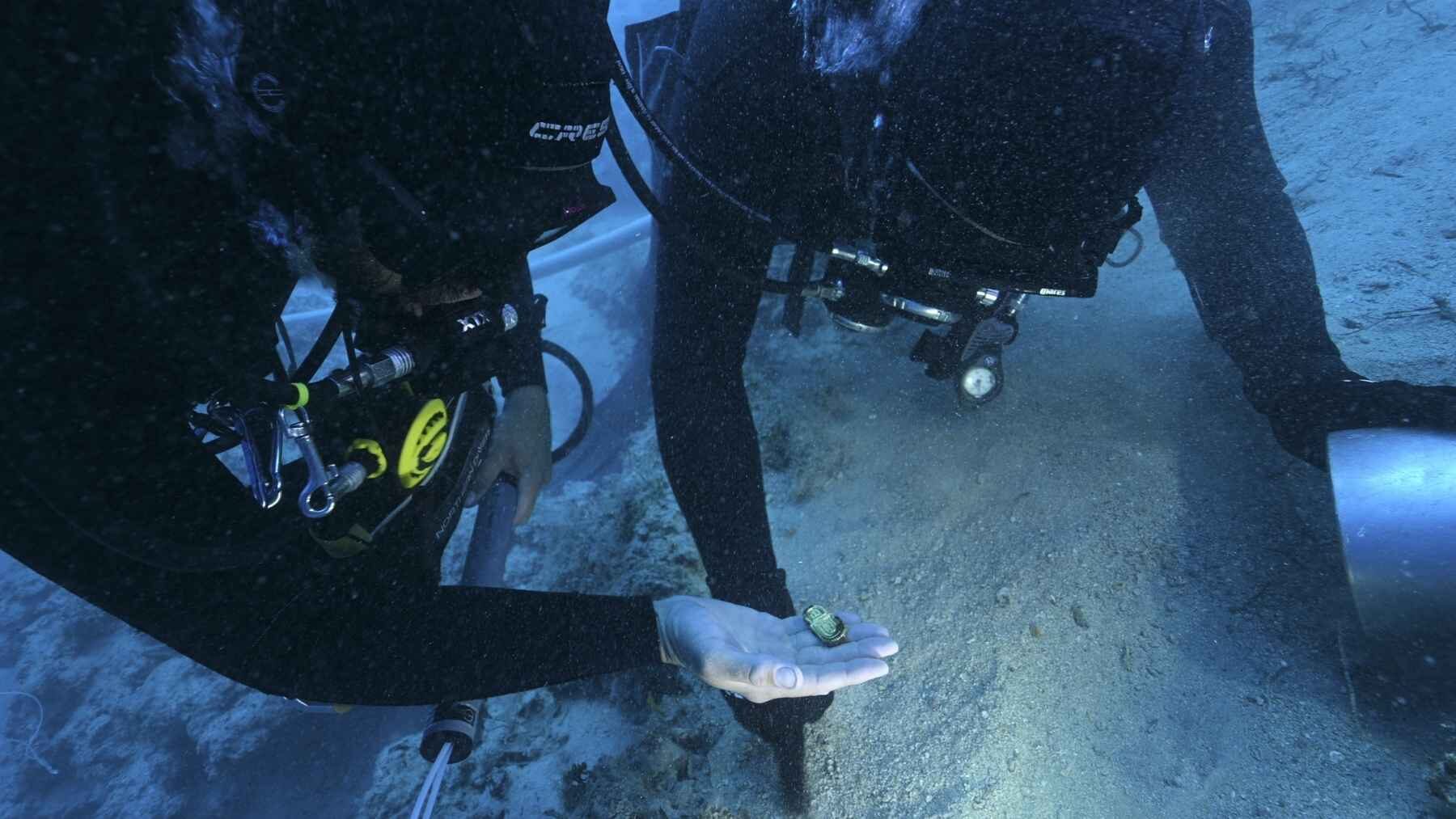
The Croatian Conservation Institute identified the Tatinica wreck during surveys off Mljet in 2014, then carried out nine excavation campaigns beginning in 2015. The remains lie on a sandy slope between rocks at a depth of roughly 105 to 131 feet, where short, careful dives have turned a slow excavation into a decade-long investigation.
That patience has paid off. During 19 years of underwater surveys around Mljet, the institute says researchers found 20 previously unknown wrecks dating from the second century B.C. to the 16th century, yet this seventh- or eighth-century vessel stands apart because of the rarity and richness of its cargo.
Gold that signaled authority
Archaeologists recovered four gold belt sets, along with buckles and strap ends decorated with emeralds, rubies, and pearls. These were not everyday accessories, but luxury objects associated with high-ranking Byzantine dignitaries, and the institute says comparable pieces had not previously been found in a Mediterranean shipwreck.
Then there is the signet ring. The institute believes an object of this kind could have belonged to someone at the highest level of government or the military, authorized to seal imperial documents, while Pavle Dugonjić told Reuters that it “certainly wouldn’t be worn by just anyone.”
More than 600 grams of gold
After cleaning and restoration, the recovered gold weighs more than 600 grams, or about 21 ounces. Igor Miholjek, who leads the archaeological research, described it as the largest amount of gold ever found on a shipwreck in the Mediterranean, a remarkable total even before the historical meaning of each object is considered.
Gold coins issued under four rulers of the Heraclian dynasty also help narrow the date of the sinking to the late seventh or early eighth century. They work like timestamps from a world with few surviving written records, allowing archaeologists to place the disaster within a period of severe political and territorial pressure on the Byzantine Empire.
Ordinary cargo complicates the story
Not everything aboard glittered. The ship also carried several types of amphorae, merchant scales, ivory counters, a die, lead ingots, and bronze and ceramic vessels, including bowls, jugs, and plates.
That mix raises the question at the heart of the wreck, because the evidence points to status and long-distance connections without settling the voyage’s purpose. Was a diplomatic party traveling with imperial gifts, was a wealthy official simply booking passage on a trading vessel, or were older gold objects being transported for sale or reworking?
A dangerous route across the Adriatic
Mljet stood beside a major sea corridor linking the eastern and western Mediterranean, including routes toward Constantinople and the Italian coast. The protected harbor at Polače offered sailors shelter during bad weather, and researchers suspect the ship sank while trying to reach that refuge.
Picture the final approach, with a crew able to see safety ahead as rough water or a sudden coastal wind threatened to push the vessel onto the rocks. Archaeologists have not established the precise cause, but the wreck’s position supports the sheltering theory.
Why this ship matters
The Byzantine Empire still viewed itself as the Roman Empire, but by the early eighth century it had lost major territories and endured long periods of war and instability. Written evidence for Adriatic travel from this era is limited, so a sealed group of objects on the seabed can reveal patterns that chronicles left out.
Justin Leidwanger of Stanford University called it “the most important shipwreck of its period.” In practical terms, the vessel may show that people, goods, official messages, and political relationships continued moving across the Mediterranean even while the empire’s map was shrinking.
The pottery may solve the mystery
Stanford archaeologists joined the Croatian team in 2026 to study the amphorae and ceramic cargo, while other specialists are examining the gold belt sets and coins. Recovered artifacts can spend about a year in fresh water to remove absorbed salt before detailed inspection and restoration begin.
The gold grabs attention, naturally. But a plain jar or worn scale may ultimately provide the clue that connects this ship to a particular port, trading network, or official mission, which is why conservation and context matter as much as treasure.
A story still emerging
The finds strongly suggest that an elite passenger was aboard, yet the person’s identity remains unknown and the diplomatic interpretation is still a hypothesis.
What archaeologists can say with confidence is that this was an unusual voyage carrying imperial symbols, commercial equipment, and objects from daily life through a Mediterranean world in transition.
The official statement was published on the Croatian Conservation Institute.