If you think building a train tunnel is only about concrete and schedules, Varberg just offered a reminder that the ground can talk back. Archaeologists working alongside the Varberg Tunnel rail project in southwest Sweden documented six shipwrecks buried under former harbor land.
The wrecks stretch from medieval times to the 17th century, and they show several different ways people built working ships. The headline find is an oak vessel from the second half of the 1530s that stayed unusually intact, with traces of burning that raise new questions about how it ended up on the seafloor.
A tunnel built for commuters and surprises
The Varberg Tunnel is part of a plan to expand Sweden’s West Coast Line and boost rail capacity. The Swedish Transport Administration says the project includes about 5.6 miles (9 kilometers) of new double track and a rock tunnel roughly 1.7 miles (2.8 kilometers) long under Varberg.
For commuters, that can mean fewer delays and less street-level congestion near the station. But the same digging that clears space for modern trains can also cut into older shorelines, and parts of Varberg sit on land filled in starting in the 1800s.
Six wrecks across a changing coastline
The ship remains were found during archaeological work that began in 2019, in and near Varberg’s historic center. The team dated four wrecks to the Middle Ages or late medieval period, one to the 1600s, and one could not be dated.
A 2025 report on three of the vessels was written by Elisabet Schager with co-authors Anders Gutehall, John Evan Skole, and Edgar Wróblewski. Schager said, “It will be very interesting,” adding that the team expects “a lot of exciting things” as the remaining analyses move forward.
Fieldwork involved marine and archaeological specialists from Bohuslän Museum, Visual Archaeology, and Cultural Environment Halland. The report focuses on Wreck 2, Wreck 5, and Wreck 6 because they preserved key parts of their structure, even if only in fragments.
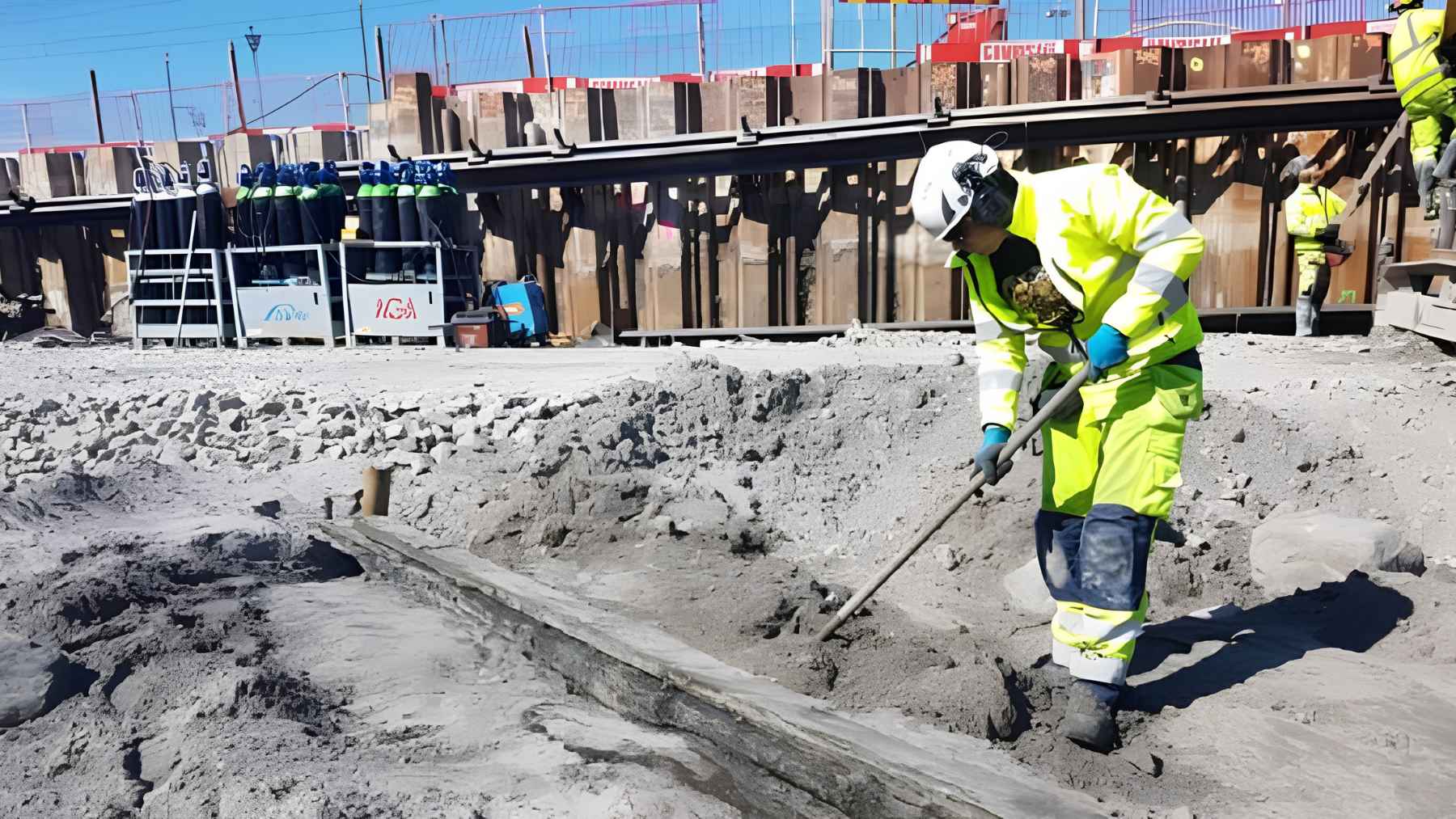
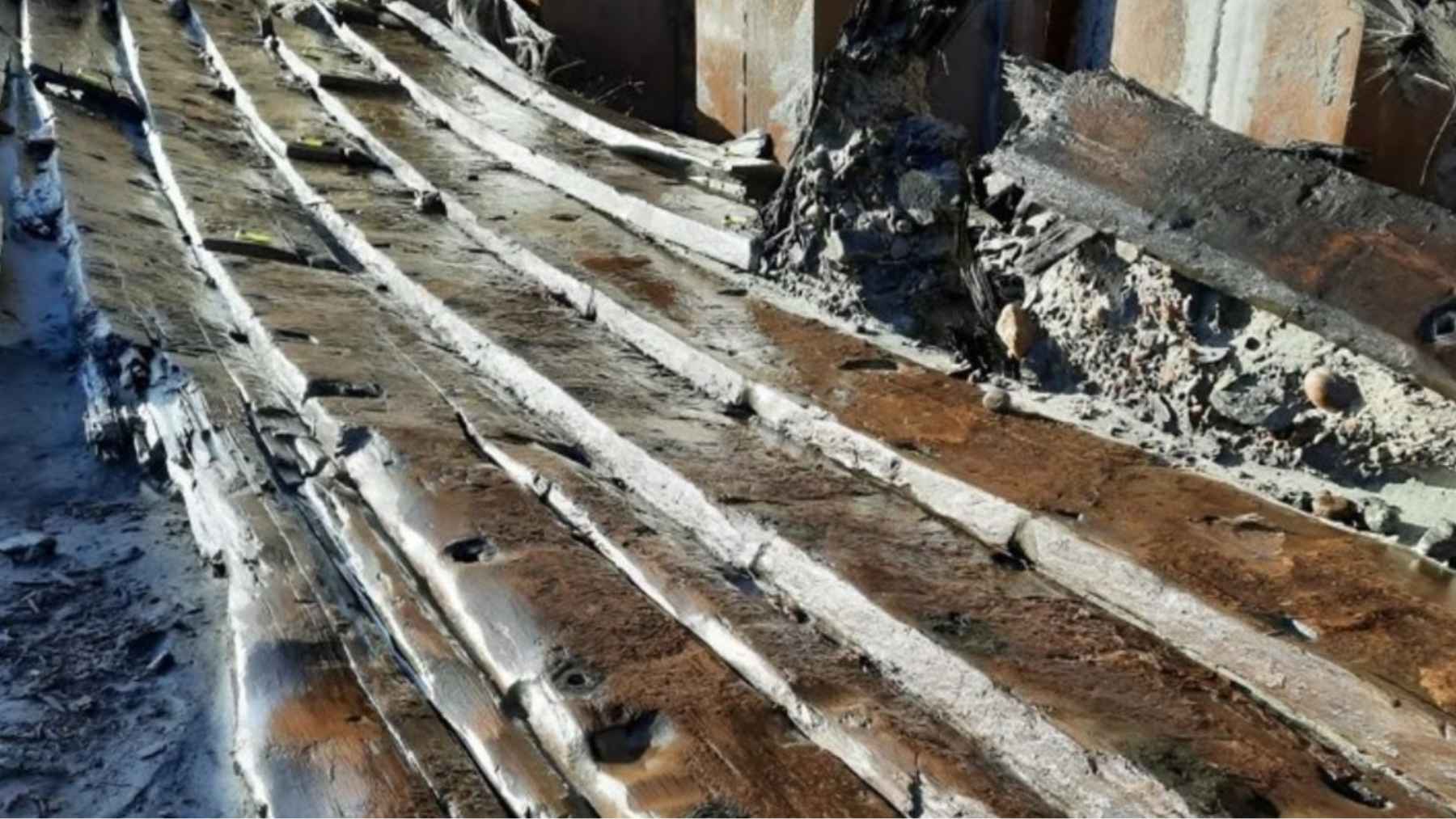
A worker carefully exposes preserved wooden ship remains during construction work that revealed multiple historic shipwrecks in Sweden.
The 1530s ship that stayed together
Wreck 2 comes from an oak sailing ship built in the second half of the 1530s using timber from western Sweden. Investigators recovered two connected hull sections from the starboard side plus scattered timbers, making it the most continuous structure in the group.
The ship was built in “clinker” style, meaning the wooden planks overlap like shingles. It is a classic northern technique for building sturdy hulls.
Researchers found burn traces on a protective strip along the hull. The report says the ship may have been burned before it sank, but the cause is still unclear.
A “berghult” that took the hits
That protective strip is called a “berghult,” and it works a bit like a wooden bumper. When a ship nudges up to a dock or scrapes along a pier, the strip helps take the impact instead of the hull itself.
It can also brace parts of the upper structure, which affects how a ship carries cargo or equipment. That is why small details like this matter.
Berghult is often linked with “carvel” construction, where planks sit edge to edge for a smoother surface, but it can appear on clinker ships too. The report points to the Osmund wreck, studied by Vrak, Sweden’s Museum of Wrecks, and to the Riddarholm ship described by Stockholm’s Medieval Museum.
Wreck 5 and a 1600s seaway
Wreck 5 has a lot in common with Wreck 2, including oak from the same region and the same clinker style. Tree-ring dating suggests its wood was cut sometime in the 1600s.
Experts think ships like these sailed outside the medieval cities of Varberg and Ny Varberg and may have ranged across the Baltic Sea. It is a reminder that the Baltic was a working corridor of trade for centuries.
The tunnel schedule shaped the recovery, and Wreck 5 had to be lifted quickly. The report notes that additional parts may still be buried beyond the excavation area.
The carvel-built ship with the surviving keel
Wreck 6 differs from the others because it was built in carvel style, with planks laid edge to edge and fastened to a frame. That approach tends to create a smoother outside surface, and it can support different hull shapes than clinker building.
It is also the only one of the closely studied wrecks with a preserved keel, the long beam that acts like a backbone. The report says the grooved keel and other details hint at Dutch shipbuilding tradition.
Researchers used dendrochronology, which dates wood by reading tree rings, but it did not deliver a firm age or origin. So for now, the ship’s timeline remains open.
The medieval cogs still waiting to talk
Wrecks 3 and 4 are dated to the 1300s and match the flat-bottomed “cog” style used for medieval cargo transport. They were designed for hauling goods in ports and shallow coastal waters.
An earlier project update on Varberg shipwrecks said two medieval merchant vessels were securely dated to the mid-1300s and built outside Scandinavia, pointing to long-distance connections in the region’s trade. That kind of detail can help historians map who was moving goods, and where those routes likely led.
As more infrastructure projects reshape Sweden’s west coast, archaeologists expect similar finds in places that were once water but are now city blocks. What else is sitting under the pavement?
The main report has been published in a 2025 publication from The Archaeologists, part of Sweden’s National Historical Museums.