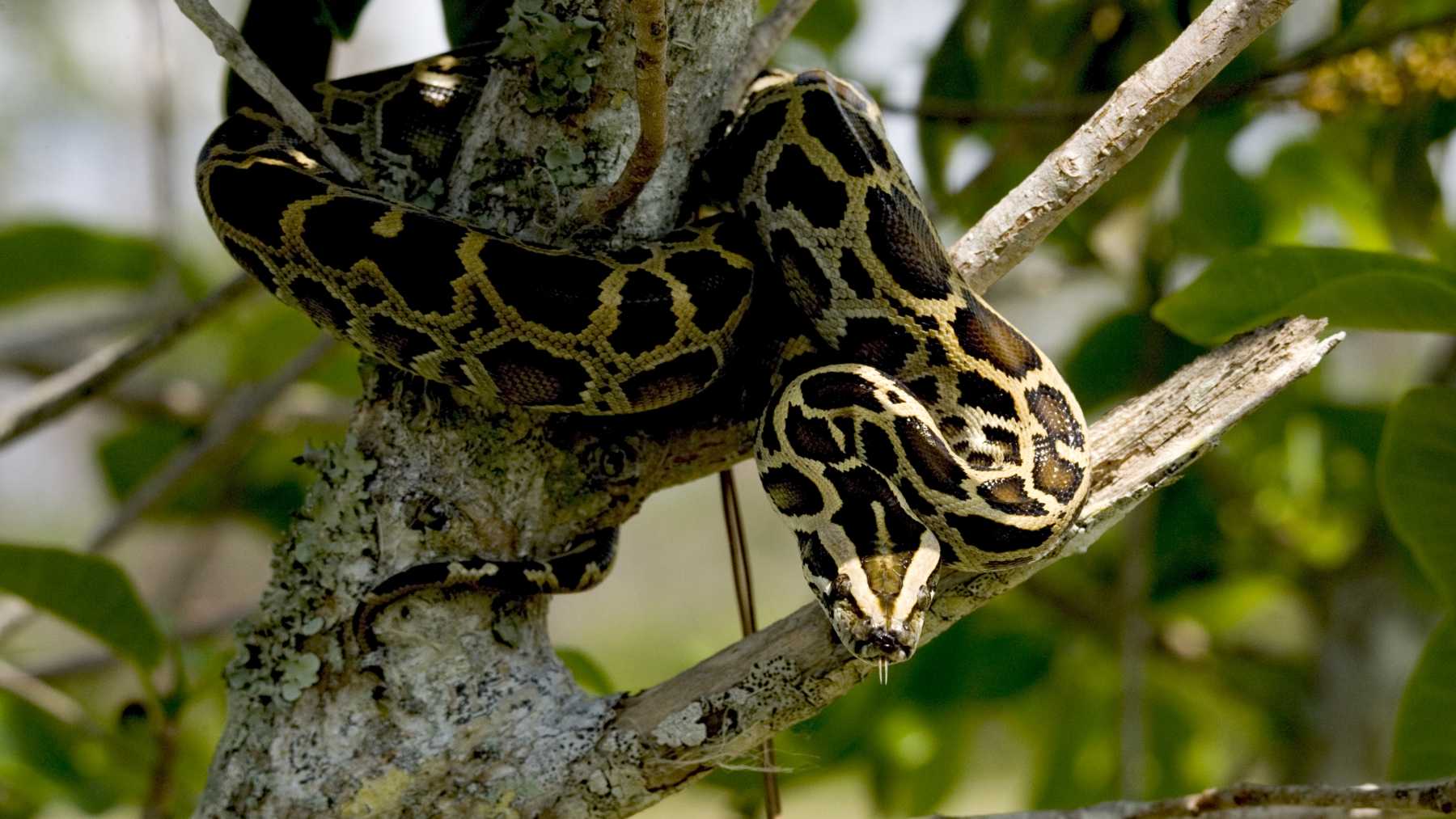
“Removing them is fairly simple. It’s detection,” Mike Kirkland, lead invasive animal biologist for the South Florida Water Management District, told the Associated Press in 2025, speaking of the Burmese pythons in the Everglades. “We’re having a really hard time finding them. They’re so well camouflaged in the field.”
Bayo Hernandez, a python hunter who works in the Everglades, told NBC 6 South Florida how much of his day the search takes: “The average time that I really spend out here on a daily basis is, you know, five hours.”
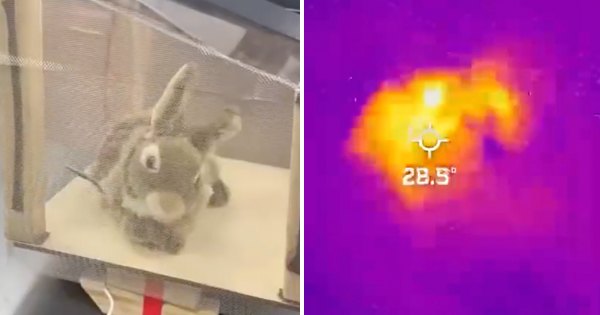
The district and University of Florida researchers want the snakes to come to a place of their choosing instead, and in the summer of 2025 they put out robotic rabbits, 120 of them as an experiment, according to the AP. UF biologist Chris Dutton built them from toy rabbits fitted with motors, heaters and solar power, and they can be switched on and off remotely.
“These innovative robots produce a heat signature and emit a smell designed to attract pythons,” the district said. Each one sits in a small pen with a camera that sends an alert when a snake comes near, at which point, Kirkland told the AP, “I can deploy one of our many contractors to go out and remove the python.” The district pays about $4,000 per robot.
About 90 decoys and very patient snakes
Robert McCleery, the UF professor who leads the project, described the setup to NBC 6 in mid-September: “We have about 90 out right now, roughly, and give or take, you know, we’ve got rabbits and we can turn on heat or we can turn on scent, or we can turn on vibrations, and we can turn on movements.”
Pythons are attracted to mammals, he said, which helps explain why so many mammal species have declined so quickly in the Everglades, “and we’re trying to simulate that by creating the smell, the movement, the visualizations, the vibrations on the ground, the heat signatures.”
McCleery called the idea that the snakes would “try and bite or, you know, attack” the decoys one of “the misconceptions on the internet.” In the field, he said, “what we found is they stayed there and they sat there. They don’t bite them.” He added, “They’re very patient,” and a python that waits around gives a trapper time to get there.
Jean Paul De Desrochers of REWYLD, which is developing the technology with UF, said the aim is to work with existing trappers and remove pythons “efficiently and effectively,” and the team is also working on AI that would recognize when a snake has arrived and ping the trappers nearby. Field tests mostly run from June through September, so the team is raising about $200,000 for more research and a lab at UF. “We’re trying to build a lab that has a 24-hour, seven days a week, 365 days a year testing facility,” he said.
Why rabbits
Live rabbits were tested first, in work published in 2024 in PeerJ in which pens holding domestic rabbits drew 21 independent python detections while the empty control pens drew one, but Kirkland told the AP that using live animals as lures became too expensive and time-consuming. A second study, published in 2025 in Management of Biological Invasions and co-written by Kirkland and McCleery, tried rabbit scent alone on 21 paired plots for 84 days in 2022 and found no difference between scented plots and controls among the 11 pythons it detected, and its authors suggested testing a lure that combines several stimuli, such as heat, visual cues and movement.
In Everglades National Park, nighttime road surveys from 2003 to 2011 recorded 99.3% fewer raccoon sightings, 98.9% fewer opossum sightings and 87.5% fewer bobcat sightings than earlier surveys, according to a 2012 study, and they turned up no rabbits at all.
Hernandez thinks hungry snakes will look elsewhere. “Just like every animal, they do spread, they do migrate and if there’s no food down south… guess where they’re gonna go… up north looking for food,” he told NBC 6. De Desrochers sees the decoys as a way to get ahead of that in counties where the snakes haven’t settled in: “We don’t have that problem yet in these other counties. And the goal is to deploy this technology to help conserve and avoid those issues moving forward.”
Hunters still do the heavy lifting
For now, the work still falls on hunters out in the swamp. Tom Rahill, a professional python hunter, won this July’s 10-day 2026 Florida Python Challenge and its $10,000 grand prize with 96 pythons, all from Everglades National Park and a little over a third of the 280 that 907 participants from 30 states, Canada and Vietnam brought in.
The Florida Fish and Wildlife Conservation Commission counts more than 1,600 pythons removed in Python Challenge events so far and more than 19,000 removed by its contractors and the water district’s since 2017. “Removing Burmese pythons from this ecosystem is critical to the survival of the native species that call this area home,” said Ron Bergeron, a member of the water district’s governing board.
When the robots first went out in 2025, Kirkland told the AP that “this part of the project is in its infancy,” and then added, “We are confident, though, that this will work once we are given enough time to work out some of these details.”
Photo: R. Cammauf / National Park Service (public domain)