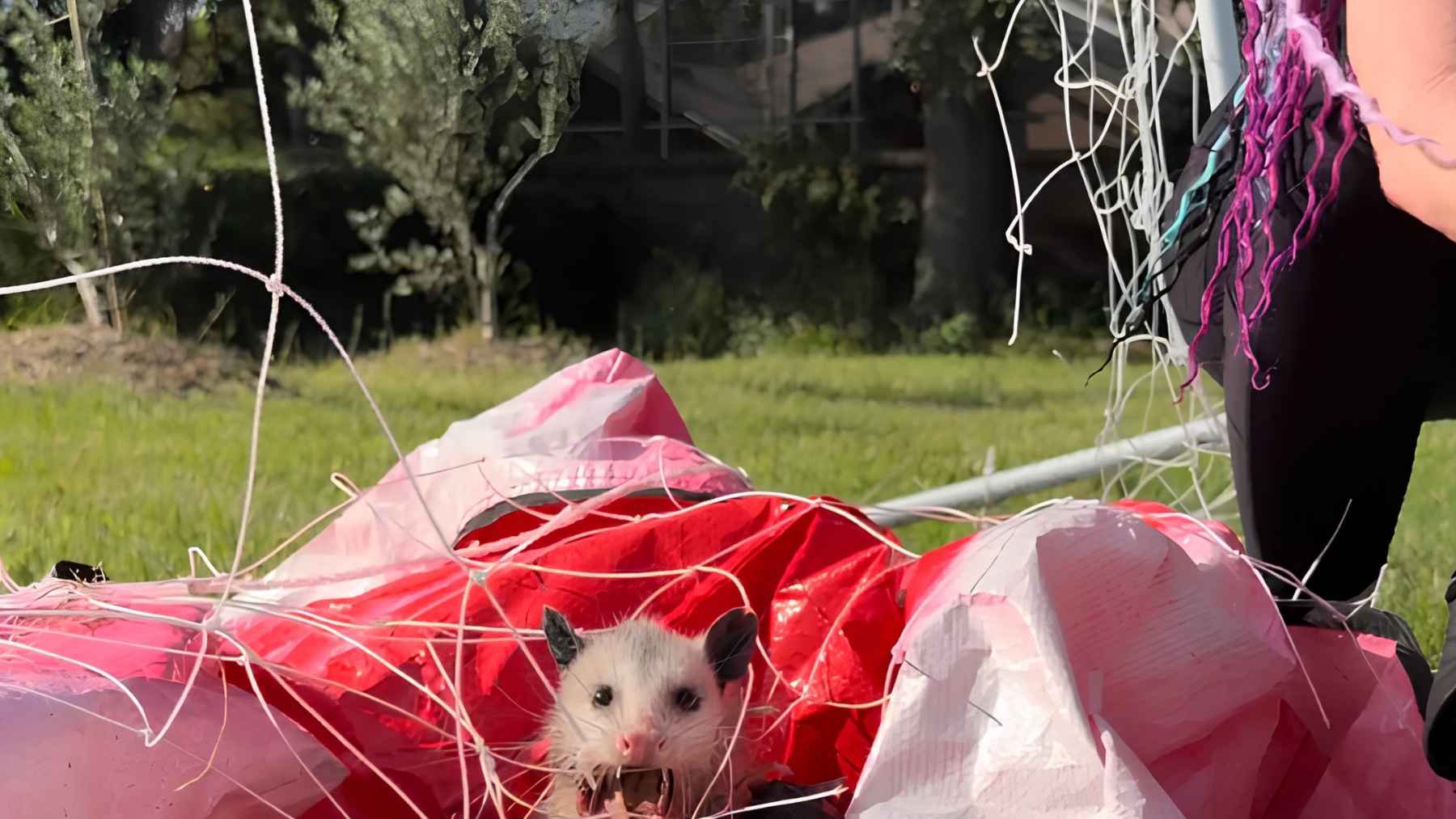
At a school in Florida, a teacher found a mother opossum that was trapped in a soccer net. At the beginning, the animal seemed quite aggressive, but Cat Clifford, as rescuer (she works with Back To Nature Wildlife Refuge), could understand that this was actually because she was super worried about her babies that were pressed against her body; she was not attacking, she was defending her joeys. And that is how a morning at this school turned into an urgent wildlife rescue!
A soccer net becomes a wildlife trap
That day, the teacher actually acted pretty well. As soon as she saw her in the school fields, she called Clifford immediately. When she arrived, the mother was extremely scared and completely trapped, holding all of her babies while she fought to protect them.
What was not clear was the number of babies she had. For example, The Dodo reported that there were eleven joeys, while the title of Clifford’s original Facebook video talks about nine of them.
The mother was defending more than herself
At the beginning, Clifford did not understand why the mother was being so aggressive, or actually showing an “attacking” attitude. But then, when she saw the babies, she could see that the animal did not have the option to leave and abandon them. Being trapped and having the babies there, probably made her collapse.
Clifford also was very clever, because she had enough patience to make the animal feel and understand that she did not want to harm her at all. And as that happened, the mother started to relax and let her free from the net.
Patience kept the family together
Wild animals are wild animals… It is very difficult for them to understand that a person is there to help them. If a trapped animal sees that the rescuer is rushing to save it, the animal will see that as an attack and it will get stressed to the point where it can make the situation worse. That is why the rescuer needs to take care, pay attention to the animals attitude, and at the same time protect themselves.
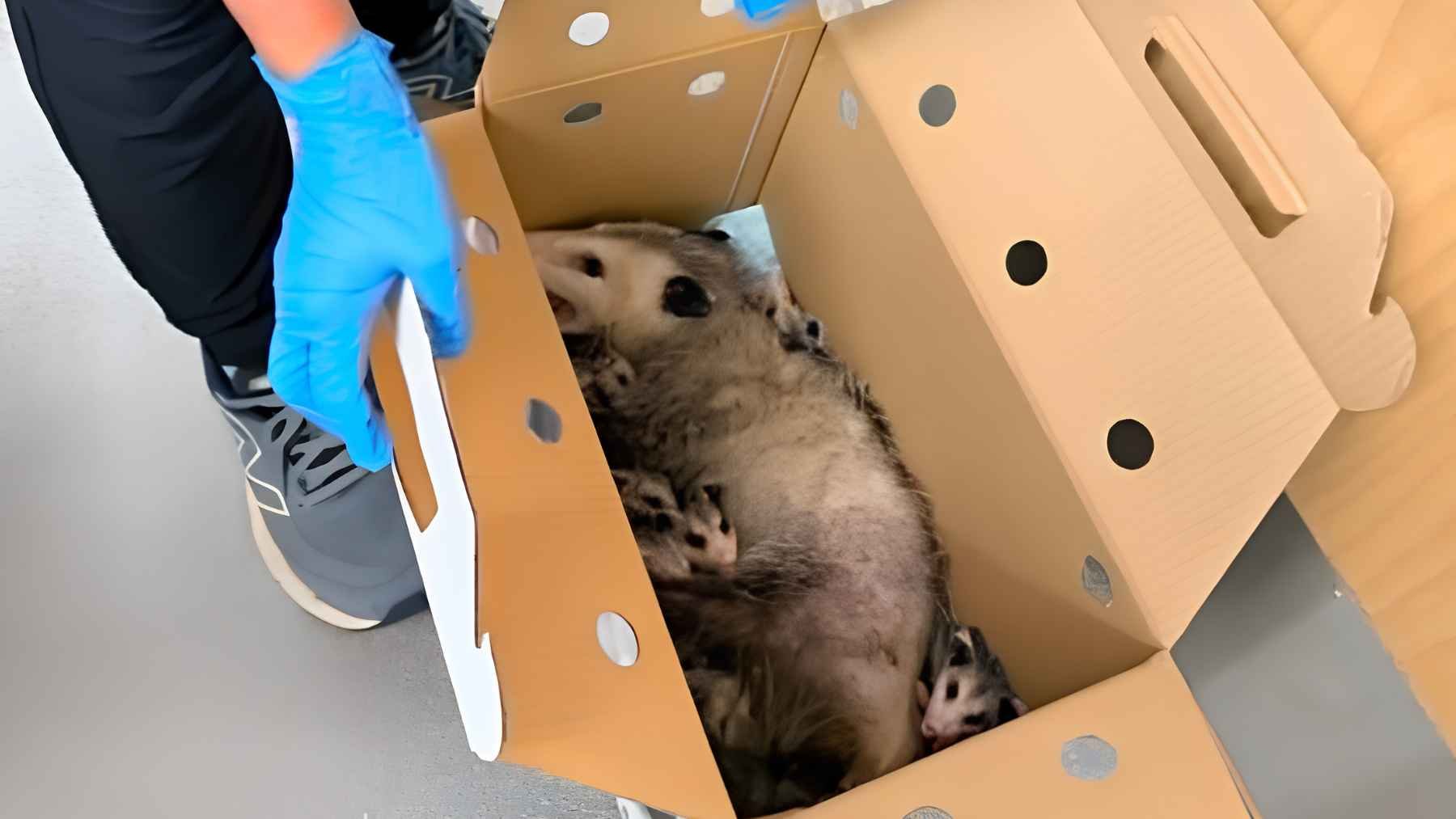
Once Clifford could free them, she took them to the Back To Nature Wildlife Refuge, where the vets checked them completely and confirmed that their health was okay.
Opossum mothers carry a moving nursery
What is interesting is what was learned about the species. Back To Nature explains that a female opossum can carry and nurse up to 13 young in her pouch for more or less three months. After that, she can carry them on her back for 1 or 3 months until they are able to start moving out of the den.
Opossums are marsupials, and people tend to misunderstand their ways of defending themselves. This species is said to be quite solitary, but when they feel that they are cornered, they can show you their teeth or enter an involuntary shock state called “playing possum”.
One simple habit can prevent another rescue
The RSPCA says that sports nets, after school time, should be removed, mostly so they do not stay there at night. They even suggest putting them away in a specific place away from curious animals. It is something that really does not take a lot of time and that can save the animals from having some bad moments.
So, nets at night can end up working as an invisible trap that cannot be seen, but that still can be stressful for them if they get trapped.
What to do when wildlife is entangled
And if one day it is you who finds an animal that is trapped? The safest (and smartest) thing you can do is to keep people and pets distant. Then of course, call a licensed wildlife rehabilitator or local animal authority. This is very important because there are many animals that can really hurt you if you get near, or if you do not have experience. I know it can be tempting to try to help them, but sometimes the best help is to step back. Do not make the situation worse.
Back To Nature also recommends that people do not handle an injured or orphaned animal, because normal vets do not always have a license to receive or accept wild animals. In this case, the teacher was well-informed, because she directly called Clifford. Something that could have been dangerous ended up with the mother and babies safe and healthy.
A second chance in the wild
After the medical revisions, they were taken back to their natural habitat, and here is the important part, because rescuing animals is not leaving them in the shelter forever. It is to cure them and take them back. That is true and successful wildlife rehabilitation.
“After more than 20 years, I still smile every time my phone rings with a wildlife rescue call,” Clifford wrote.
The original rescue account was published on Cat Clifford’s Facebook page.