Florida crews yanked 4 tons of Burmese pythons from the wild, proving Everglades nightmares have serious weight
· 4 min read
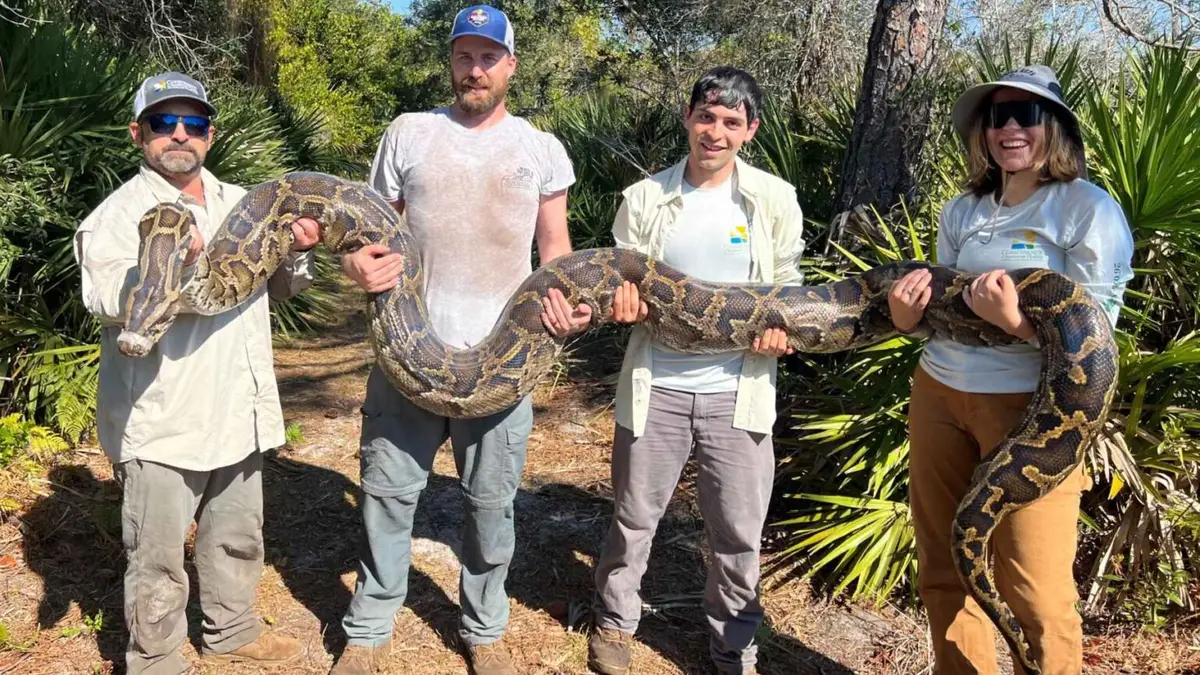
Florida’s long fight against invasive Burmese pythons just reached a record that feels both encouraging and unsettling. During the latest breeding season, biologists and volunteers with the Conservancy of Southwest Florida removed 177 pythons weighing 8,080 pounds from a 200-square-mile area in Collier County, the largest single-season python biomass the group has taken out since its program began in 2013.
That is just over 4 U.S. tons of snakes. Even more important, the team removed more than 4,100 python eggs before they could enter the ecosystem, cutting off a future wave of hatchlings in a landscape already under heavy pressure from this powerful predator.
4 tons of snakes
The record came during the breeding season from November 2025 through April 2026, when large adult pythons are more likely to gather and become easier for trained teams to locate. The biggest female captured this season measured 17 feet long and weighed 153 pounds, roughly the weight of an adult person.
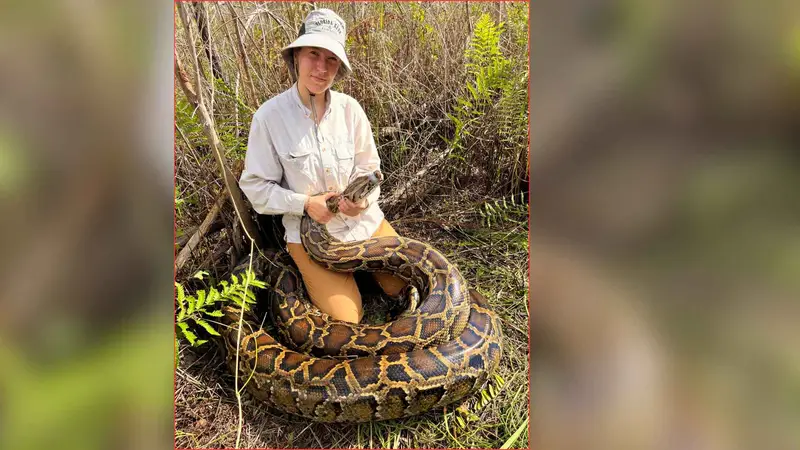
The average captured female weighed 95 pounds and carried about 70 eggs. One in four females also had remains of white-tailed deer in her stomach, a striking reminder that this is not just a snake problem, but a food-web problem.
How scout snakes help
So how do scientists find a giant snake in thick South Florida habitat? Not easily.
The Conservancy uses radio telemetry and about 40 tagged male Burmese pythons known as “scout snakes.” These males lead researchers to breeding groups, where teams can remove large females before they lay eggs.

“This was our first 4-ton removal season,” said Ian Bartoszek, wildlife biologist and science project manager at the Conservancy. “These science-based management efforts are suppressing local python reproduction. With continued pressure, we hope to see these removal numbers decline over time.”
Why the Everglades are vulnerable
Burmese pythons are not native to Florida, and state wildlife officials classify them as an invasive species because of their impact on native wildlife. The Florida Fish and Wildlife Conservation Commission (FWC) says they prey on birds, mammals, and reptiles, and a female python may lay 50 to more than 100 eggs at a time.
That kind of reproduction adds up fast. It also explains why removing egg-bearing females is such a high priority, especially before nesting and hatching peak later in the year.
The U.S. Fish and Wildlife Service notes that Burmese pythons are hard to control because they are cryptic, semi-aquatic, and able to grow up to 20 feet long. In plain English, they hide well, move well through wetlands, and get big enough to eat animals many people would never imagine a snake swallowing.
Native wildlife is paying the price
The Everglades may look wild and endless, but ecosystems can be surprisingly fragile when a new top predator settles in. U.S, Geological Survey (USGS) research has linked Burmese pythons to severe mammal declines in Everglades National Park, including major drops in raccoon, opossum, and bobcat sightings since the late 1990s.
The U.S. Fish and Wildlife Service has also documented python predation on mammals, birds, and reptiles, including marsh rabbits, wood storks, and American alligators. That is why every removed python matters, even if the total population remains difficult to measure.
“Without the Conservancy’s continued removal efforts, these invasive predators would still be out there decimating native wildlife and reproducing across the landscape,” said Rob Moher, president and CEO of the Conservancy. “Every python removed reduces pressure on the ecosystem.”
A record that is not really a celebration
At first glance, 4 tons sounds like a victory lap. However, there is another way to read the number.
A record haul means the team is getting better at finding pythons, yet it also shows how much reproductive power is still moving through the landscape. Since 2013, the Conservancy’s program has removed 1,750 pythons weighing more than 53,000 pounds from Southwest Florida.
That is more than 26 U.S. tons of invasive snake biomass taken out by one long-running program. Still, experts warn that Burmese pythons are exceptionally difficult to detect, with one U.S. Fish and Wildlife Service summary noting that detection probability can be less than 1%.
What happens next
The goal now is not a quick fix. For the most part, Florida’s approach depends on steady pressure, better detection tools, public reporting, and coordinated work between conservation groups and agencies.
The FWC says Burmese pythons can be humanely killed year-round without a permit or hunting license on designated Commission-managed lands in South Florida. The agency also urges people to report sightings rather than ignore them, because one snake near a road or canal could point to more hidden nearby.
At the end of the day, the 4-ton season tells a bigger story. Invasive species control is slow, muddy, and rarely glamorous, but in the Everglades, removing one breeding female can mean dozens of future predators never arrive.
The official statement was published on Conservancy of Southwest Florida’s website.
Glossary for this story
- Biomass
- Organic matter, such as forest, crop or animal waste, used to produce energy, heat or fuels.
- Ecosystem
- A community of living things and the environment they live in, together with the relationships between them.
- Wetlands
- Areas covered by water all or part of the year, such as marshes, swamps and bogs. They teem with life and store a lot of carbon.
ECOnews Newsroom
Writer at ECOnewsA team of journalists specializing in socio-environmental news, sustainability, climate change, the environment, responsible consumption, and innovation. At EcoNews, we provide clear, reliable, and relevant coverage of the environmental and social challenges shaping our era.
More from ECOnews NewsroomComments · 0
Rules ›No comments yet. Be the first to share your view.