Have you ever crossed a muddy field and wondered what might be hiding just under your feet? In North Wales, a faint signal from a metal detector led David Moss and Ian Nicholson to what may become one of the largest Roman coin hoards ever found in the United Kingdom.
The find is estimated at up to 15,000 coins, packed into two clay vessels weighing more than 130 pounds, and the coins are now being analyzed at National Museum Cardiff.
The size is startling, but the real story may be what the coins can reveal. A hoard is not just a pile of old money. It is a frozen decision, a moment when someone hid wealth in the ground and, for reasons we may never fully know, did not return.
A signal in the rain
Moss had been searching the area for years. He had already found a smaller Roman hoard nearby in 2018, which made him believe the field still had secrets under its wet soil.
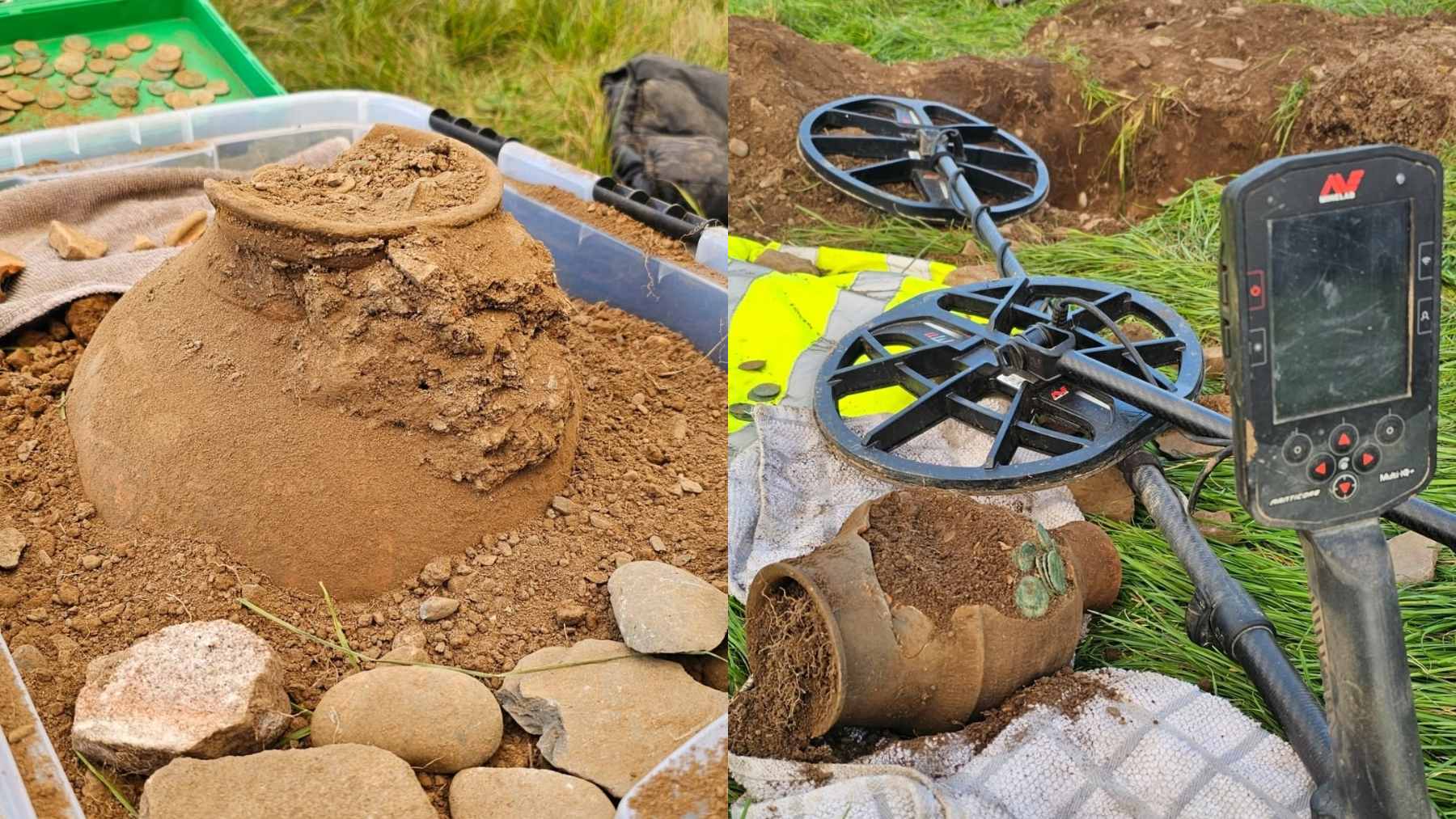
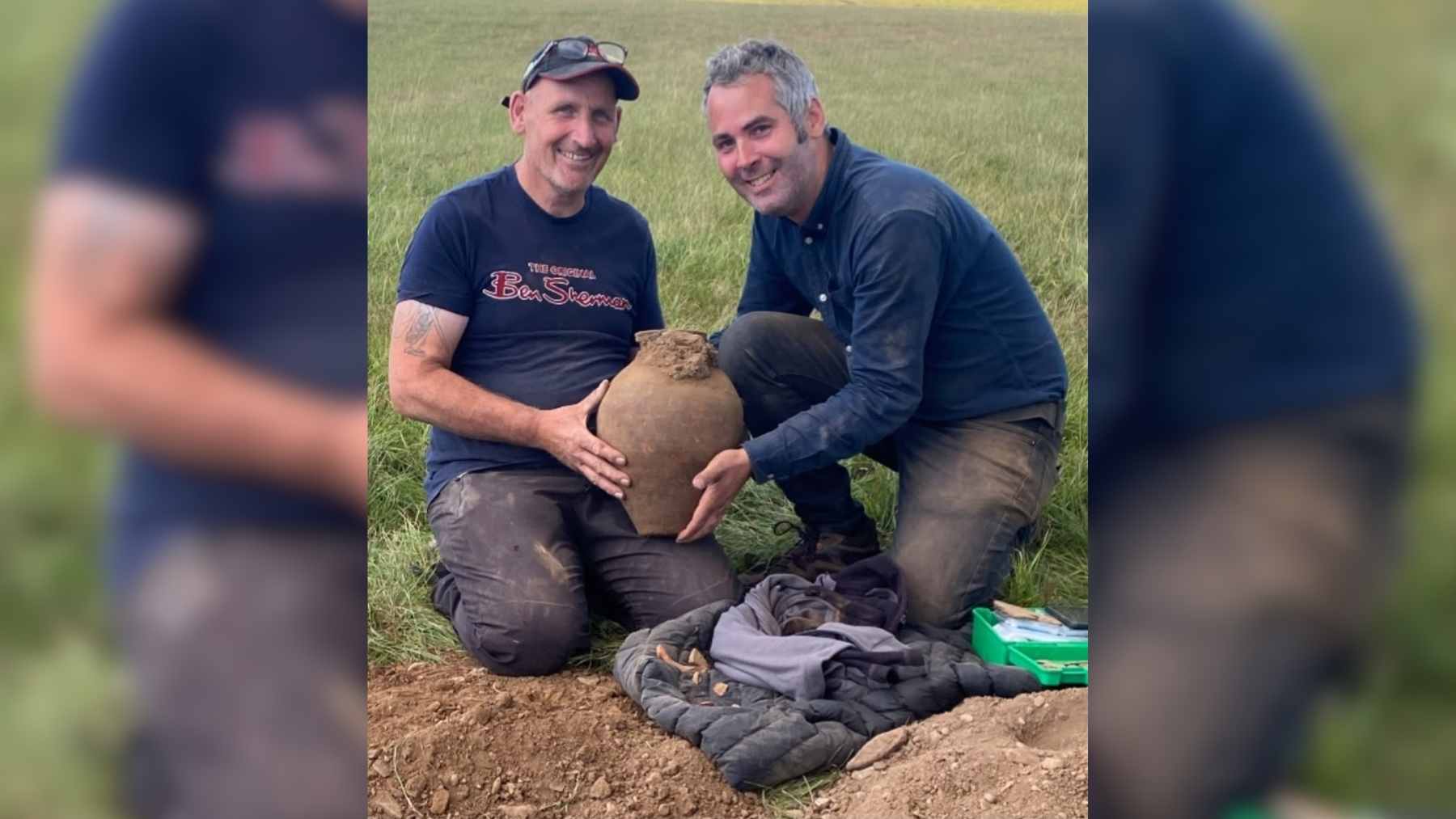
Then came the signal. It was weak, steady, and deep, coming from roughly 20 inches below the surface. “At that depth, I expected it to be iron,” Moss said, before finding the edge of a clay pot filled with coins.
The first vessel took hours to recover carefully. A few days later, another search in the same area revealed a second pot close by. Two hoards in one place. That does not happen every weekend.
What the pots held
Early reports suggest the new hoard includes Roman denarii and silver-washed radiates. A denarius was a common Roman silver coin, used across the empire for wages, trade, and everyday payments. A silver-washed radiate looked silvery on the outside but usually had a cheaper metal underneath.
That detail matters. The mix of coins can tell researchers whether the money came from military pay, local trade, taxes, savings, or several sources at once. In practical terms, it is a financial footprint from almost 2,000 years ago.
Experts will also look for the youngest coin in the group. That coin can help date when the hoard was buried, because the stash could not have gone underground before its newest piece was made.
Why Wales matters
Roman Wales was not just a quiet edge of the empire. It was a landscape of forts, roads, valleys, farms, and sacred sites, where Roman power met local ways of life. That makes a large multi-pot hoard in North Wales especially important.
A major Cardiff University project led by archaeologist Peter Guest recorded more than 52,000 Iron Age and Roman coins from 1,172 separate Welsh find spots. The research showed that coin finds can help explain not only money, but also conquest, identity, and cultural change at the far western edge of Roman rule.
So what could this hoard add? Quite a lot. If the coins cluster around certain emperors or mints, they could point toward the movement of soldiers, the flow of taxes, or the way local people interacted with the Roman economy.
Coins under microscopes
Before the coins can tell their story, conservators have to keep them from falling apart. Soil, moisture, and corrosion can make ancient coins fragile once they are exposed to air. That is why the first step is stabilization, not display.
A previous Caerhun hoard found by Moss and Tom Taylor gives a clue to the work ahead. Amgueddfa Cymru Museum Wales said that larger find contained 2,733 coins, including silver denarii and silver and copper-alloy radiates, while some silver coins had been held in thin leather bags near the top of the pot.
In that earlier case, specialists used CT scanning, which is a three-dimensional X-ray image, to see inside the vessel before fully opening it. The new hoard may require the same patience. Every layer could matter.
Why bury so much money
People usually did not bury this much coinage for no reason. Sometimes hoards were hidden during fear, violence, political uncertainty, or a local crisis. Other times, they may have been religious offerings placed near a meaningful site.
That is where the story gets tricky. The earlier Caerhun evidence suggested a long period of collecting, with older coins lower in the pot and newer ones closer to the top. It was a bit like someone adding fresh savings to a jar over time.
Could the new hoard show the same pattern? Maybe. If it does, the discovery could point to a person or community building up wealth for years, then hiding it when the world around them started to feel unsafe.
What happens next
Under U.K. rules, possible treasure must be reported to a local Finds Liaison Officer within 14 days of being found or within 14 days of realizing it may be treasure. After that, a coroner’s inquest decides whether the find legally counts as treasure, and museums can express interest in acquiring it.
The Portable Antiquities Scheme records archaeological finds made by the public so researchers can see patterns across the landscape, not just admire isolated objects. That record is why responsible reporting matters. A coin without a location is just a coin, but a coin in context can become history.
If a museum buys the hoard after valuation, the finder and landowner may receive a reward if the discovery was made legally and in good faith. For local communities, the best outcome would be clear enough. Keep the coins close to the place where their story began.
A field full of questions
For now, the North Wales hoard remains a mystery under careful study. Researchers still need to count, clean, date, and compare the coins with other finds from Wales and Britain. That slow work may not sound as dramatic as the moment a detector beeps, but it is where the discovery becomes knowledge.
Moss summed up the feeling after the find by saying, “Something always told me there was more here.” That hunch has now handed archaeologists a rare chance to look again at Roman Wales, not from a palace or battlefield, but from a muddy field where someone once hid a fortune.
The main background study on Roman coins in Wales has been published in Britannia.