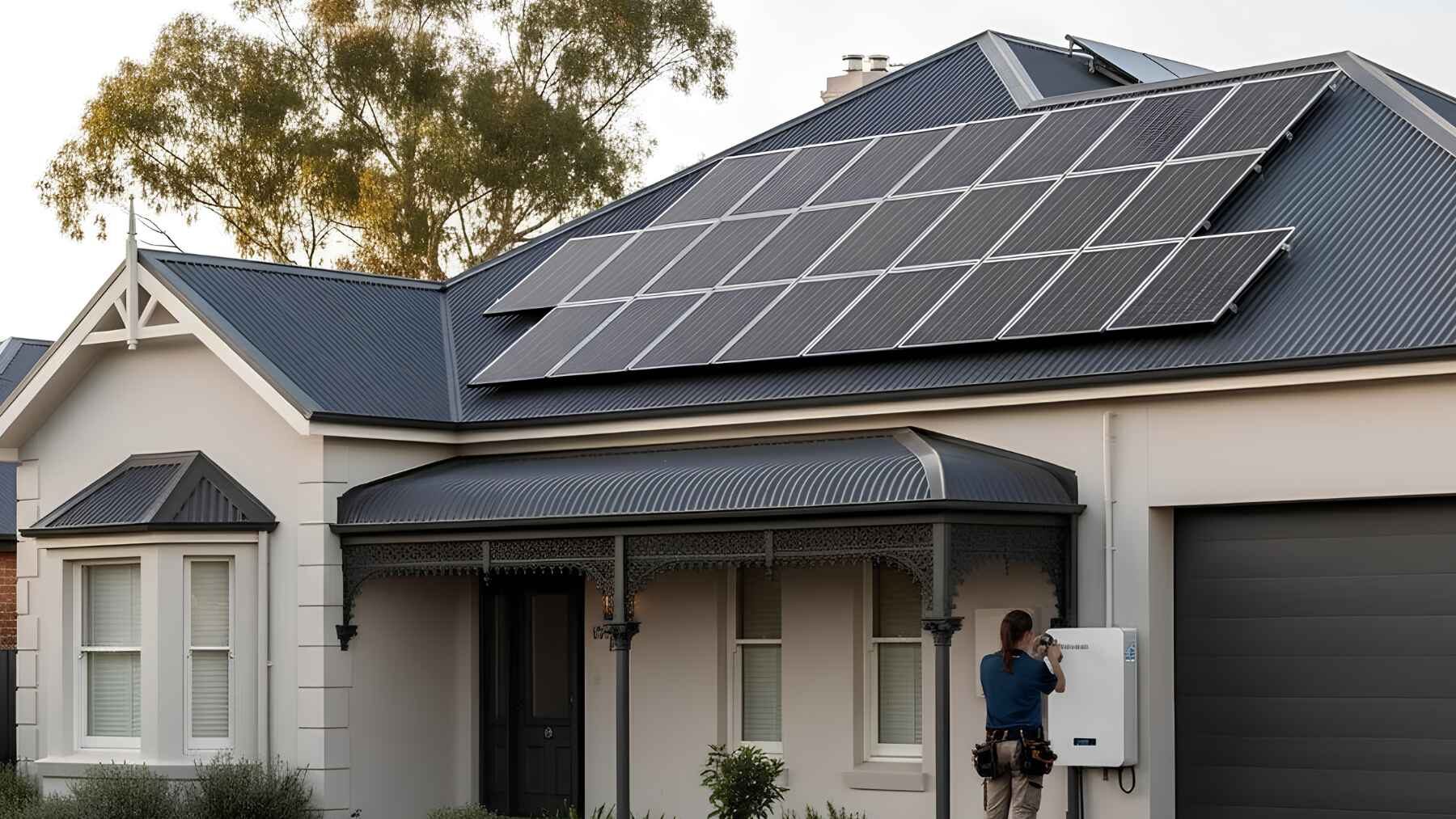
Australia is installing home batteries at a record pace, yet most owners are keeping control rather than letting a virtual power plant coordinate their stored energy. As of January 2026, only about 24% of customers with installed batteries were participating in one, according to the Australian Competition and Consumer Commission.
That reluctance could become an expensive weak link in the clean energy transition. Virtual power plant customers generally paid the lowest electricity bills in the regulator’s sample, while coordinated batteries could reduce the need for billions of dollars in new generation and grid infrastructure, but many households remain uneasy about surrendering control to an energy company.
A battery can join a power plant
A virtual power plant links many small energy assets, usually rooftop solar and home batteries, so an operator can charge them when solar is abundant and discharge them when demand and prices rise. One battery is modest, but thousands acting together can behave like a grid-scale plant.
At his Frankston home south of Melbourne, Chris Richardson joined a virtual power plant after installing solar and a battery. He told ABC News that his first reaction when the company drew power from the battery at night was “This is not fair,” yet he said the arrangement helped almost eliminate his electricity bill.
The savings are substantial
In its standardized comparison, which excluded federal bill rebates and GST, the ACCC found solar-and-battery households had median annual bills $329 to $909 lower than grid-only customers, a reduction of 20% to 52%. For the 24% enrolled in virtual power plants, the gap widened to $762 to $1,093, or 57% to 63%.
Those averages are not a promise. The regulator found wide differences between operators and usage patterns, and said some households may be better off using a battery without a virtual power plant.
Why homeowners hesitate
Money is only part of the decision. For many buyers, a battery is also about independence and resilience, not just the electric bill, and Professor Yolande Strengers of the Monash Energy Institute said some households want “greater independence and resilience” and to regain control.
The concern is not imaginary, because the ACCC found operators can have almost complete discretion over charging and discharging while many contracts limit liability and performance warranties. Some reviewed agreements ran from about one to 12 years, and differences in rewards, battery compatibility, override rights and exit costs made comparisons difficult.
A vast clean energy asset remains uncoordinated
Australia’s Small-scale Renewable Energy Scheme has supported more than 4.2 million rooftop solar systems. From July 1, 2025, to June 8, 2026, more than 460,000 solar batteries were installed across homes and businesses, adding 12.8 gigawatt-hours of storage.
That rapid rise has been powered by the federal Cheaper Home Batteries Program, whose estimated funding was expanded to $7.2 billion over four years. The government expects it to support battery installations for more than 2 million Australians by 2030.
Coordination could lower costs for everyone
Home batteries do more than trim a single household’s bill. By storing midday solar and releasing it during the evening peak, they can improve renewable energy use, ease pressure on the grid and reduce reliance on coal and gas generation.
The Australian Energy Market Operator scenario cited by the ACCC estimates that if roughly 53% of battery customers joined a virtual power plant by 2050, about $7.2 billion in additional generation and network investment could be avoided. Falling far short of that level means the system may need more large-scale storage and infrastructure, with costs ultimately spread across all users.
Direct access brings a different risk
Some battery owners may prefer dynamic retailers that expose them more directly to wholesale spot prices and let software trade on their behalf. Simon Hackett, who runs Energy Autopilot, argues that this can return more control and more of the upside to households, but he also acknowledged that customers could earn more or end up paying more.
That distinction matters. Traditional retail offers generally buffer households from much of the short-term wholesale volatility, while a spot-price model passes more of it through, so independence comes with a sharper need to understand tariffs, automation and downside exposure.
Trust is the missing infrastructure
Consumer complaints are rising alongside installations, with reports to the ACCC about household batteries and new energy services increasing 107% over 12 months. The regulator is calling for broader ombuds coverage, a mandatory code for subsidy-linked sellers and installers, and a consumer duty that puts customer interests first.
These virtual power plants will scale only if households can see the benefit, preserve a meaningful degree of control and leave without being trapped by technology or contract terms.
The report was published on the Australian Competition and Consumer Commission website.