A full fishing net usually looks like good news. But in Lake Erie, scientists found fish crowding the edges of oxygen-starved “dead zones,” where shrinking habitat can make them easier to catch without making them more abundant.
The findings came from fieldwork conducted between 2011 and 2013, with a study published in 2015 and a broader U.S. Geological Survey (USGS) report released in 2016. Their warning goes beyond where to cast a line, because catch records can paint a misleading picture when environmental stress changes where fish gather.
Why a bigger catch can hide a problem
A follow-up study published in 2020 examined yellow perch caught in scientific bottom trawls and commercial trap nets. Trawl catch rates were higher under low-oxygen conditions, while trap-net catches peaked at intermediate durations of hypoxia, showing that the effect depended partly on how fish were caught.
That matters because population models use those catches to help estimate how many fish live in the lake. The researchers warned that elevated catches could lead models to overestimate yellow perch abundance and potentially contribute to overfishing. A crowded patch of water is not the same thing as a growing population.
How Lake Erie runs short of oxygen
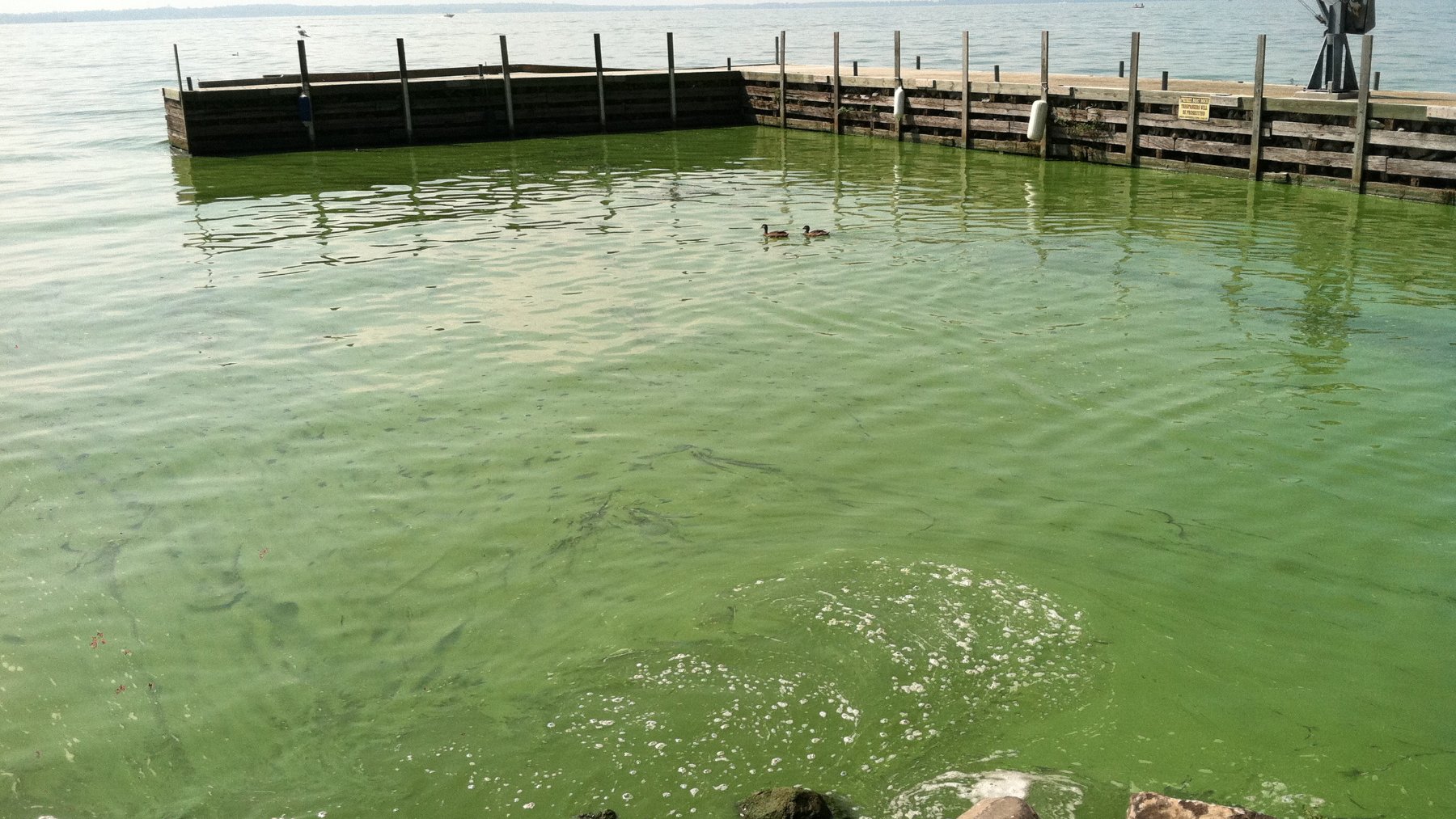
Excess nutrients, especially phosphorus, help fuel algae growth, and decomposition consumes oxygen when that organic material dies. During summer, warmer surface water sits above colder bottom water, restricting the mixing that would replenish oxygen below. Scientists commonly describe water containing less than 2 milligrams of dissolved oxygen per liter as hypoxic.
Climate change can tighten that squeeze by warming the water and increasing the separation between layers. Warmer water also holds less oxygen, although the severity of any particular season depends on several factors, including weather and nutrient inputs. Fish that need cooler water can face a difficult trade-off between temperature and oxygen availability.
Three years of tracking fish and their food
The broader project compared two contrasting study areas, Fairport with medium-to-high nutrient levels and Erie with lower levels. Researchers examined fish communities, mapped their distributions, assessed available prey, and studied diets and biochemical tracers to investigate feeding patterns. Together, those measurements offered more than a snapshot of what happened to enter a net.
The three-year window included substantial differences in rainfall, winter ice cover, and water layering. That variability helped researchers compare fish responses under different environmental conditions, but it did not turn a short field study into proof of a decades-long climate trend. The work was designed to help managers choose indicators for questions that unfold over different timescales.
One prediction did not hold up well. Scientists expected the degree of dietary overlap among selected species to change sharply during periods of stratification and hypoxia, but found little supporting evidence. The clearer surprise was spatial, with fish gathering near low-oxygen boundaries rather than simply spreading farther away.
These underwater boundaries do not stay put
The 2015 study showed that hypoxic areas could disappear and reappear elsewhere within hours, with internal waves moving low-oxygen water around the lake. “We were amazed by how quickly hypoxic areas moved during our study,” lead author and USGS scientist Richard Kraus said in the agency’s announcement.
Acoustic surveys revealed fish clustering along dead-zone edges, and catches were highest near those boundaries. This is “habitat compression,” with fish squeezed into a smaller usable space, not evidence that oxygen-starved water has become harmless. For someone interpreting a catch, location and timing can change the story considerably.
In separate research published in 2012, scientists found evidence that some yellow perch make feeding trips into hypoxic water, despite generally avoiding it. That suggests the boundary can be crossed temporarily, but it does not prove that prey attracts every fish gathering there.
What this means for fisheries monitoring
The project helped develop an interim decision rule for handling survey data collected during hypoxic events in yellow perch stock assessments. Its findings also helped the Environmental Protection Agency refine sampling of the central basin’s hypoxic zone, supporting the 2012 Great Lakes Water Quality Agreement’s objective of reducing hypoxia.
The study areas subsequently supported food-web sampling in the 2014 binational Coordinated Science and Monitoring Initiative. Researchers also recommended combining relatively inexpensive checks of fish condition and community composition with more demanding indicators suited to longer-term changes. Not every monitoring tool needs to answer every question.
For fisheries managers, the practical lesson is to read catch numbers alongside the conditions that shaped them, rather than treating a productive haul as proof of recovery.
The 2020 follow-up study was published in Fisheries Research.