Can a bottom trawl keep catching fish while one of its heaviest components stops scraping the seabed? A Spanish-led field experiment off Alicante has put that question to the test with semi-pelagic trawl doors, known as “flying doors,” which are designed to travel just above the ocean floor. The aim is to reduce direct contact and sediment disturbance without weakening commercial fishing performance.
The Spanish Institute of Oceanography (IEO-CSIC) led the work with Spain’s Ministry of Agriculture, Fisheries and Food and the General Fisheries Commission for the Mediterranean (GFCM), a regional fisheries body of the Food and Agriculture Organization of the United Nations (FAO). The campaign began on July 15 and was scheduled through July 22, with financing from the GFCM. Official announcements explain the methods but do not yet report findings, so this is a test of the technology rather than proof of a solution.
What the doors actually change
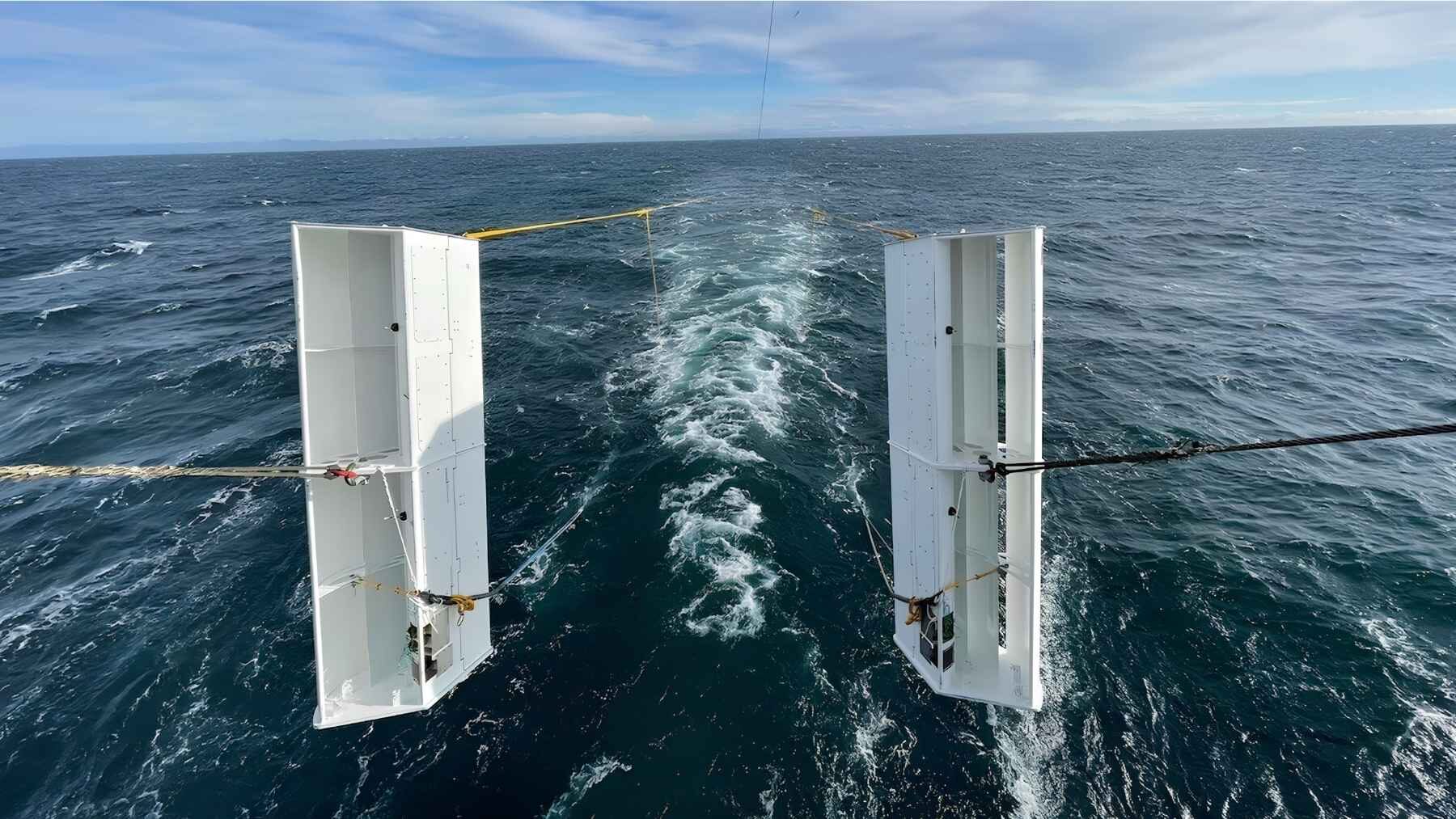
A trawl “door” is not a door in the household sense. It is a wing-like panel positioned on either side of the fishing gear, where water pressure helps spread the mouth of the net and keep it stable as the vessel moves. Conventional designs usually travel in contact with the bottom, while semi-pelagic versions are intended to hover slightly above it.
Think of the new design as an underwater wing. By producing spreading force through its shape and movement, it may disturb less sediment than a conventional door that relies partly on contact with the bottom. The Alicante trial is intended to measure how large that difference is under working conditions.
There is an important limit. The net remains a bottom trawl, and other components, including sweeps and ground gear, may still touch the seabed. Flying doors could reduce one part of the footprint, but they do not make the activity impact-free.
A commercial fishing test
Researchers used the same commercial bottom-trawl vessel for both configurations, testing one door type and then the other in the same fishing grounds. That reduces the noise created by comparing different boats, seasons, or locations. Essentially, it gives scientists a cleaner comparison while the crew works under normal fishing conditions.
The trials covered the Moraira and Altea grounds at depths of roughly 165 to 660 ft. Scientists planned to compare catch rates, species composition, gear geometry, door behavior, and day-to-day operating performance. “The objective is to determine whether semi-pelagic doors can reduce environmental impacts without compromising fishing performance,” said Sergi Tudela of the GFCM Western Mediterranean Technical Unit.
That second half is crucial. A device that protects the seabed but loses too much catch, handles poorly, or becomes unreliable in changing currents is unlikely to spread across the fleet. The experiment is asking an environmental question and a workplace question at the same time.
Mapping the invisible footprint
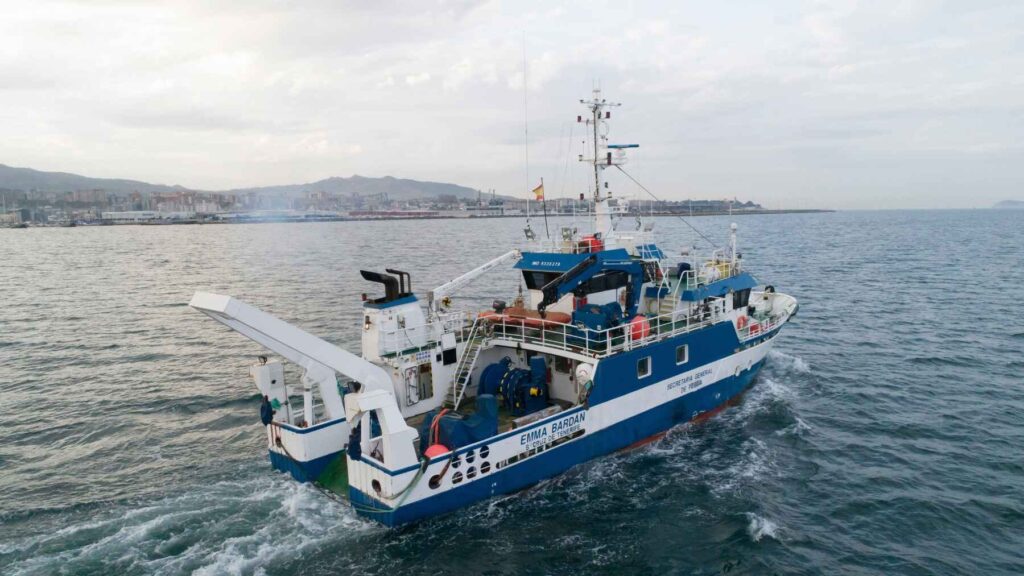
A commercial trawler cannot answer the whole question by itself, so the research vessel Emma Bardán also took part. The roughly 95-ft. ship was tasked with producing high-resolution maps of the seabed before and after trawling with each door type. Those images can reveal the physical trace left by both systems.
The vessel also profiled the water column and measured turbidity, which simply means how cloudy the water becomes when fine sediment is lifted from the bottom. It is a little like watching dust rise after a truck crosses a dry road, except the cloud forms underwater. Comparing those plumes can show which design resuspends more material.
Turbidity is useful, but it is not a complete ecological scorecard. A smaller plume and a lighter physical track would point to lower immediate disturbance, while longer-term effects on animals and habitats may require further study. That is why the paired mapping and water measurements matter.
Why fishing policy is watching
The technology is not being tested in a policy vacuum. Spain’s 2026 rules reserved 3% of the country’s allocated Mediterranean trawling days for distribution among eligible vessels whose owners committed to using flying, semi-pelagic, or other verified low-contact doors. The equipment had to be installed by July 15 and used throughout 2026 to retain the benefit.
That creates a practical incentive for fishers, especially when every permitted day at sea can affect income, crew schedules, and the supply reaching port, but incentives work best when managers can point to measured environmental gains rather than a promising label. The Alicante campaign could show whether the policy tool and the physical tool are pulling in the same direction.
The fishery targets valuable species including European hake, deep-water rose shrimp, red mullet, broadtail shortfin squid, Atlantic horse mackerel, and common pandora. A change that preserves catch performance while reducing contact could therefore matter beyond one vessel. Favorable results could influence gear choices across other Mediterranean ports.
What success would look like
The clearest positive result would combine several findings. Flying doors would leave a smaller seabed trace, produce less turbidity, keep the net open and stable, and deliver catches that are broadly comparable in quantity and composition. A win in only one category would be harder to translate into routine use.
Energy performance may offer another benefit, but it should not be assumed. A previous full-scale study in the Barents Sea reported about 17% lower energy use for a semi-pelagic trawl configuration than for a traditional bottom setup. Different vessels, depths, currents, and target species can change that outcome, which is why Mediterranean testing matters.
For now, the story is about evidence being collected, not a verdict. “Flying doors” sound almost effortless, but their value will be decided by maps, sediment measurements, catches, and how crews handle them on an ordinary working day. That is where a clever idea becomes useful technology or remains a promising experiment.
The official statement was published on the General Fisheries Commission for the Mediterranean website.