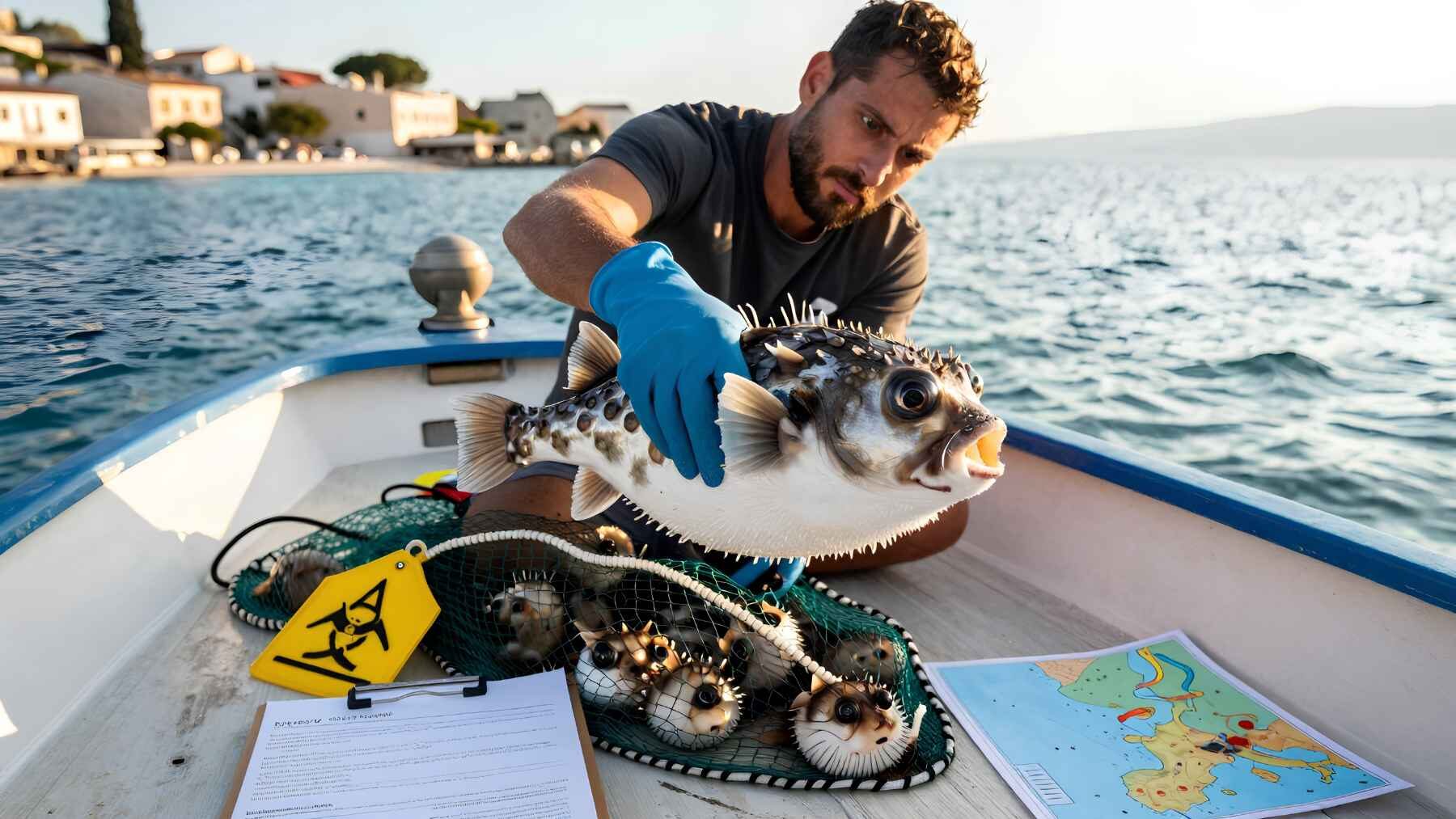
Have you ever pulled up a fishing net and found the catch half-eaten, the gear torn, and a strange fish with strong teeth still hanging around? For many professional fishers in parts of Greece, that scene has become less unusual as the silver-cheeked toadfish spreads through warmer Mediterranean waters.
Greece is now offering a cash reward of about $2.75 per pound for professional fishers who catch the toxic invasive fish, known locally as lagokefalos. The pilot program starts in Crete and the southern Aegean, where officials say the problem is most severe, and it is meant to protect marine ecosystems while giving struggling fishers a new source of support.
A bounty on an invader
The new program was activated by Greece’s Ministry of Rural Development and Food after announcements made on June 25, 2026, by Agriculture Minister Margaritis Schinas. It covers targeted fishing for the silver-cheeked toadfish, a species that officials describe as a serious threat to marine biodiversity, fishing activity, and fishers’ incomes.
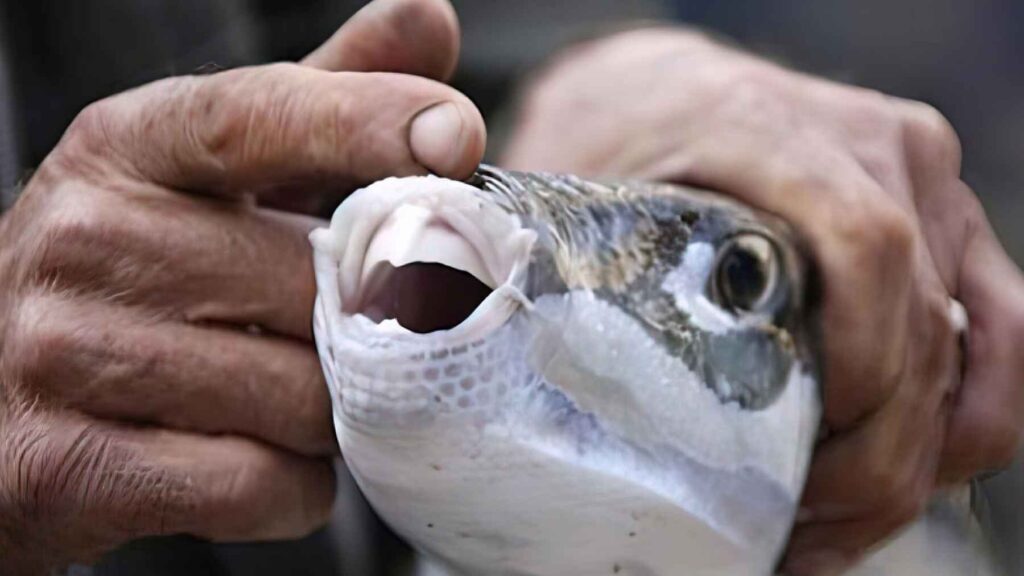
The reward is not meant to turn this fish into dinner. Quite the opposite. The silver-cheeked toadfish is part of the pufferfish family, and its organs and flesh can contain a powerful nerve poison that can be deadly if eaten.
In practical terms, Greece is paying fishers to remove a dangerous animal from the water and keep it out of markets. That is a tricky balance, because the goal is control, not consumption.
Why this fish matters
The silver-cheeked toadfish is an invasive species, which means it is living in a place where it did not originally belong and is causing harm. Scientists and European officials say it came into the Mediterranean through the Suez Canal from the Red Sea and Indo-Pacific region, a movement often called Lessepsian migration.
What makes it such a headache? It eats native species, damages fishing gear, and attacks fish already caught in nets or on lines. For a small fishing boat, that can mean less seafood to sell, more hours repairing equipment, and another bill landing on the table after a long day at sea.
The fish is also spreading in a sea that is changing. A 2026 study in Mediterranean Marine Science by Robbie Weterings and colleagues found that rising temperatures may have helped the species move into the Mediterranean and that full eradication is no longer realistic.
How the plan works
The Greek pilot program has a public cost of roughly $1.7 million and is co-funded through European resources. It will be managed through regional authorities in Crete and the southern Aegean, which are expected to organize ports where fishers can deliver and weigh their catches.
The plan also covers the practical side of the operation. Officials say the state will pay for collection, temporary storage, transport, weighing, special equipment, freezing, and final disposal. In other words, the fish are not supposed to move from the dock to the dinner plate.
After landing, the captured fish will be frozen and incinerated at local government facilities, according to Schinas. That may sound harsh, but for a toxic fish with no safe normal market, disposal is part of the policy.
Fuel costs and fishers’ frustration
The bounty is only one part of a broader fishing support package. Greece also announced temporary marine fuel subsidies of about 69 cents per gallon for April and May and about 52 cents per gallon for June, a measure aimed at lowering operating costs for professional fishers.
Still, the rollout has not pleased everyone. Fishers from regions outside the pilot area criticized the decision to start only in Crete and the southern Aegean, especially since the species is not politely staying inside neat government boundaries.
That complaint is easy to understand. If your nets are being ripped apart somewhere else, being told to wait for the next phase does not feel like much help.
Science backs the concern
A 2024 study in the journal Fishes led by Georgios Christidis, with researchers from the Hellenic Centre for Marine Research, the University of Crete, and the University of Patras, interviewed 141 fishers in Crete and the Ionian Sea. The team found that the economic damage was much worse in Crete, where the species was more abundant.
The study estimated that Crete’s small-scale fishers were losing about one third of their income because of the species, while losses in the Ionian region were far smaller. That difference helps explain why the pilot is starting in the south, even if it does not erase frustration elsewhere.
The researchers also reported that some fishers had changed their tactics, including fishing in deeper waters, reducing fishing time, or adjusting gear. That is not just a scientific detail. It is the daily routine of a job being reshaped by an animal few people knew about years ago.
A Mediterranean test case
Greece is not the first place in the region to try this kind of approach. Cyprus previously used an EU-backed program that paid professional fishers to land and register pufferfish catches, with the fish later destroyed through controlled waste management.
That example matters because invasive species rarely stop at borders. Warmer waters, shipping routes, and human-built canals have turned the Mediterranean into a moving map, with new species arriving and old balances changing.
For now, Greece’s program is a test. If it reduces damage without creating a risky food trade, it could become a model for other coastal areas facing the same toxic invader.
The official press release has been published by Greece’s Ministry of Rural Development and Food.