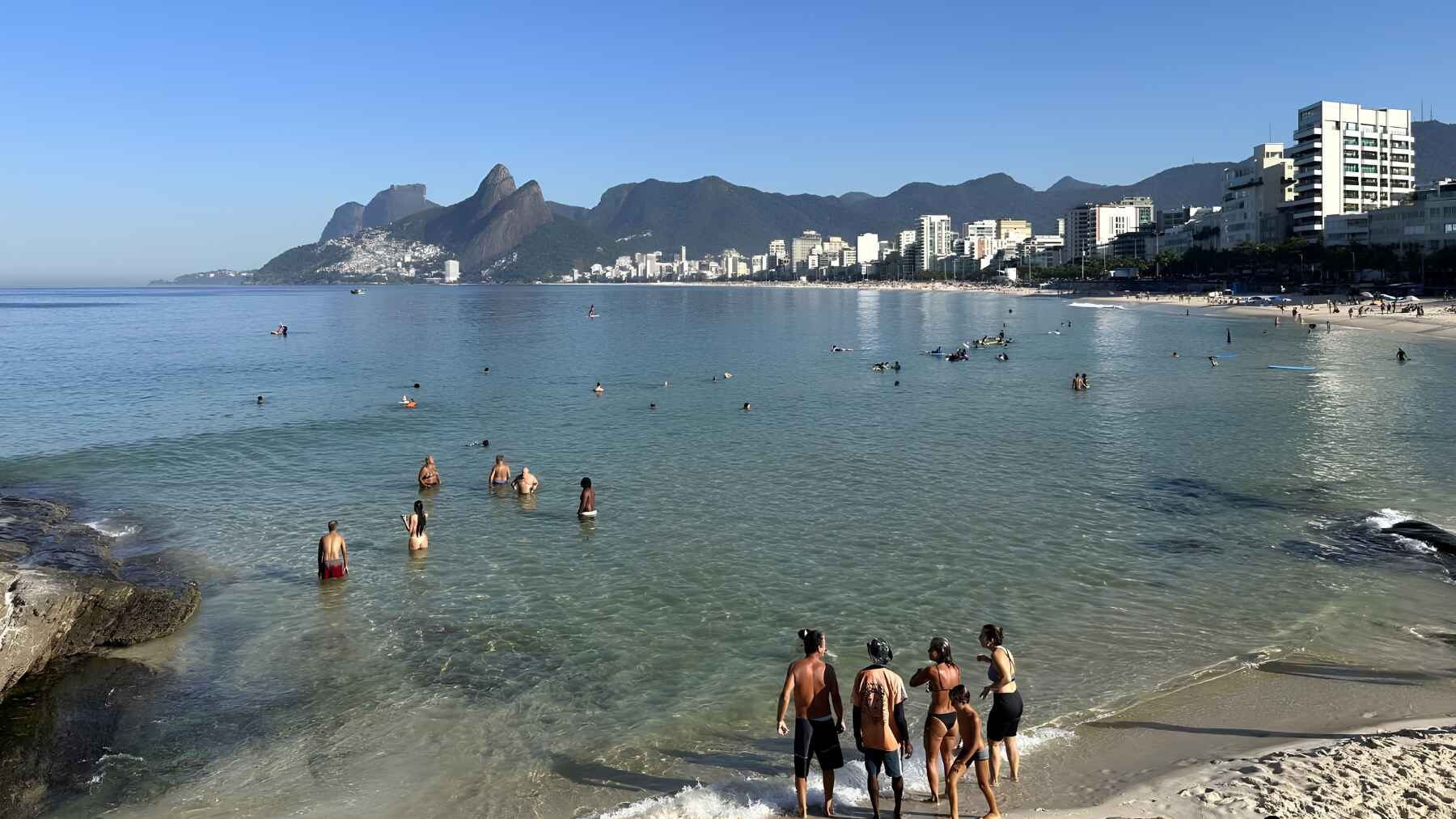
Ten years after Rio de Janeiro’s Olympic sailing events put its polluted waters under global scrutiny, Guanabara Bay is showing signs of recovery. On Flamengo Beach, where swimmers once avoided brown, foul-smelling water, clear mornings are becoming common enough for sea swimming schools to fill the sand.
The change is not a miracle, and it is not spread evenly across the bay. But sanitation works launched after 2021 are now keeping roughly 35 million gallons of sewage a day out of the water, while state monitoring and local reports point to a real improvement at Flamengo and nearby beaches.
A beach people used to fear
Rafael Oliveira has spent 15 years teaching physical education on the sand at Flamengo Beach. Until recently, he said, going into the water felt like a dare, the kind of thing only the boldest students would try after seeing floating trash and smelling sewage.
What changed? A project diverted wastewater that had been flowing into the area, and the water slowly began to look different. Oliveira said students started asking for swim lessons, and the beach now has more than 300 early-morning swimmers, plus several other sea swimming schools.
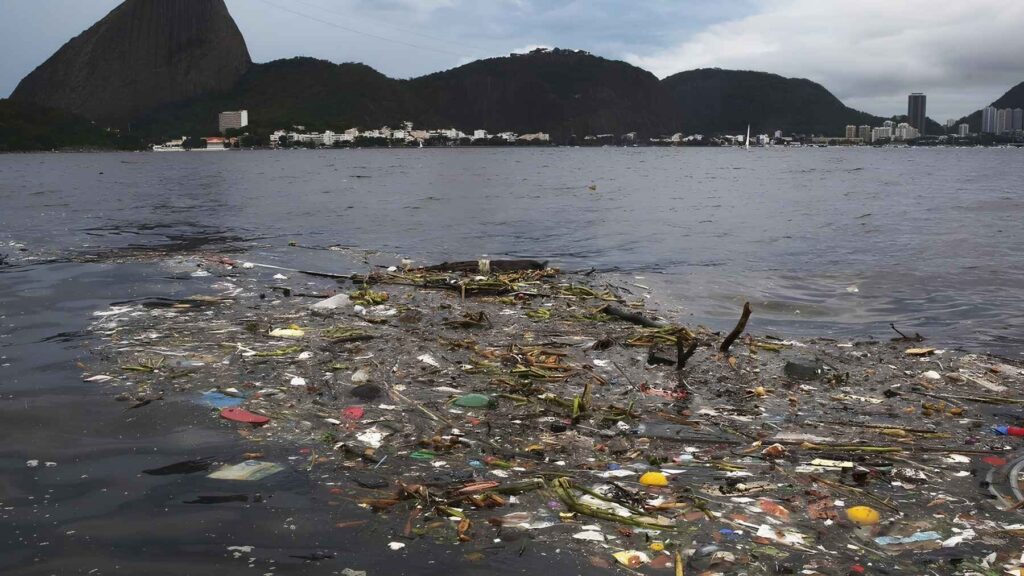
Why the bay became a sewer
Guanabara, a Tupí-Guarani name often translated as “breasts that feed the sea,” covers about 159 square miles. It is huge enough that Portuguese navigators mistook it for a river mouth in January 1502, which helped give Rio de Janeiro its name.
Today, the bay is ringed by more than 100 islands, mangroves, river deltas, airports, shipyards, ports, and neighborhoods. More than 8 million people live in its watershed, and in many low-income areas, sewage has long moved through open ditches or pipes straight into rivers and then the sea.
Sewers are changing the map
One of the biggest fronts is the Complexo da Maré, a group of favelas where about 200,000 people live along the bay. For the first time, a sewer network is being built there, with tunneling about 36 feet below wider streets and hand work in alleys that can be less than 2 feet wide.
The plan calls for more than 12 miles of new pipes. When finished in 2027, the work is expected to prevent about 343 million gallons of dirty water each month from reaching the bay, close to enough to fill 20 Olympic swimming pools every day.
The promise is bigger than one beach
The larger cleanup is tied to a water and sewage concession signed in 2021. Brazil’s National Bank for Economic and Social Development said the model was designed to bring sewage network access to 90 percent of people in the region by 2033, after decades in which only about half the population had sanitary sewage.
In practical terms, that means a mix of new sewers and “dry weather collectors.” These pipes catch wastewater moving through storm drains when it is not raining and send it to treatment plants, but Ana Britto, a sanitation and urban planning expert at the Federal University of Rio de Janeiro, warns they are only a partial fix because heavy rain can still push street filth and sewage into rivers.
The numbers bring hope, with caution
Rio de Janeiro’s State Environmental Institute reported in 2023 that Flamengo Beach had seen a 92 percent reduction in pollution over five years, comparing May and June of 2018 with the same months in 2023. State officials linked part of that progress to diverting about 5.3 million gallons of contaminated water a day away from the beach.
Even so, the broader picture is uneven. In 2015, only 31.5 percent of annual bulletins for bay beaches showed good water quality, while the figure rose to 44.7 percent in 2025, and Flamengo reached 80 percent clean-water days, according to the supplied figures. Sérgio Ricardo, director of the nonprofit Baía Viva, warned that beaches deeper inside the bay remain unsafe for swimming.
Wildlife is still hanging on
The bay was often described as dead during the Olympic years, but biologist Ricardo Gomes pushed back against that image. His documentary “Urban Bay”, presented through the Instituto Mar Urbano and described by the United Nations in Brazil, showed a damaged but living ecosystem with seahorses, rays, and other marine life still holding on.
That matters because recovery needs something to recover from. The source material describes about 30 dolphins still surviving in the bay, so few that researchers can tell individuals apart by marks on their fins, and two new calves have recently raised cautious excitement among observers.
Trash remains the other fight
Sewage is only one part of the problem. More than 99 U.S. tons of plastic waste reach the bay every day, and floating barriers on rivers are not enough when illegal dumps, missed garbage collection, oil spills, chemical runoff, and abandoned boats keep feeding the mess.
So is Guanabara Bay clean now? Not yet. But on clear mornings at Flamengo, swimmers are testing a different future, one that depends on whether pipes, trash collection, and political patience can keep moving faster than the tide.
The official information has been published by Águas do Rio.