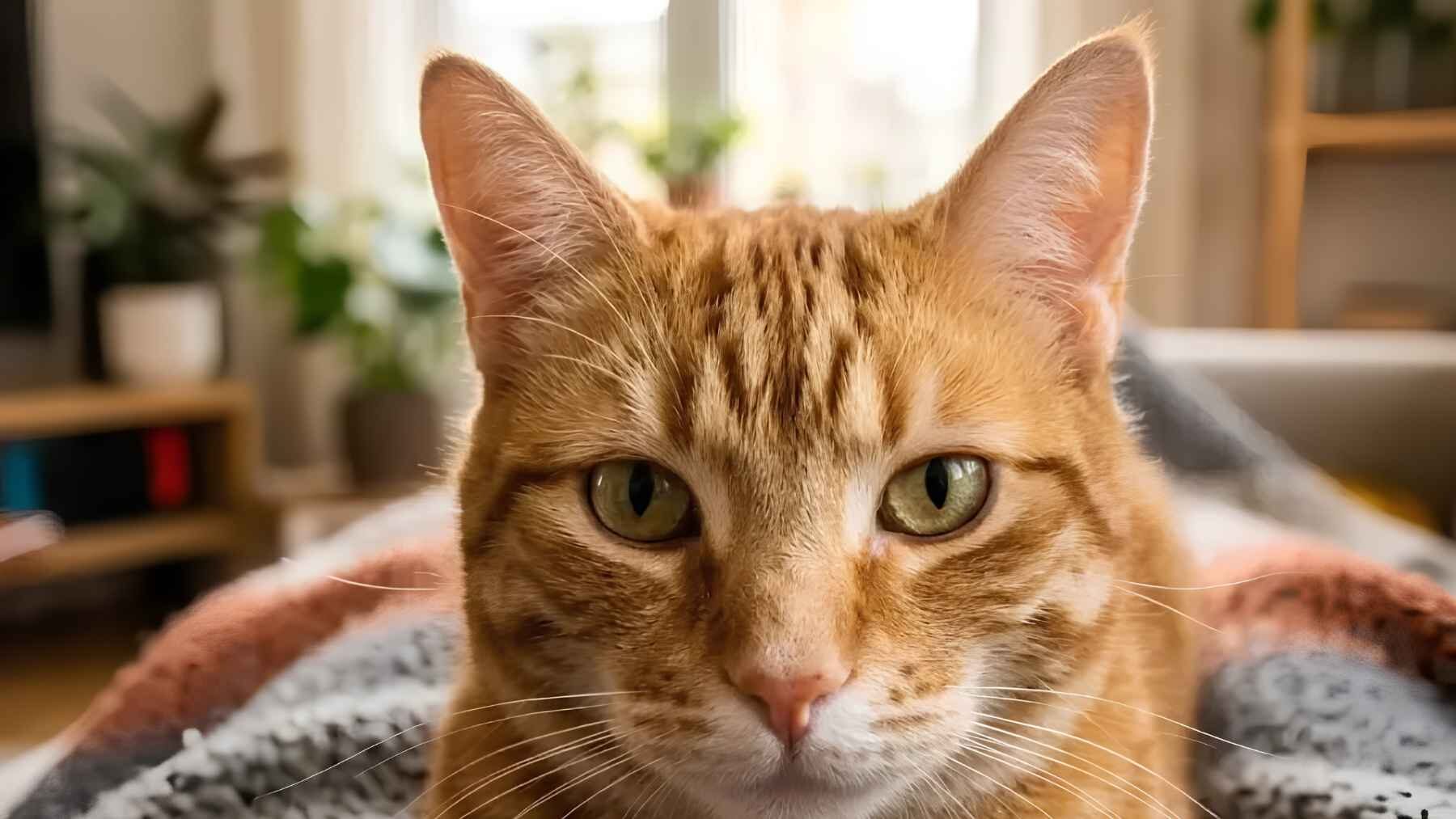
Have you ever watched an orange cat stroll into a room like it already owns the couch, the blanket, and maybe half the household? These marmalade-colored felines have long had a reputation for being affectionate, social, and easy to live with.
Veterinarian Carlos Gutiérrez says part of that image may come from something many owners overlook. “Almost all orange cats are actually tabbies, and that makes them very family-oriented,” he explained, while also warning that no cat should be judged only by appearance. UC Davis Veterinary Genetics Laboratory also notes that a sex-linked red or orange cat will show the tabby pattern, even when other genetics might normally make a coat look solid.
Why orange often means tabby
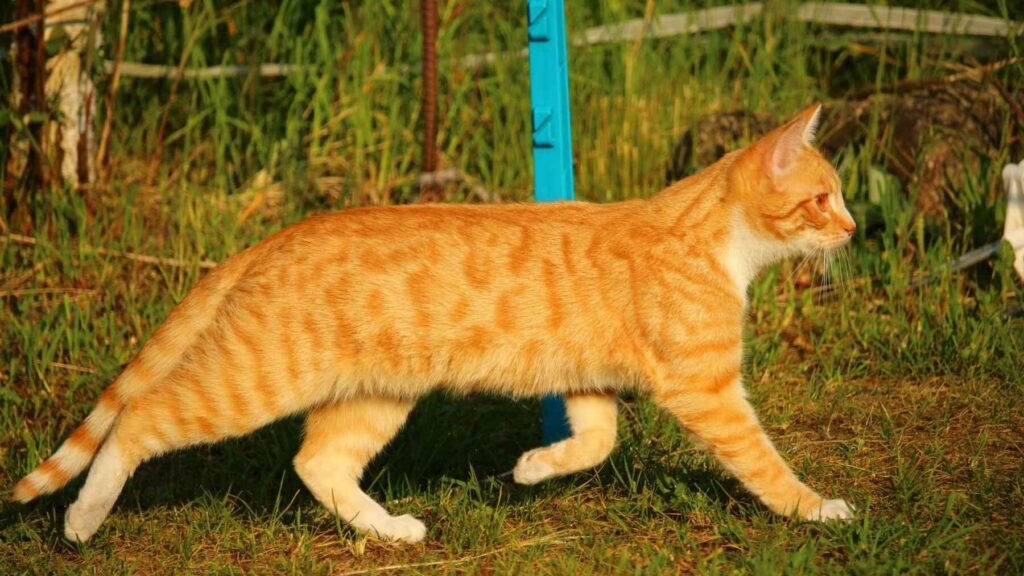
A tabby is not a breed. It is a coat pattern, one that can appear as stripes, spots, blotches, or circular shapes across different parts of the body.
That detail matters because many orange cats seem, at first glance, to be one smooth shade of pumpkin or cream. Look a little closer at the face, legs, tail, or sides, and the hidden markings often start to appear.
The markings are not always obvious
Gutiérrez explains that many owners do not realize their orange cats belong to the tabby group because the pattern can be subtle. In some cats, the stripes look bold and tiger-like. In others, they are faint, especially in lighter cream or softer gray tones.
So, what should you look for? Try checking the forehead, the tail rings, or the legs when the cat is sitting in natural light. That quiet little pattern may have been there all along.
The famous “M” mark
Many tabby cats also carry the well-known “M” shape on the forehead. Around this mark, stories and myths have grown for years, especially among cat lovers who see it as a mysterious little signature.
Gutiérrez keeps the explanation down to earth. The mark is not a special symbol or a sign of destiny. It is simply part of the way genetics distributes color across the coat.
Is personality written in fur?
This is where things get interesting, but also where caution is needed. According to Gutiérrez, tabby cats often stand out for being sociable, friendly, and drawn to family life, which helps explain why orange cats are so often described as affectionate pets.
Yet a coat is not a crystal ball. “You should not judge a cat only by its appearance,” Gutiérrez said, noting that temperament is also shaped by genetics, socialization, and the environment where the animal grows up.
That means the kitten handled gently from an early age, the adult cat adopted into a calm home, and the pet given predictable routines may all develop differently. The fur may offer a clue, but the household writes much of the story.
Science is still careful
Researchers have looked at cat color and behavior before, but the answer is not as tidy as internet jokes make it seem. One study on cat coat color and personality found that owners perceived some color groups differently, with orange cats often viewed as bold or friendly, but perception is not the same thing as proof.
A separate Stanford Medicine report on orange cat genetics makes the same point in a different way. Researchers found no clear difference in brain expression of the orange-linked gene between orange and non-orange cats, and one scientist noted that “there are not many scientific studies of the personality of orange cats.”
Effectively, this means the friendly orange cat stereotype may be partly based on real owner experiences, partly on tabby tendencies, and partly on what humans expect to see. Anyone who has ever blamed a knocked-over water glass on “orange cat energy” knows how quickly a joke can become a legend.
The gene behind the glow
The orange coat itself is not just folklore. In 2025, Stanford Medicine researchers reported that scientists had tracked down the long-suspected mutation that makes orange cats orange, solving a genetic puzzle that had lingered for about a century.
The key involves a sex-linked orange mutation on the X chromosome. Because male cats usually have one X chromosome, one copy of the mutation can make a male cat entirely orange. Female cats usually need the mutation on both X chromosomes to be fully orange, while one copy can contribute to tortoiseshell or calico patterns.
What owners should remember
For families choosing a cat, the takeaway is simple. An orange tabby may be sociable, playful, and eager to be near people, but that should be understood as a tendency, not a guarantee.
Shelters and homes are full of cats that break the stereotype. Some orange cats are bold greeters at the door. Others are shy observers who need time, patience, and a quiet corner before they trust anyone.
So, enjoy the stripes. Notice the “M.” Smile at the sofa king with the pumpkin coat. Just remember that every cat is still an individual, shaped by biology, care, and daily life.
The scientific study on orange coat genetics was published in Current Biology.