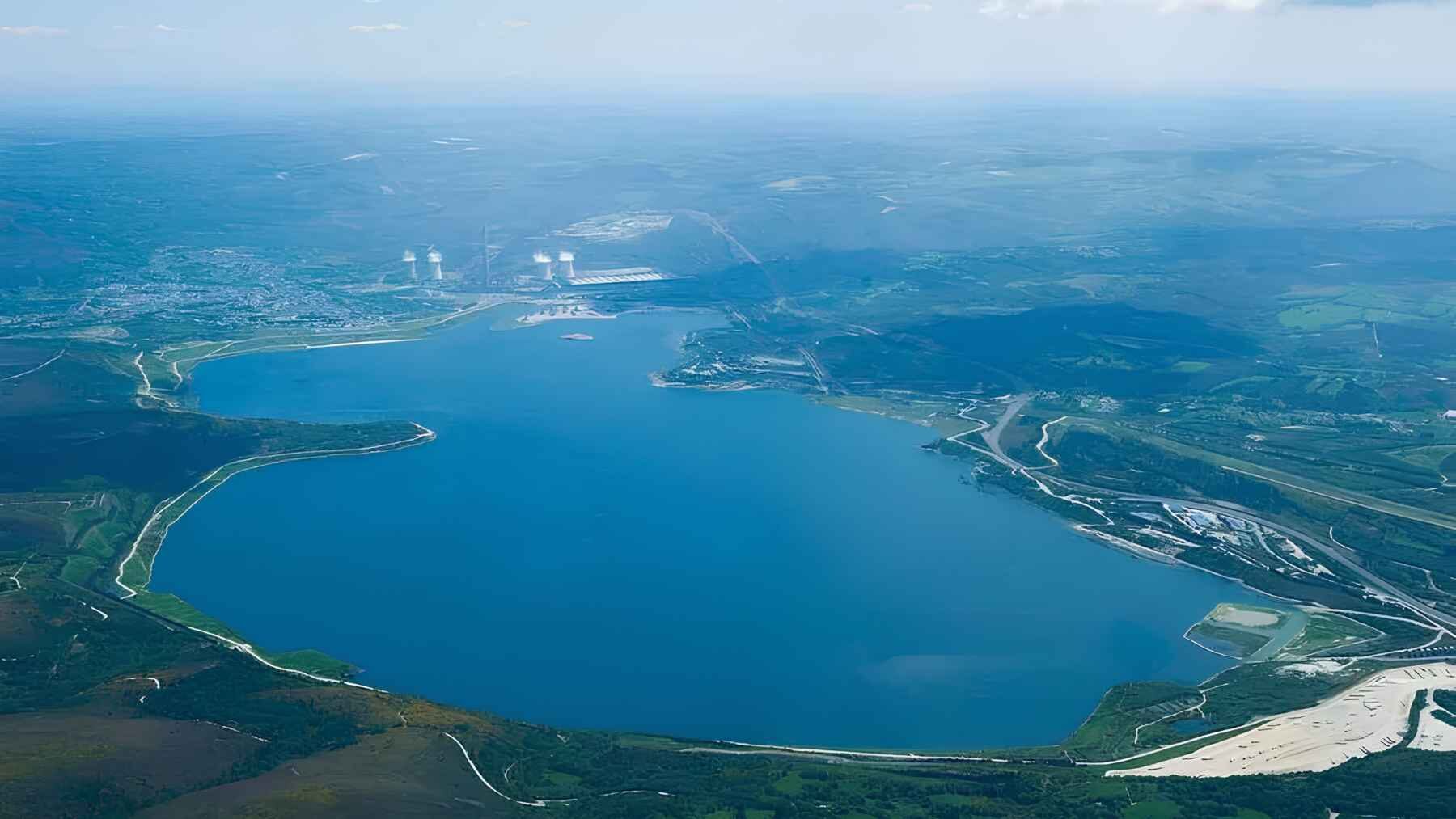
Engineers poured 144.5 billion gallons of water into a colossal brown-coal scar in Galicia, Spain, transforming one of Europe’s deepest open-pit mines into a sailing and swimming lake. Completed in 2012, the massive fill operation at As Pontes created a thriving ecosystem—though two distinct, unmixed water layers show the lingering impact of its industrial past
A vast coal scar
Early work at the site dates to 1943, with lignite production beginning in 1947 and Endesa taking control in 1972. The large open-pit operation closed on December 28, 2007, after producing roughly 262 million metric tons of lignite and moving about 697 million cubic meters of waste material.
By the end, the excavation stretched for several kilometers and reached close to 300 meters at its deepest point. That is the less photogenic side of brown coal, a landscape altered on a scale that no beach photograph can erase.
Why engineers chose water
The project team compared three choices, leaving the pit as it was, allowing rain to fill it slowly, or accelerating the process with water from surrounding basins and the Eume River. An environmental assessment favored the controlled option, helped by Galicia’s high rainfall and the availability of relatively good-quality surface water.
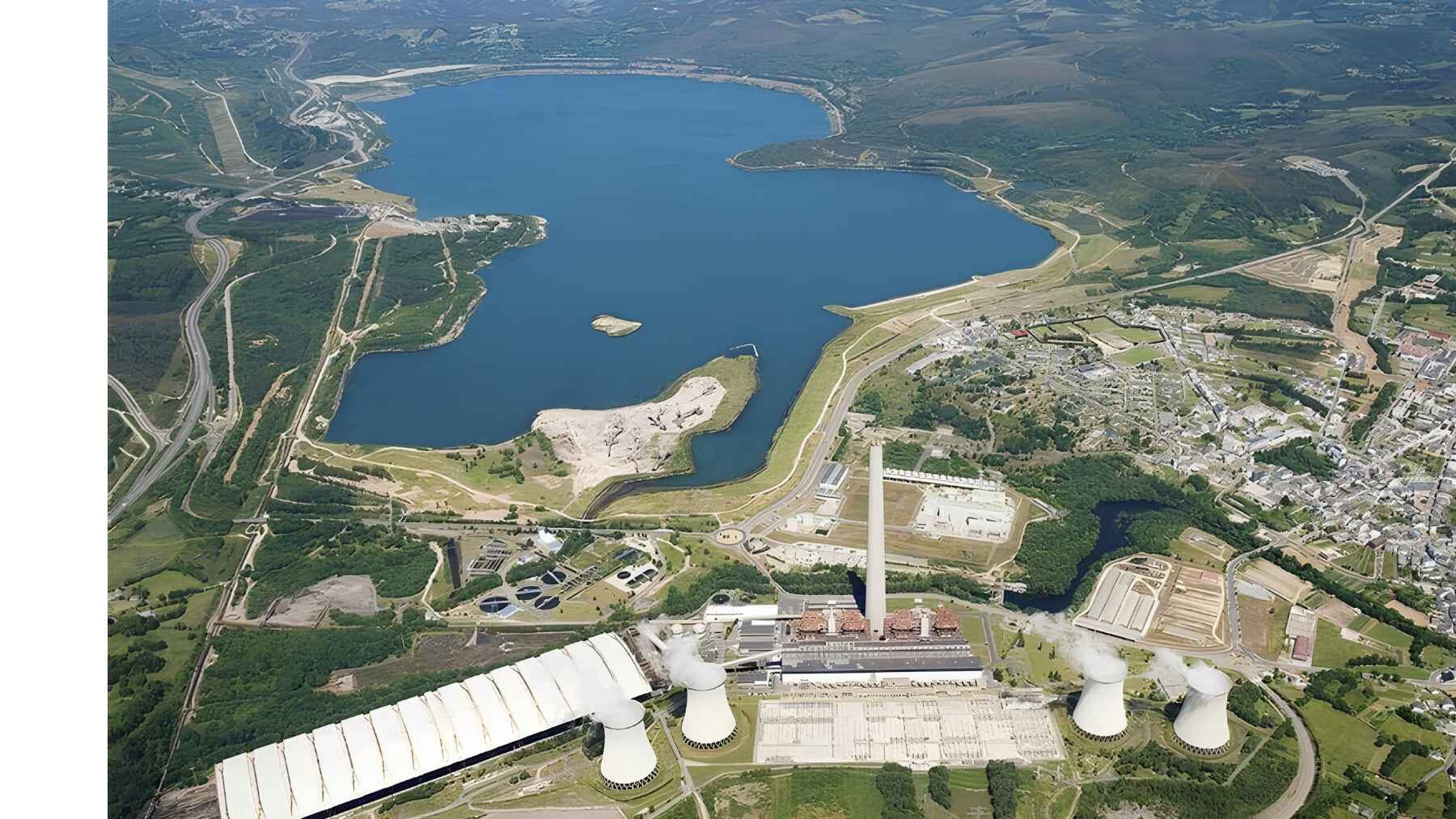
The final mix came from the Eume River, runoff from restored waste dumps, groundwater, and rain. Filling started before Eume water was available, however, so the job took 50 months rather than the 40 months initially estimated.
About those 547 billion liters
There is a small difference between the two principal scientific accounts. A 2019 hydrochemical study describes a 547-cubic-hectometer pit, while the broader 2023 engineering review reports 548 cubic hectometers.
Since one cubic hectometer equals one billion liters, both figures describe essentially the same enormous volume. In practical terms, the lake contains about 144.5 to 144.8 billion gallons—a difference of less than 0.2%.
One lake, two worlds
Measurements showed that As Pontes is meromictic, which means its deepest water does not fully mix with the upper lake during normal seasonal turnover. In the western basin, researchers measured a chemocline between roughly 102 and 132 meters below the surface in 2015.
Above that boundary, the water is oxygenated and only slightly acidic. Below it, denser water remains oxygen-poor and much more acidic, rather like a sealed basement beneath well-ventilated rooms.
What the water tests showed
Monthly testing at the overflow point in 2015 found pH values between 6.38 and 7.12, while sulfate stayed near 100 milligrams per liter against an authorized ceiling of 250. Aluminum, manganese, and iron were also below their respective maximum limits in the reported table.
The researchers noted two low-flow dates when measured concentrations exceeded authorized maxima, although they described the effect on the Eume River as limited. That nuance matters because clear beach water does not mean identical chemistry from the shoreline to the deepest bottom, and continued monitoring remains important.
A beach replaced the machinery
The lake now covers about 2,137 acres and includes a sandy beach designed both to absorb wave energy and provide access for swimming, sailing, and canoeing. Engineers also built treatment wetlands for acidic seepage and an ornithological island, while motorboats are prohibited on the water.
In 2026, the lake’s beach retained its Blue Flag for a sixth consecutive year. Spain’s Blue Flag program says the award recognizes legal compliance, accessibility, public health, environmental education, cleanliness, and safety, the everyday details that matter when families arrive with towels and kayaks.
Wildlife returned
Native birch, alder, and oak now dominate parts of the perimeter, while aquatic communities include wintering birds and fish. The 2023 study describes the ecosystem as young but naturalized and increasingly self-sufficient.
Endesa also reports “four different habitats” across the restored landscape, including meadow, scrub, woodland, and wetlands. None of this erases decades of extraction, but it shows how rehabilitation can produce ecological and social value when it is planned as engineering, not decoration.
A lesson for the coal exit
For planners confronting other open-pit closures, it may be tempting to see flooding as an easy fix. As Pontes shows otherwise, since water sources, exposed sulfides, chemistry, slope stability, wave action, wildlife habitat, and downstream discharge all had to be studied as parts of one connected system.
In the end, the lake succeeded not because water simply hid the scar, but because specialists treated it as a long-term living system.
The study was published in Boletín Geológico y Minero.