Bacteria taken from the flooded remains of a former uranium mine in eastern Germany immobilized up to 96% of the uranium dissolved in water during a 130-day laboratory experiment. The stimulated microbial community helped convert the contaminant into solid mineral forms that were far less likely to travel with groundwater.
The work, led by Antonio M. Newman-Portela, brought together researchers at the Helmholtz-Zentrum Dresden-Rossendorf and the University of Granada. It does not mean bacteria can suddenly make radioactive pollution disappear, but it reveals a promising way to trap uranium where it is, potentially adding a lower-waste tool to the cleanup of mines and contaminated aquifers.
A closed mine with a lasting problem
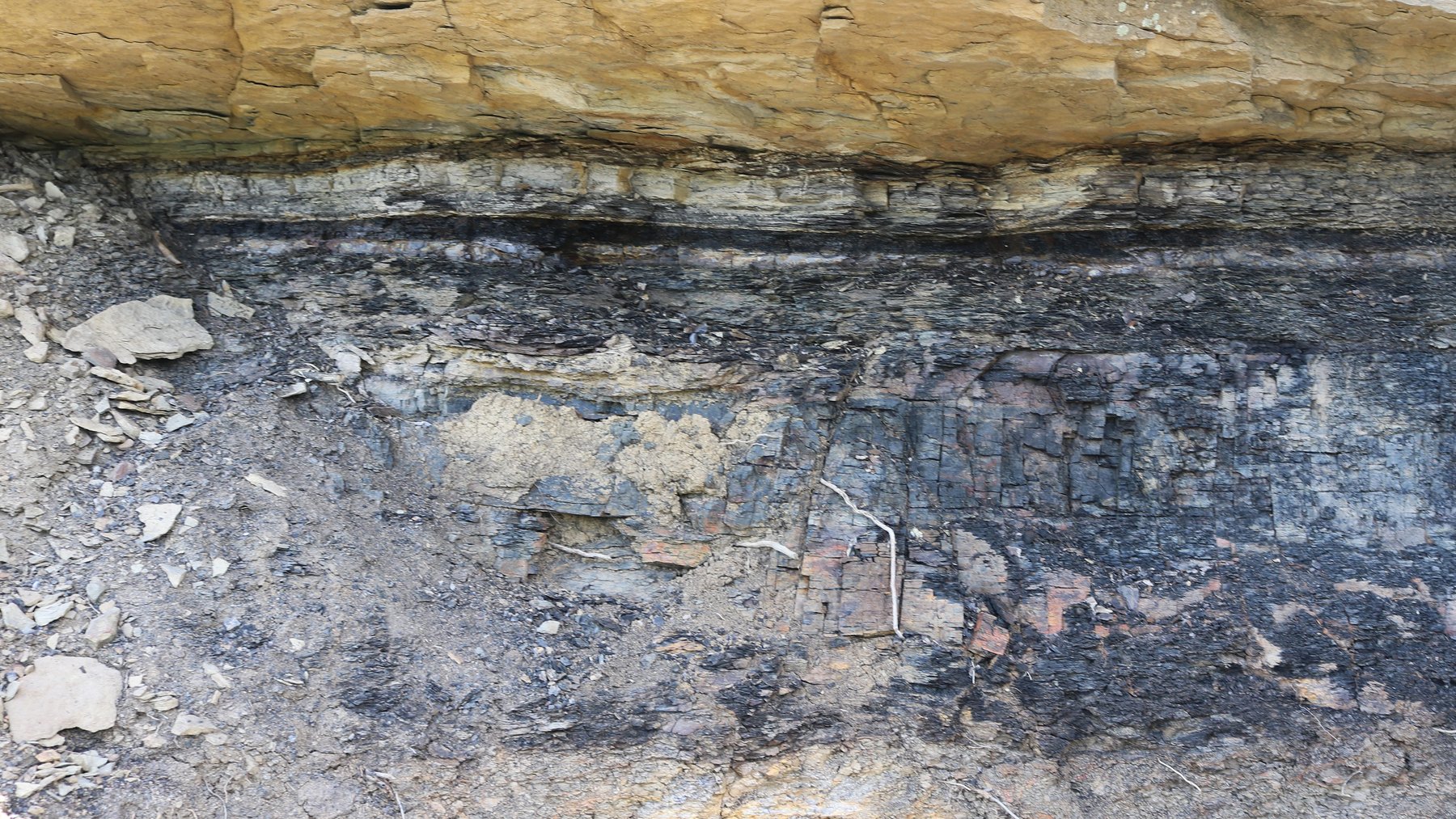
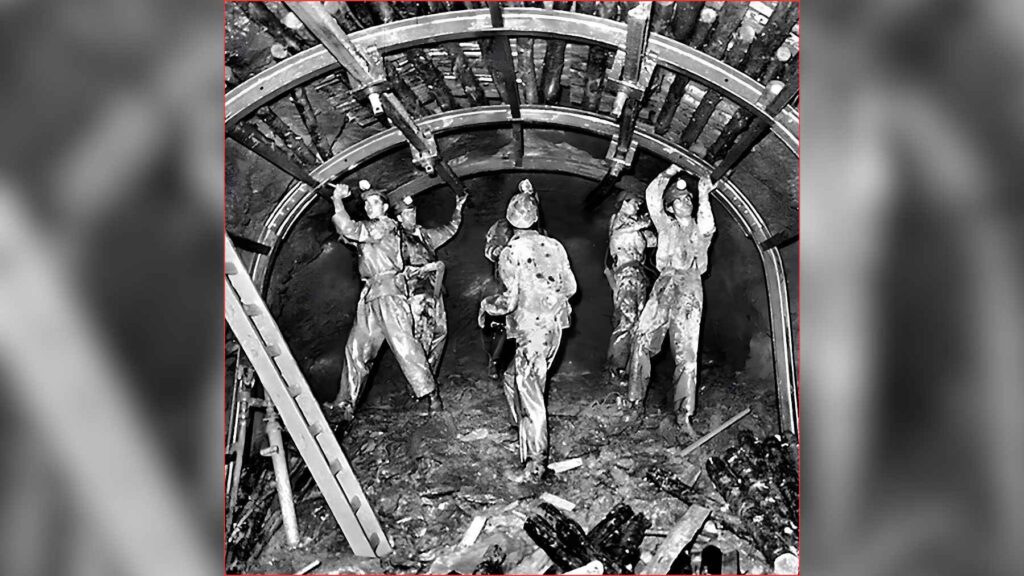
The water came from the Schlema-Alberoda mine in Saxony, once one of the world’s largest uranium operations. The site closed in 1990 and was gradually flooded, but contaminated water still requires continuous treatment before it can safely enter the surrounding environment.
That is the uncomfortable reality of uranium mining. A mine can stop producing ore, yet rain and groundwater keep moving through broken rock and waste, picking up uranium and carrying it toward streams or underground water supplies.
At Schlema-Alberoda, untreated mine water still contains about one part per million of dissolved uranium. For comparison, the U.S. Environmental Protection Agency allows no more than 30 parts per billion in public drinking water, although mine discharge and drinking water are regulated for different purposes.
How bacteria trapped the uranium
The researchers filled laboratory bottles with fresh mine water and kept them without oxygen, closely matching conditions deep underground. They then added glycerol, a simple carbon-rich compound that served as food and energy for microorganisms already living in the water.
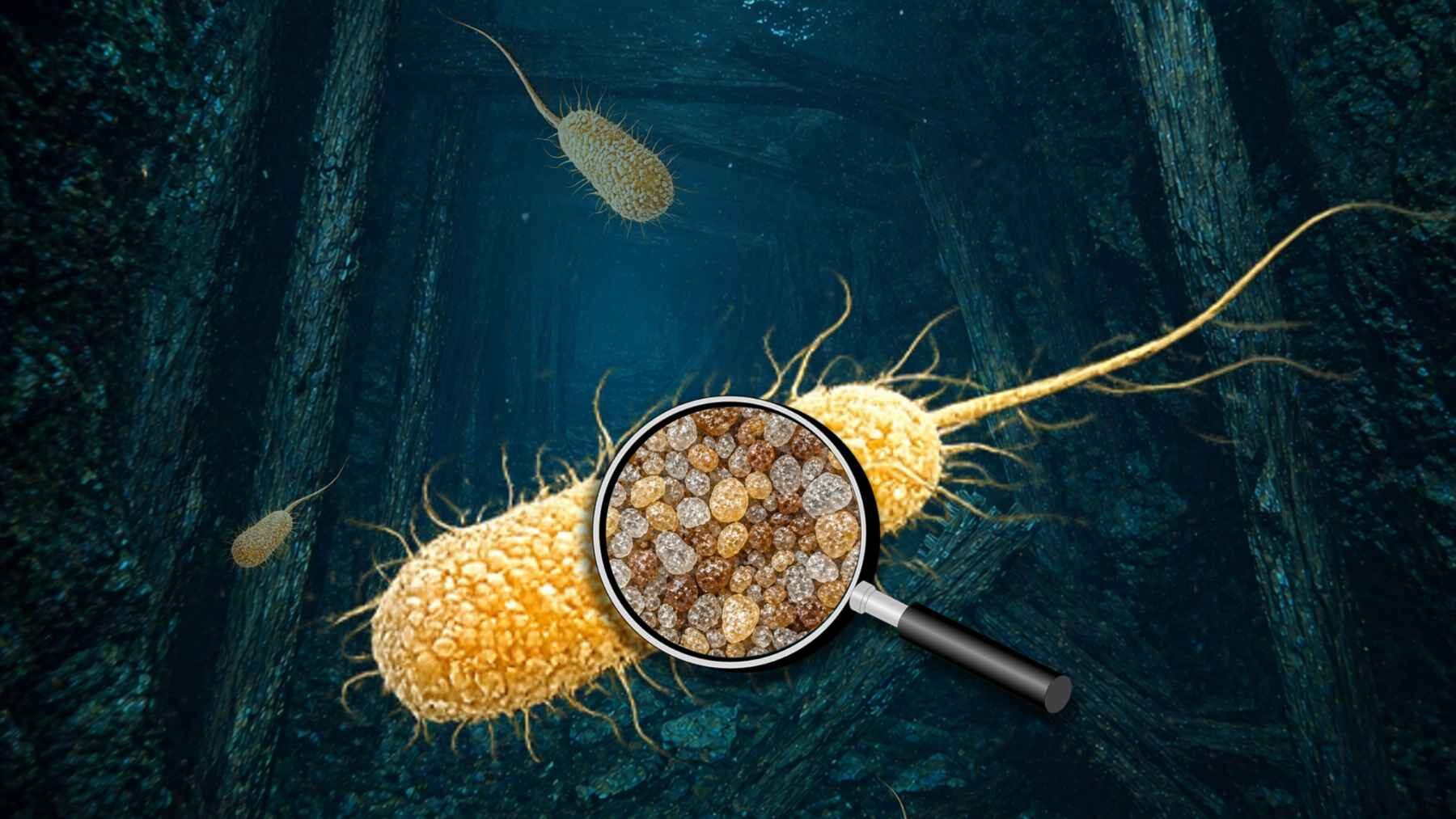
These bacteria were not genetically modified or introduced from somewhere else. They belonged to the mine’s natural microbial community, and the glycerol simply encouraged certain fermenting and sulfate-reducing groups to become more active.
A 2024 study had already found that glycerol worked better than two other food sources at stimulating uranium removal in this mine water. The new research went further by identifying the minerals that formed and testing whether the trapped uranium remained stable.
What changed inside the water
Uranium can exist in several chemical states. The form commonly dissolved in oxygen-rich water, called hexavalent uranium, is relatively mobile and can move through soil and rock with groundwater.
The bacteria helped push it into pentavalent and tetravalent forms. In practical terms, that changed uranium from a contaminant that could ride along with the water into particles more likely to settle out or remain attached to solid material.
Scientists detected uraninite, a well-known uranium mineral, along with carbonate complexes and a stable iron-uranium compound containing pentavalent uranium. Tiny uranium-bearing particles gathered on bacterial cell surfaces, while a dark precipitate formed in the bottles as the experiment continued.
The 96% result
The uranium concentration began at about one part per million. After 130 days, it had fallen to roughly 40 parts per billion in the glycerol-fed systems, a reduction of up to 96%.
The control tests matter here. Uranium declined by about 25% in bottles without glycerol and by 36% in sterilized bottles that contained glycerol, probably because some uranium stuck to surfaces, dead biomass, or existing mineral particles. The live systems also recorded reductions of about 98% for iron, 68% for sulfate, and 44% for arsenic, showing that the microbes were reshaping the water’s chemistry as a whole.
Still, 40 parts per billion is slightly above the EPA drinking-water limit of 30 parts per billion. That comparison does not turn mine water into drinking water, but it is a useful reality check. Impressive removal is not the same thing as a finished treatment system.
A surprisingly stable uranium form
For years, pentavalent uranium was often treated as a brief stepping-stone between the mobile hexavalent form and the less mobile tetravalent form. This study found that it could persist for the full 130 days without oxygen and remain detectable after four weeks of exposure to air.
Why does that matter? Uraninite can sometimes react with oxygen and release uranium back into water. The stable iron-uranium particles could provide another line of defense by slowing that return when underground conditions change.
The researchers wrote that the finding “offers new insights for sustainable remediation strategies.” It does not prove permanent stability in a real mine, but it challenges the tidy idea that uranium moves through only two important chemical states.
What happens before field use
Bioremediation uses living organisms or their natural processes to break down, remove, or immobilize pollutants. Here, the aim would not be to destroy uranium, which bacteria cannot do, but to lock it into solids that are less likely to spread through water.
A future system might complement chemical treatment and reduce some of the repeated chemical use and secondary sludge produced at mine sites. However, the results will vary from place to place depending on oxygen, acidity, iron, carbonates, and other metals. That is where the hard work begins.
Researchers still need to identify which microbes perform each step, test the method at larger scales, and confirm that the uranium minerals stay put for years rather than months. Until then, this is a strong laboratory result and a possible direction for cleaner treatment, not a ready-made cure for uranium-contaminated water.
The main study was published in Nature Communications.