An old wind turbine blade is not necessarily finished when it stops turning. In 2022, the U.S. Department of Energy (DOE) reported that Tennessee’s Carbon Rivers had recovered glass fiber with 99.9% purity from retired blades, opening a route back into manufacturing.
But recovering usable fiber is only part of recycling. Official local records document cleanup concerns at a Carbon Rivers site, and a July 2026 news report describes state enforcement action. The underlying 2026 order and inspection report could not be independently reviewed for this article.
Cleanup concerns deserve a closer look
Draft minutes from a December 11, 2025, Oak Ridge Reservation Communities Alliance meeting record a call for cleanup enforcement at the Carbon Rivers site. Roane County Executive Wade Creswell asked for “the strongest enforcement available from TDEC,” referring to Tennessee’s environmental regulator.
Ecoportal reported on July 27, 2026, that the Tennessee Department of Environment and Conservation had ordered the company in February to stop accepting material and clear its processing site within a year. Its update, citing case SWM25-0034, also described inspectors reporting escaping shredded fiber and no demonstrated viable market during a July 21 visit.
According to the same report, Carbon Rivers neither admits nor denies the findings and says a customer ended its purchasing agreement in early 2025. It also reported a company commitment to clear the site by February 2027.
Why wind turbine blades are so difficult to recycle
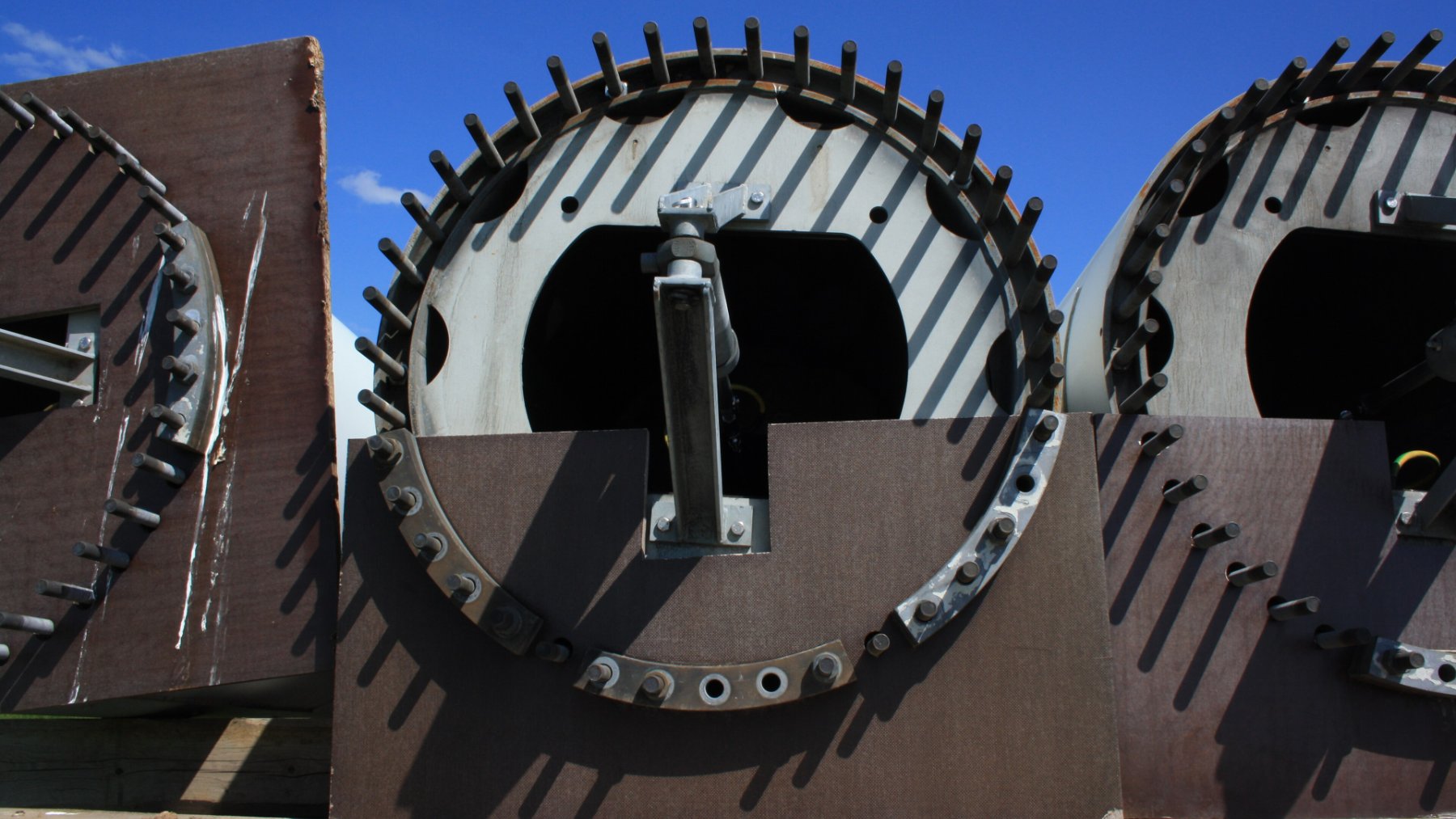
Blades are built from reinforcing fibers bound in tough resins, a combination designed to be strong, lightweight, and durable. Those tightly bonded materials are much harder to separate than familiar metal components, which is why blade recycling cannot simply follow the same route as scrap steel.
Carbon Rivers’ approach starts by shredding blades into smaller pieces, according to a 2023 U.S. Chamber of Commerce facility visit. The material then undergoes pyrolysis, which uses intense heat without oxygen to break down the resin and separate it from the glass fibers. This is an industrial separation process, not a giant oven swallowing an intact blade.
The process also produces gas and oil that can be used for energy, according to DOE. That is a useful recovery pathway, but it is not evidence that a particular plant operates without emissions or other environmental impacts.
What 99.9% purity actually tells us
That impressive figure describes the cleanliness of the recovered glass fiber. It does not mean that 99.9% of an entire blade becomes new fiber, nor does it measure how much material a factory sells.
DOE identified potential uses including car panels, building materials, and reinforcement for new composite products. Some recovered fiber can also be remelted and blended with newly made fiberglass. In everyday terms, material from a retired blade could eventually turn up in a vehicle or the roof over someone’s head, provided it meets the manufacturer’s requirements.
Could that recovered fiber go straight into any new product? The answer depends on the application, and DOE’s broader recycling assessment emphasizes tailoring recovered materials’ properties to their next use. A potential ingredient still has to meet a factory’s specifications.
Why the 50,000-metric-ton figure needs context
The frequently repeated claim that Carbon Rivers had recycled “a few thousand metric tons” and was building capacity above 50,000 metric tons a year comes from a DOE article dated October 17, 2022. Those were a historical processing figure and an expansion plan, not a verified statement of today’s annual output.
What matters is the whole chain. DOE’s January 2025 recycling assessment identifies material demand, disposal fees, transportation distances, and workers as factors in economic viability. A useful fiber still needs a buyer, a suitable application, and an affordable trip from the recycler to the factory.
In that 2022 announcement, Carbon Rivers’ Bowie Benson said, “With Carbon Rivers’ novel process, today’s decommissioned blades can become tomorrow’s wind turbine blades and electric vehicles.” That describes an ambition worth testing against current production and sales, not treating as an accomplished industry-wide transition.
The bigger lesson for wind energy
There is also an important distinction between a blade and the turbine it came from. DOE reported in January 2025 that existing U.S. infrastructure could process about 90% of decommissioned turbine mass. That is potential capability, not proof that 90% is actually recycled, and blades are not the only difficult components.
For communities and wind farm owners, the practical test is whether recovered materials move safely into real products, rather than merely changing the location of a waste pile.
The draft December 2025 meeting minutes were published on the Oak Ridge Reservation Communities Alliance website.