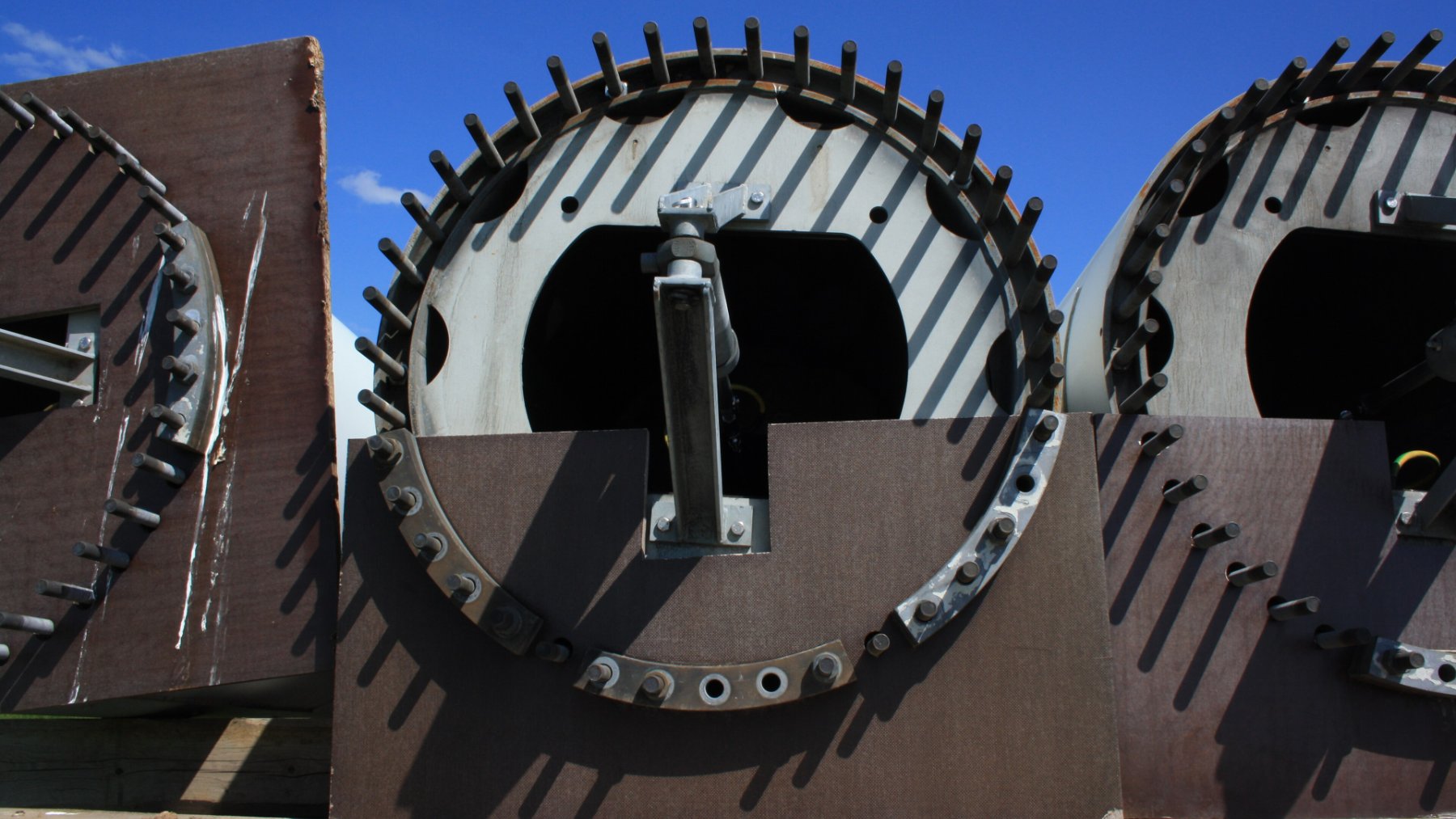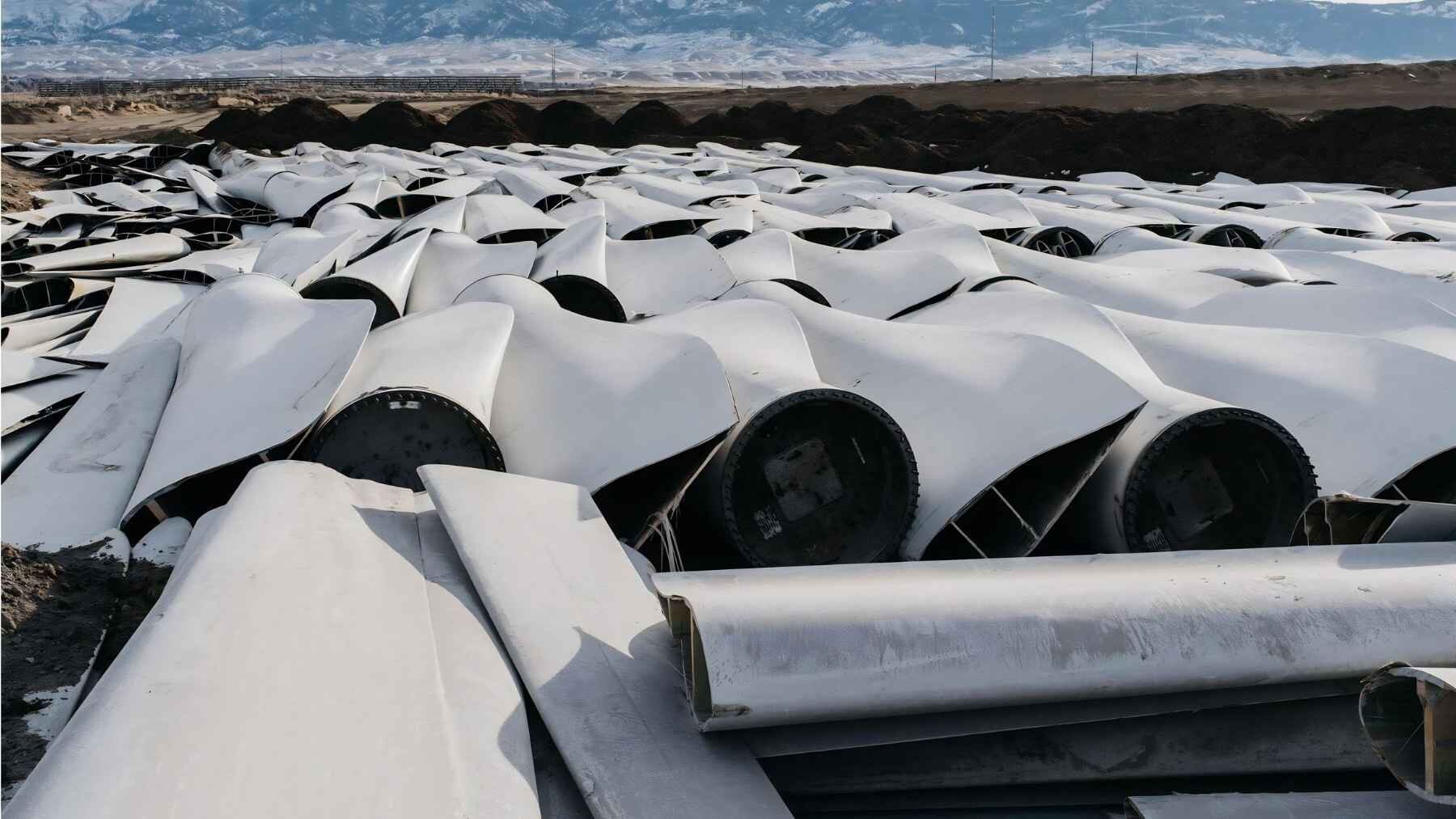
On the high plains outside Casper, Wyoming, crews used heavy equipment to saw giant 120-foot wind turbine blades into three truck-sized sections before lowering them into a landfill trench. By Sept. 16, 2020, the facility had buried 1,124 of the giant blades — capturing one of clean energy’s most persistent dirty secrets.
The story has moved on. A facility in Louisiana, Missouri, now shreds retired blades for cement kilns and says it has processed more than 7,000 since 2020, while European engineers are putting old blades into bridges and installing new ones made with resin that can later be separated.
Why these blades went underground
Casper’s landfill began receiving blades in 2019 after regional wind farms were repowered with newer equipment, and crews cut each 120-ft. blade into three roughly 40-ft. pieces while nesting smaller sections inside larger ones to conserve space. A 2024 follow-up reported that no blades had arrived since mid-2021, making the famous trench a historical episode rather than evidence of an uninterrupted current trend.
That elaborate packing job exists because blades are engineered to resist bending, storms, and fatigue for decades. Their glass-fiber-reinforced composites are strong and lightweight, but conventional thermoset resin acts like baked cake batter — once it sets, a permanent bond forms that cannot simply be melted and reshaped like many everyday plastics.
The cement route in Missouri
GE and Veolia launched their U.S. program in 2020. Veolia says nearly 90% of a blade’s weight can be reused, with more than 65% replacing raw cement ingredients and about 28% supplying kiln energy, while an environmental analysis cited by GE estimated a 27% net reduction in cement-production CO2 emissions compared with traditional manufacturing.
Veolia’s current program page reports more than 7,000 blades processed and says each one can displace about five tons of coal, 2.7 tons of silica, 1.9 tons of limestone and one ton of other raw materials. Consequently, this process serves as a material recovery route rather than closed-loop blade-to-blade recycling, directing the composite into cement production rather than a new rotor.
When a blade becomes a bridge
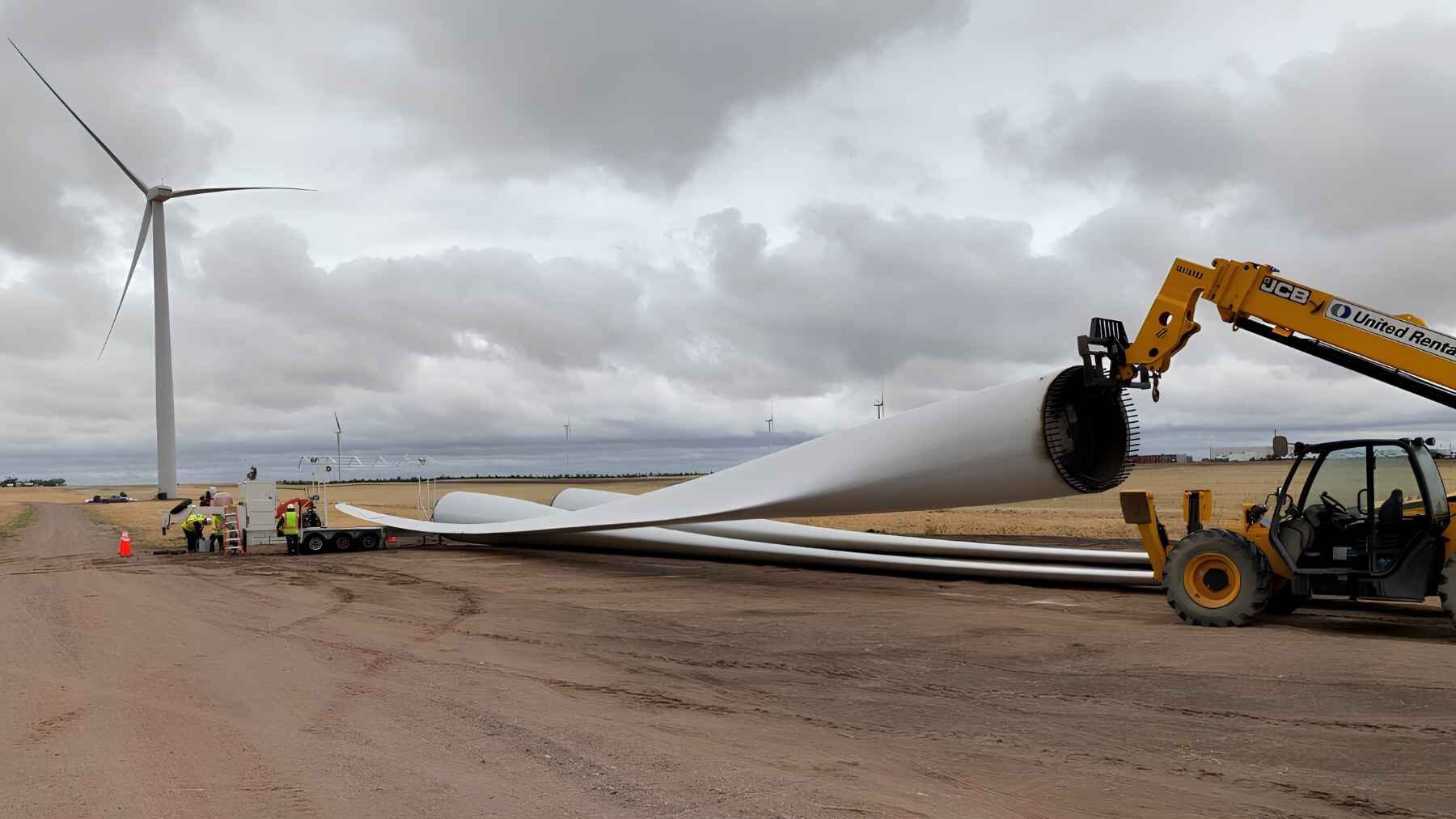
Not every solution requires grinding. In County Cork, Ireland, the Re-Wind project used two retired LM 13.4 blades as the main girders of a pedestrian bridge spanning about 16 ft. on a former railroad corridor.
The 2022 installation was only the second such bridge in the world, following an earlier project in Poland. Clever? Absolutely — however, the U.S. Department of Energy expects annual blade retirements eventually to reach 10,000 to 20,000 by 2040, so bridges are better suited to high-value local reuse than mass processing.
The number behind the warning
A peer-reviewed study published in 2017 estimated that cumulative wind turbine blade waste could reach roughly 43 million metric tons worldwide by 2050. That figure describes material accumulated over time, not a prediction that 43 million tons will suddenly appear every year.
For the United States, the Department of Energy projects between 200,000 and 370,000 tons of blade waste per year by 2050, still less than 0.15% of the combined municipal and construction waste sent to landfills in 2018. The national share looks small, but the local problem is real because long, hollow sections can consume scarce landfill capacity surprisingly quickly.
New blades are built to come apart
The most promising fix begins before the turbine ever spins. Siemens Gamesa’s Recyclable Blade uses a resin that can be dissolved in a mild, heated acid solution, allowing glass fiber, plastics, metals and wood to be separated and prepared for reuse.
By November 2025, RWE had completed the installation of 150 such blades across 50 turbines at its Sofia offshore wind farm in the United Kingdom, following an earlier demonstration at Kaskasi in Germany. Those blades will not retire for years, but their design changes the end-of-life question from “where can we bury it?” to “which materials can we recover?”
The next test is scale
Europe’s wind industry began a self-imposed landfill ban for decommissioned blades on Jan. 1, 2026, and expects the region’s annual volume of retired blade material to rise from about 20,000 metric tons in 2025 to 55,000 in 2030. That commitment is not the same as a government ban, but it increases the pressure to build enough collection, transportation, and processing capacity.
For now, the practical hierarchy is to keep blades operating safely for as long as possible, reuse whole sections where engineering allows, recover material through processes such as cement co-processing, and treat burial as a last option.
The latest official program figures were published on Veolia North America website.