Could the next big home battery already be humming in a laundry room, garage, or utility closet? Researchers say Australia’s water heaters could quietly absorb surplus solar power at a scale equal to more than 2 million household batteries.
Research director David Roche, working with Chris Briggs and Ed Langham at the University of Technology Sydney, put the scale plainly. “That’s the equivalent of over 2 million home batteries,” he said. At the July 15 exchange rate, their estimate of yearly savings equals about $4.2 billion in U.S. dollars.
Batteries changed the grid
Australia’s battery boom has already changed when the country relies on gas-fired electricity. Nearly 450,000 batteries were installed through a federal incentive program within its first 12 months, while large batteries connected directly to the grid also expanded.
The effect now shows up in the Australian Energy Market Operator’s market data. During the first quarter of 2026, batteries shifted more than three times as much electricity from sunny daytime hours into the evening, helping push average wholesale prices down 12 percent and gas generation to its lowest quarterly level since 1999.
That helps explain why fears of an electricity-price shock linked to conflict involving Iran have not materialized so far. Batteries are not the only reason, but they have reduced the grid’s need for costly gas when people get home, switch on appliances, and face the day’s highest demand.
Why hot water matters
Hot water is a surprisingly large piece of the household energy puzzle. Australian government guidance says water heating accounts for 15 to 30 percent of home energy use and can produce up to 25 percent of an average home’s greenhouse gas emissions.
Then there is the sheer amount of water involved. One person uses about 13 U.S. gallons of hot water a day, so a family of four may heat roughly 53 gallons, using around 13 kilowatt-hours in a conventional electric tank.
That daily energy use is close to the capacity of some home batteries. A gas water heater can cost a family about $700 or more each year after currency conversion, while a well-timed electric system paired with rooftop solar could bring the hot-water portion of the electric bill close to zero.
A battery made of heat
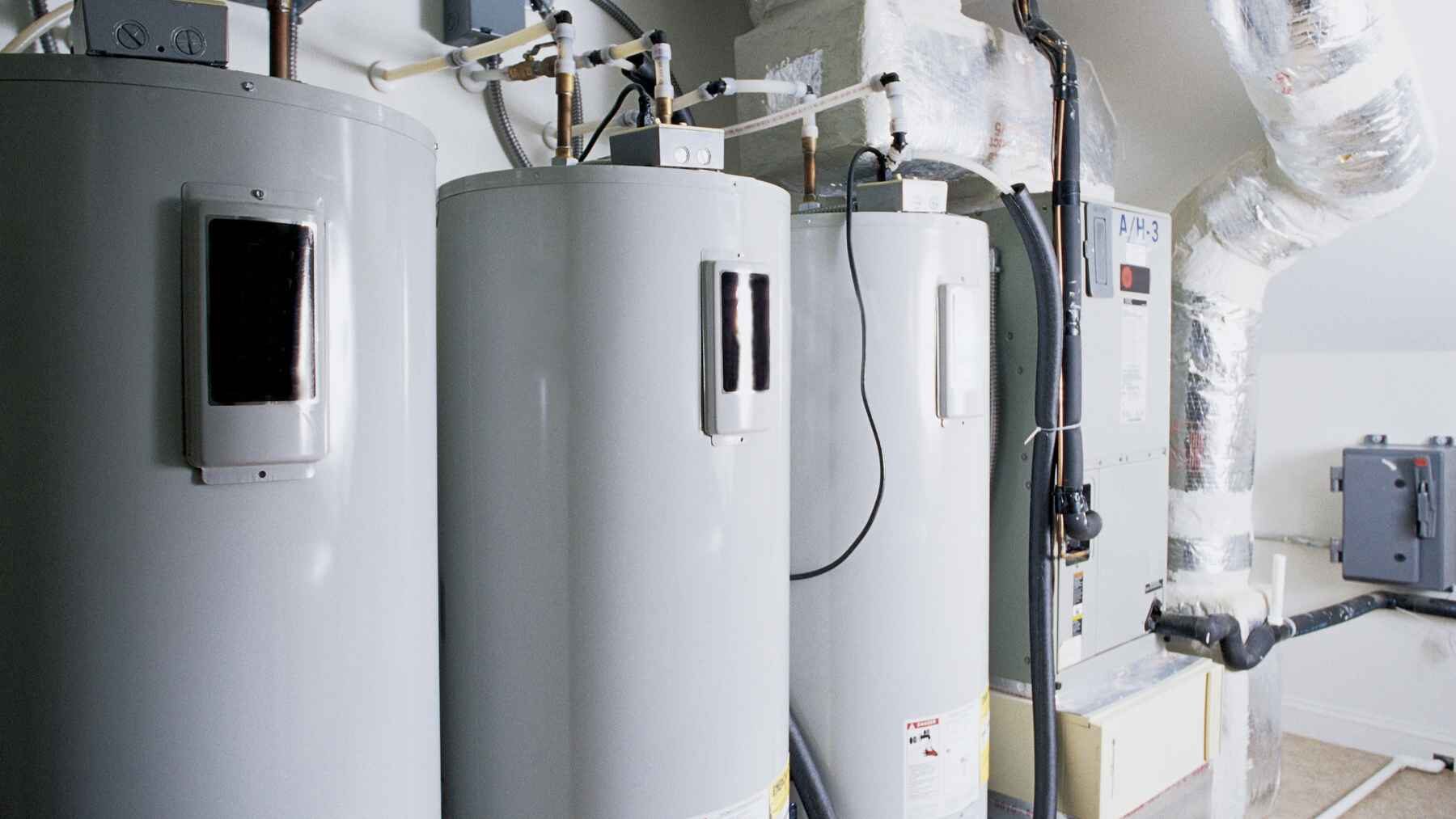
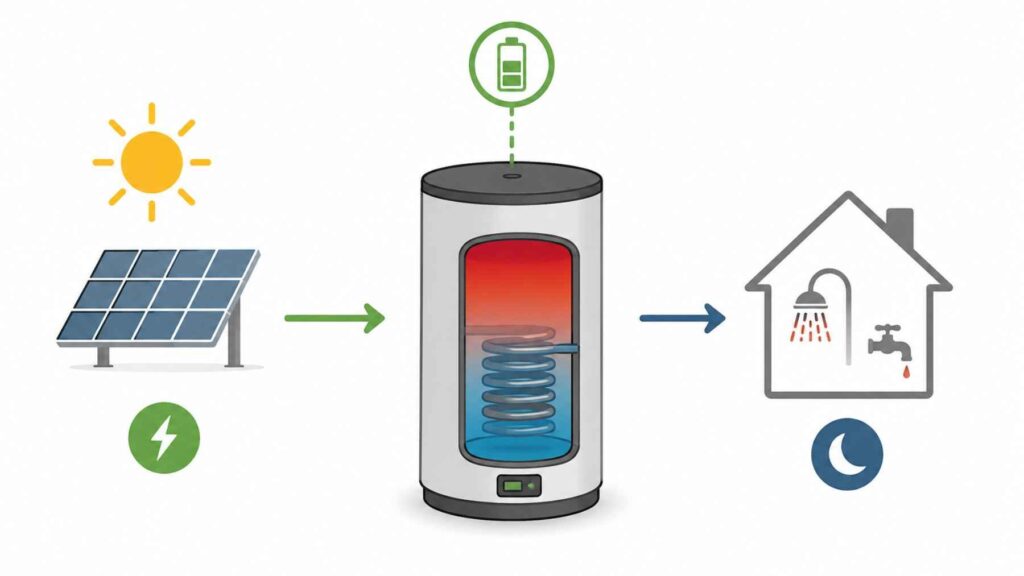
A smart water heater does not store electricity in the usual sense. Instead, it converts cheap or excess electricity into heat, keeps that heat in an insulated tank, and delivers hot water hours later when someone takes a shower or turns on the kitchen faucet.
In practical terms, the tank becomes a thermal battery. A timer or smart meter can tell it to heat during the sunny middle of the day, rather than during the crowded evening peak, without asking the household to change its morning routine.
Heat pump water heaters can stretch that advantage further. They work much like a refrigerator in reverse by pulling warmth from the surrounding air, and Australian government guidance says they use about 30 percent of the energy required by a conventional electric water heater.
Free midday power changes the math
A new electricity plan makes this idea more relevant for people without rooftop panels. Australia’s Solar Sharer Offer began July 1 in New South Wales, South Australia, and southeast Queensland, giving eligible households three free hours of electricity in the middle of each day.
Renters and homeowners can participate without owning solar, but they need a smart meter and must opt in. The plan does not erase the whole electric bill, since supply charges and electricity used outside the free window still cost money, and some water heaters on special controlled-load circuits may need rewiring before their schedules can change.
Still, the opportunity is easy to picture. Heat the tank during the free period, store that energy as hot water, and use it later for showers and dishes, when electricity would otherwise be more expensive.
What a national program could look like
The researchers argue that governments could treat smart water heaters much as they treated rooftop solar and home batteries. Rebates could lower the upfront cost, while a separate upgrade program could add timers or smart-meter controls to older electric tanks that still work.
Updated efficiency standards could also require new systems to include scheduling controls. Just as important, public support would need to reach renters, apartment residents, social housing providers, and shared buildings, groups that often miss out when clean-energy incentives mainly reward owner-occupied houses.
There are real limits. Heat pump systems cost more to buy, compressors can make noise, and some models are not designed for winters that regularly fall below 41 degrees Fahrenheit. Smaller, quieter designs and stronger installation standards would be essential for apartments and homes with little outdoor space.
What water heaters cannot do
A hot-water tank cannot run the lights during a blackout or send electricity back to the grid, so it is not a direct replacement for a chemical battery. Its value comes from moving one large, predictable household demand to hours when clean power is abundant and cheaper.
At the end of the day, the idea is simple. Heat the water early, use it later, and take pressure off both the grid and the electric bill.
The official research report has been published by the Australian Renewable Energy Agency.