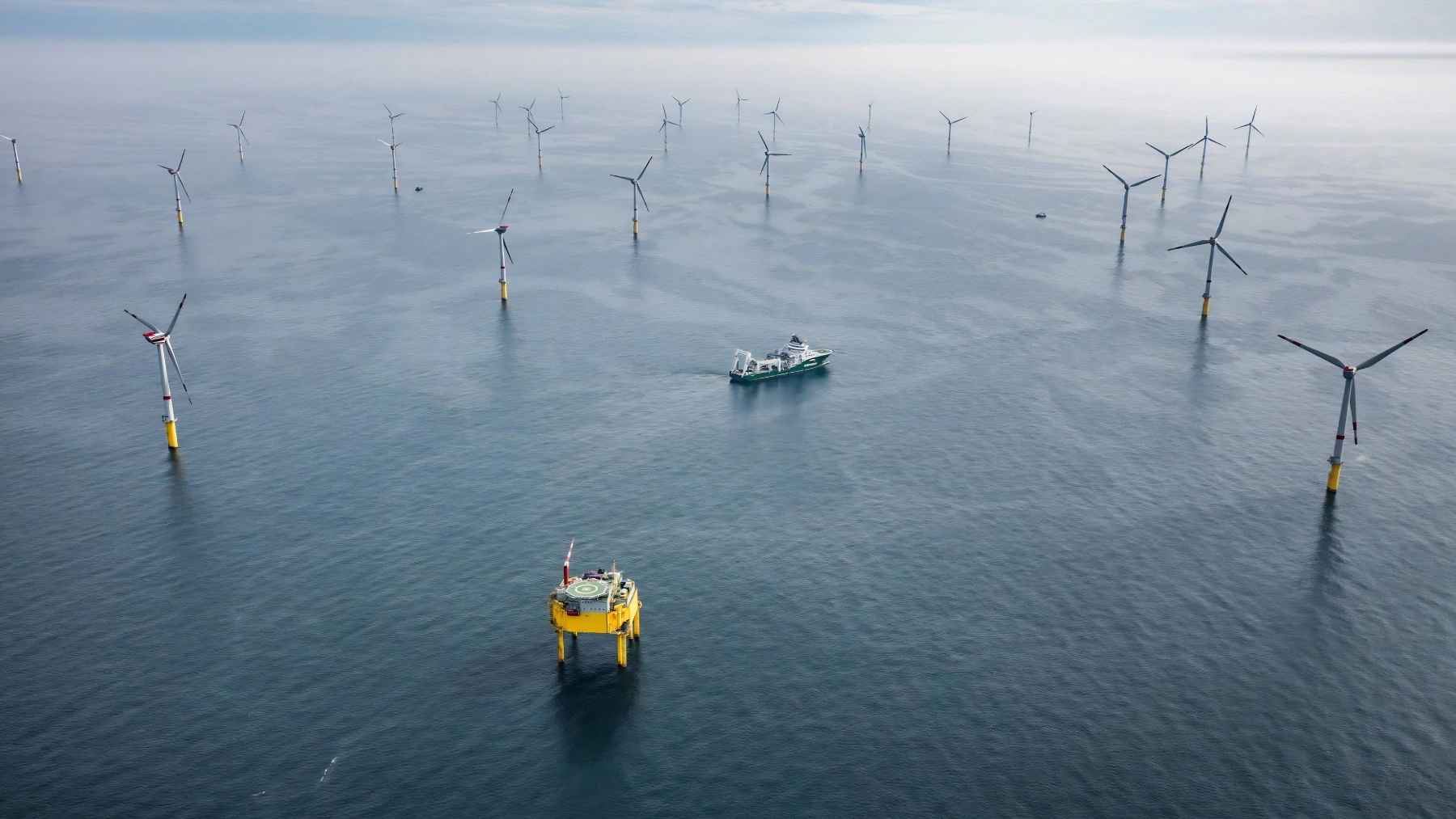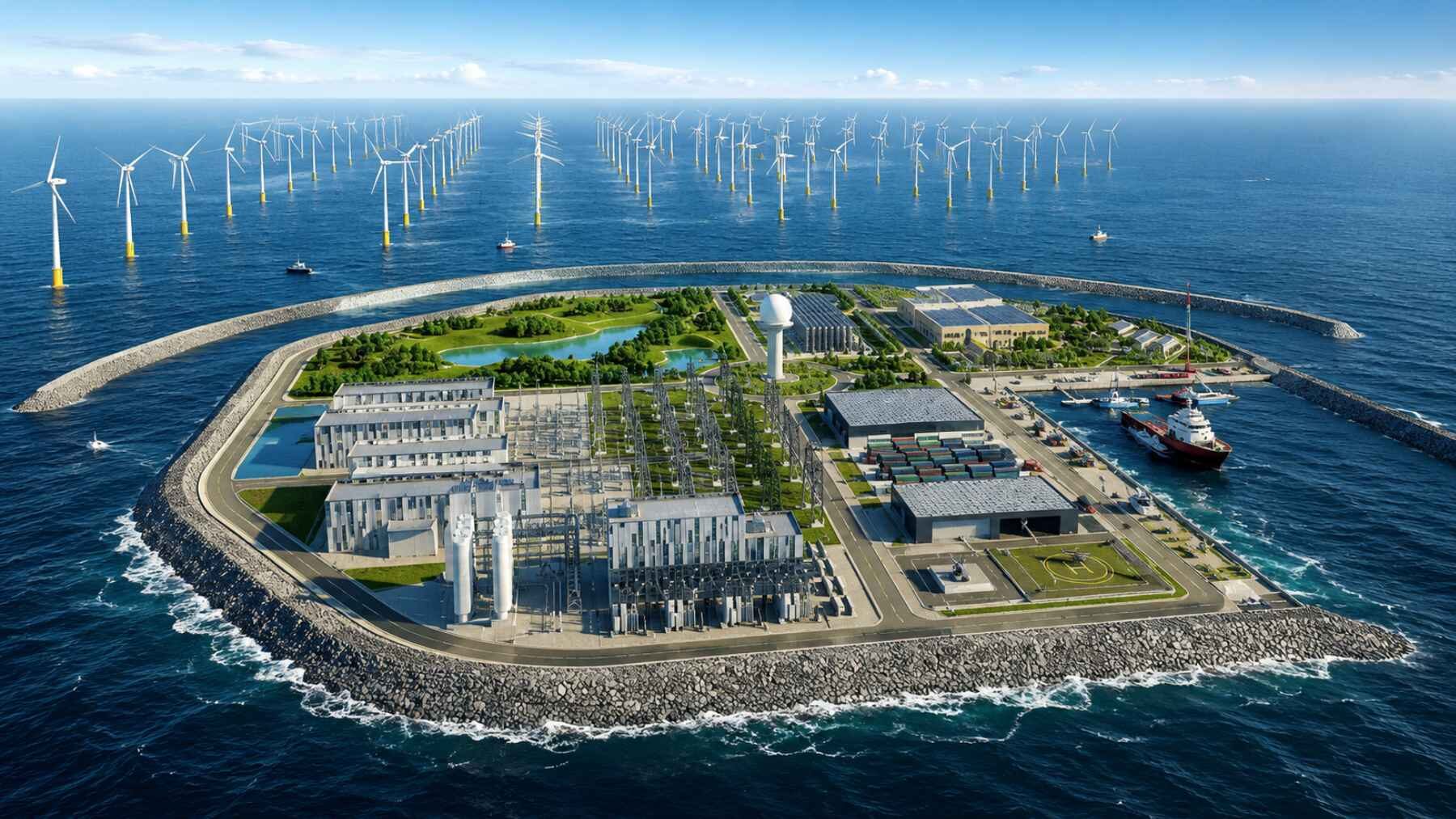
Denmark’s boldest offshore wind idea is not another row of turbines. It is a man-made North Sea island designed to collect electricity from vast wind farms and send it across northern Europe, with a planned 10-gigawatt capacity described as enough for 10 million European households.
But that headline number comes with a reality check. Rising costs forced Denmark to postpone the original tender, and the country’s 2026 energy outlook leaves the North Sea Energy Island out of its baseline projection. Earlier estimates had already pushed the earliest possible opening to around 2036, so the project now has no dependable launch date.
A power plant in the sea
The island would sit roughly 50 to 62 miles off Denmark’s west coast. Rather than generate electricity itself, it would act like a giant offshore power station, receiving wind energy and routing it to land through high-voltage subsea cables.
The first version was planned for 3 gigawatts and around 200 turbines. An expansion to 10 gigawatts could involve roughly 650 turbines, turning a remote patch of sea into one of Europe’s largest renewable energy junctions. Big idea, big footprint.
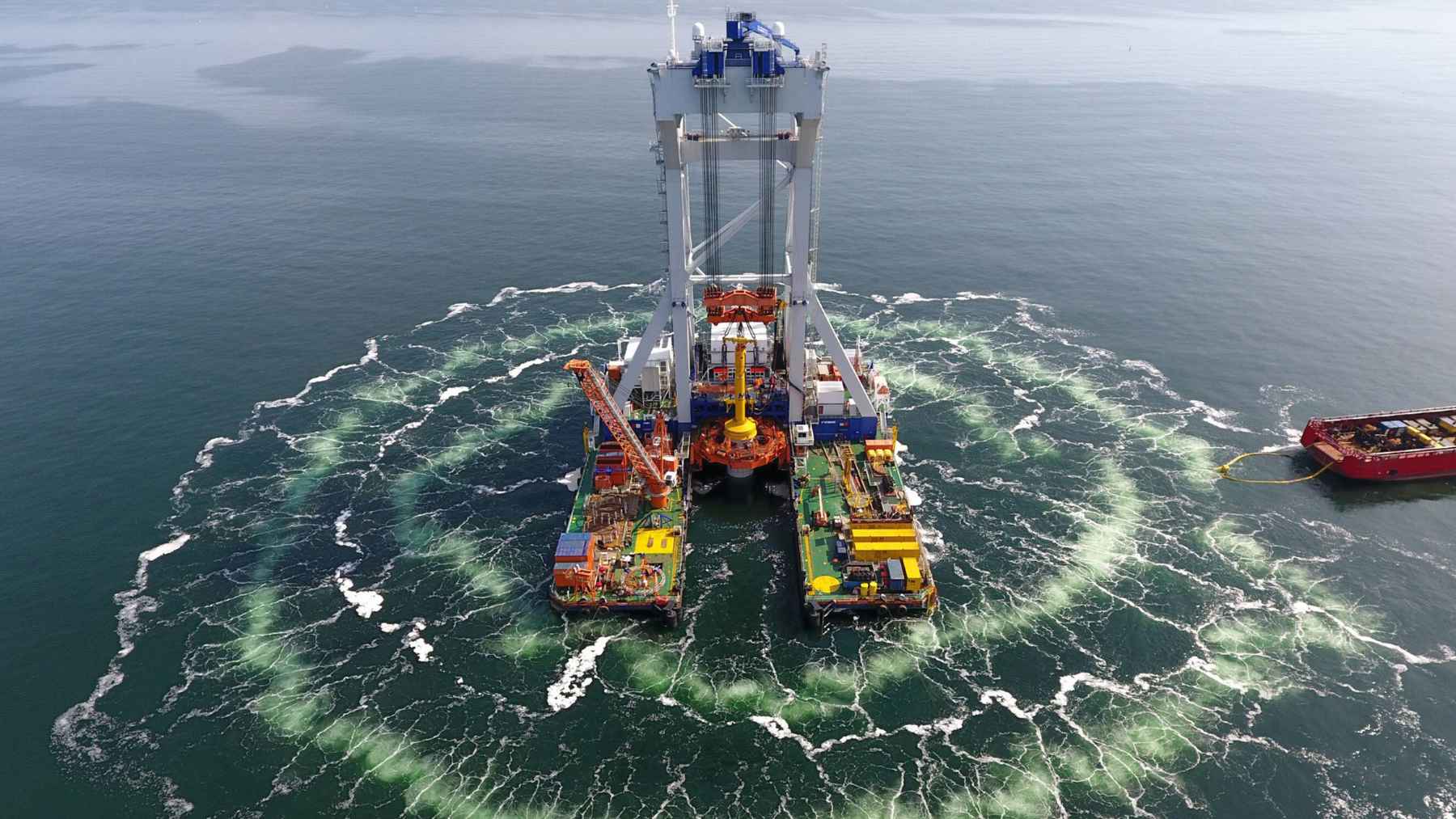
The artificial platform was expected to cover at least 30 acres at first, or about 1.3 million square feet. An expanded version could reach about 114 acres, with room for electrical equipment, docks, maintenance operations, and possibly green-fuel systems.
What 10 million homes means
Could one island truly keep the lights on in 10 million homes? The figure is an energy-use comparison based on the planned capacity, not a promise that 10 million specific households would receive uninterrupted power directly from the hub.
Wind output rises and falls with the weather, while demand changes by the hour. In practical terms, electricity would move through a wider European grid and serve homes alongside factories, heat pumps, and electric vehicles. That does not guarantee a neat, one-to-one drop on the electric bill.
The original 3-gigawatt phase was described as enough for about 3 million European households. Reaching the larger promise would require far more turbines, cables, financing, and cross-border agreements. The last part may be the hardest.
Costs changed the timetable
The original system-wide estimate was about 210 billion Danish kroner, roughly $32 billion at July 2026 exchange rates. That covered the island, infrastructure, and associated wind farms, not just the platform in the water.
By 2023, Denmark said the state’s costs under the existing design could exceed 50 billion kroner, or about $7.6 billion. Officials called the concept “far from profitable” and postponed the tender while studying cheaper alternatives, including a platform-based hub.
Those dollar figures describe different cost categories, so they are not a simple overrun comparison. Still, the message is clear. Offshore ambition faces familiar pressures, from higher borrowing costs to pricier materials and construction.
A North Sea power network
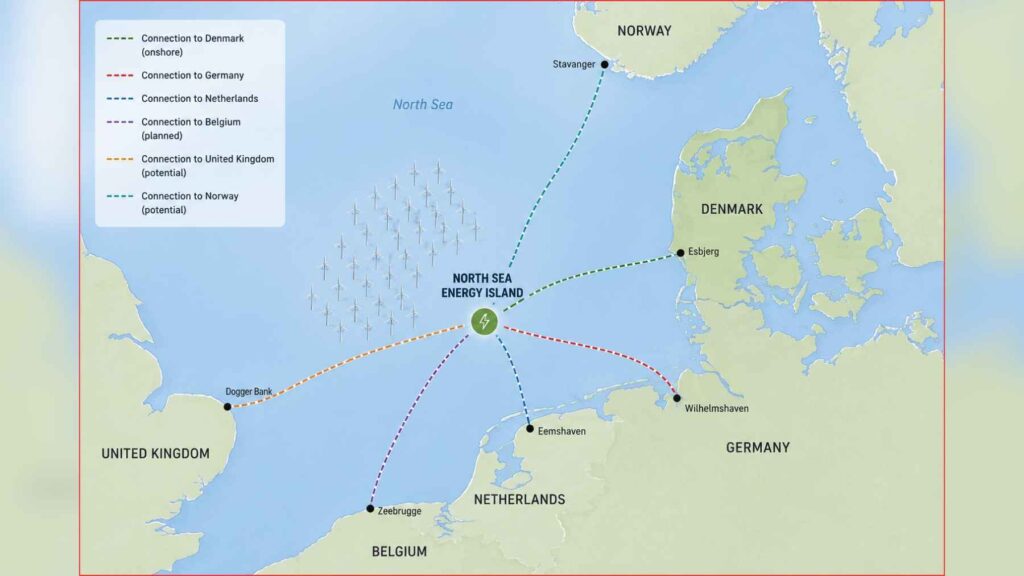
Early descriptions pictured the hub linked with Denmark, Germany, the Netherlands, Norway, Belgium, and the United Kingdom. That sounds like an offshore extension cord stretching across the North Sea, but official agreements did not place every country at the same level of commitment.
Belgium was identified as the first planned foreign connection, while Germany and the Netherlands remained priorities for further work. The United Kingdom and Norway joined broader North Sea energy cooperation, but that is not the same as a finalized cable contract for this island.
Why do the links matter? A multi-country grid could send wind power toward places that need it most, reducing waste when generation is high in one area and demand is stronger elsewhere. It could also spread costs, although agreeing who pays is rarely simple.
Green hydrogen adds another layer
Denmark also envisioned using some offshore electricity to make green hydrogen through electrolysis. That hydrogen, or fuels made from it, could serve shipping, aviation, and heavy road transport, where batteries are harder to use at scale.
The idea is appealing because surplus wind power would not have to go unused. But officials acknowledged that the exact mix of hydrogen production, storage, and other “Power-to-X” technology was not mature enough to define with certainty. Big promise, many moving parts.
For the economics to work, the island would also need reliable buyers, safe transport systems, and fuel prices that compete with fossil alternatives. That is where an engineering project becomes a market test.
The environmental bill
Building an island, burying cables, and installing hundreds of turbines would disturb parts of the seabed and increase vessel activity and underwater noise. Denmark commissioned surveys covering marine mammals, birds, bats, fish, and other environmental conditions, but the formal strategic assessment was paused with the tender.
The proposed design included monitoring and the possibility of shaping protective structures as artificial reefs. Those steps could reduce some harm or create habitat, but they remain mitigation ideas rather than guaranteed biodiversity gains. An artificial reef is not a free pass for an industrial project.
The environmental case depends on both sides of the ledger. Large amounts of low-carbon electricity could help replace fossil fuels, while poorly planned construction could damage marine ecosystems locally. Careful siting and long-term monitoring would be essential.
What happens now
Denmark’s wider offshore wind market shows how difficult the economics have become. The first three areas in a 2024 auction received no bids, prompting the government to redesign later tenders with public support and more flexible terms.
Reviving the island would require a cheaper design, committed partners, a workable cost-sharing plan, and fresh environmental approvals. For now, it remains a powerful vision rather than a construction schedule.
The latest official assessment was published on the Danish Ministry of Climate, Energy and Utilities website.