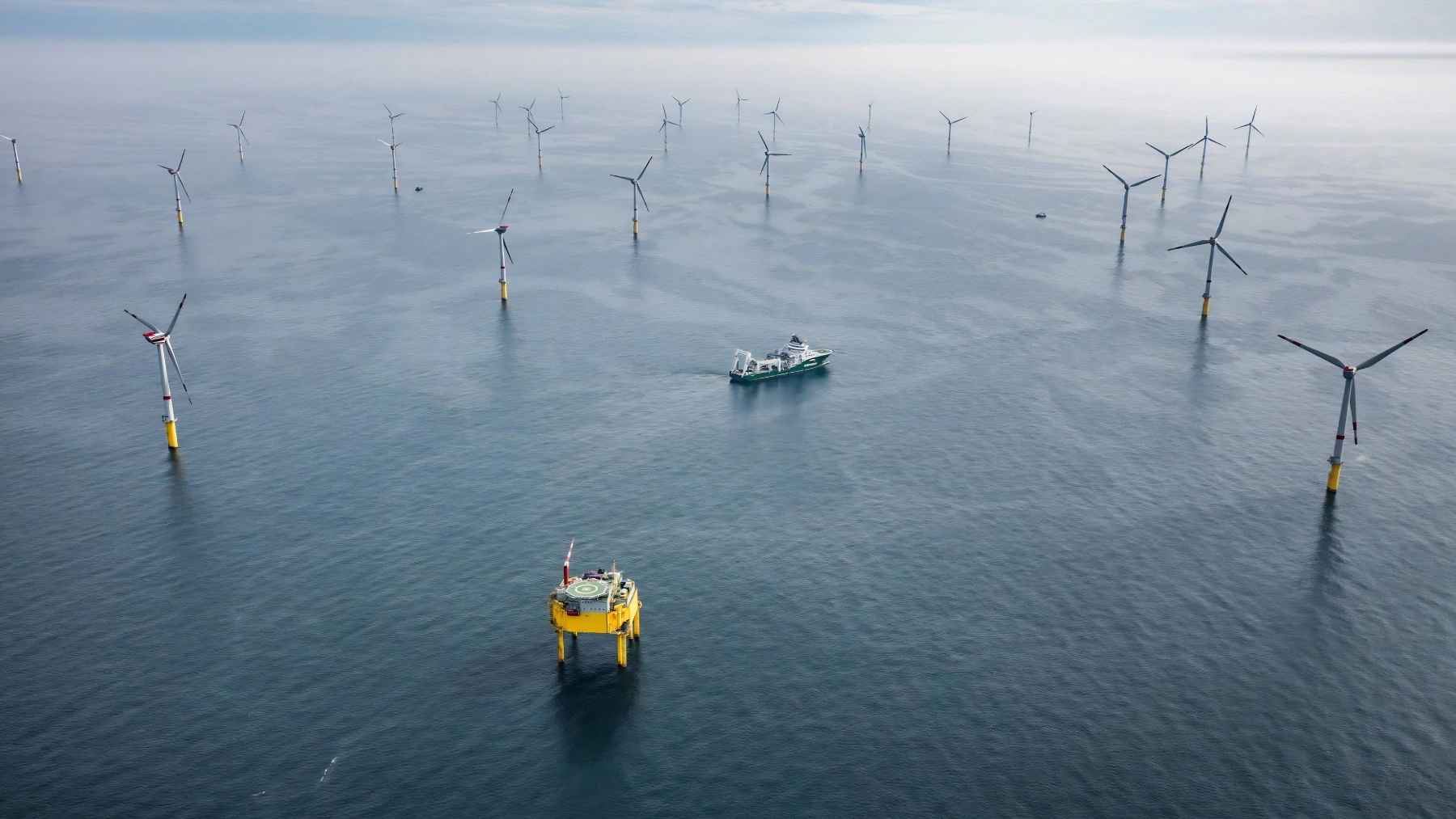
A wind farm located in the North Sea seems to affect the wind before it even touches the turbines. Researchers found that, under stable weather conditions, the air slowed by approximately 4 percent in a distance of almost 1.8 miles before it reached the first row. Then, when they revisited the data in 2025, they also realized that some of the wind was being pushed towards the sides of the wind farm.
This is called “global blockage.” It does not indicate that offshore wind does not work, and the study was made with turbines which are fixed to the seabed, not a new floating farm. However, these results are important. Offshore projects are currently growing, and tend to be built closer together, so even just a small error in wind forecasts may impact the amount of electricity a project is expected to generate and whether or not it will be profitable.
Lasers detected wind changes miles offshore
This study was carried out on Global Tech I, a wind farm located in the North Sea, in Germany. It has a total of 80 turbines, which can generate up to 400 megawatts altogether. In order to measure the wind heading to the site, researchers added a long-range Doppler lidar on one of the turbine platforms. This instrument scanned the air at a distance as far as five miles away, offering the team a much bigger picture than a single weather sensor could provide.
The best way to detect the wind slowdown was when the atmosphere was stable. In these conditions, a layer of warm air sits above cooler air and prevents it from mixing easily. When the turbines were pushing strongly against the wind, air speed dropped by almost 4 percent over 2.9 kilometers (1.8 miles). According to researchers, the actual decrease was between 2 and 6 percent. They did not find the same results when the air was unstable, or when the turbines produced less resistance.
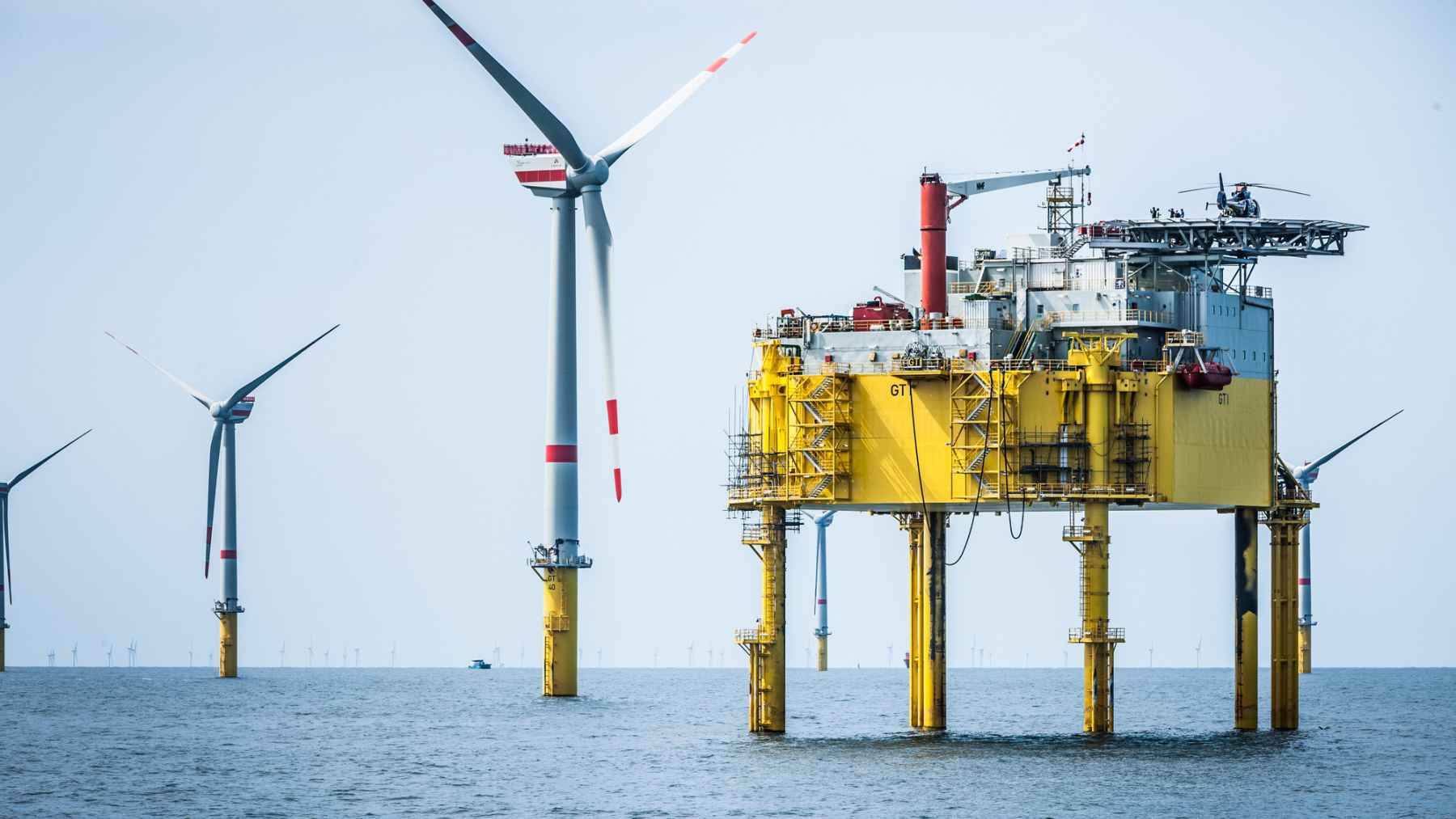
This difference is very important. The result does not indicate that every single offshore wind farm constantly slows the wind before it reaches the turbines, or that the turbines must be producing at their full capacity. It just identifies a strong interaction between the whole array, its operating state, and the atmosphere above the sea.
An open wind farm behaving like an obstacle
How can a barrier be made out of rows of turbines encircled by open waters? While producing thrust, every rotor reduces impetus from the air, creating an adverse pressure gradient in front of the farm by the built up effect of numerous machines. This naked the approaching air to slow down and move either around or above the array, resembling how a large rock can divide a stream, although the wind farm itself is a penetrable obstruction.
A recent study observed 79 situations linked with global blockage, and its conclusion was that wind direction changes on both sides of the farm’s centerline. According to investigators, not only wind speed drops, should be taken into account in accurate models. but also wind direction changes. They did not find similar change in direction when an upstream velocity reduction is not present.
This is different from the common wake effect. These waves form behind turbines, and they can significantly reduce wind speed for machines that are located downwind, developing, usually smaller, global blockage upstream. These two effects influence different pieces of the airflow puzzle, although they both matter.
Meticulous interpretation is needed for a 4% wind speed reduction
Even a very small change in wind speed can cause an enormous difference. Available wind power rises with the cube of wind speed, so a 4% reduction in the wind’s speed could result in around 11.5% less air kinetic power at that time. Although this could seem impressive, it does not mean the farm will produce 11.5% less in the production of wind farms over a whole year.
For the blockage signal to appear, there are very specific atmospheric and operational circumstances needed. Given that these results were measured at a height of 24.6 meters (roughly 81 feet), well below the 92-meter height of the turbine’s hub, these measurements can not be directly applied to the totality of the rotor, nor to every hour of the year. More experimental and numerical analyses on the effect on annual energy is needed, according to researchers.
Although there will be no adjustments on electric bills listed under “global blockage” for households, these energy calculations do condition construction bids, power agreements, seeking investors and loan costs. So, even small forecasting errors can have considerable effects on how profitable a project is considered and its financing.
Future offshore output can be protected by better planning
There are many factors that can influence the impact of global blockage, such as farm design and size, wind direction, turbine density and atmospheric conditions, according to ForWind. Engineers take into consideration aspects like distance between turbines, array orientation, and control strategies, although there does not exist a universal layout solution that can be applied to every weather or sea system.
In order to improve predictions before building the farm, researchers need industry-backed projects for their datasets. The Carbon Trust’s GloBE campaign used several scanning lidars as well as a floating one, placed around working wind farms in the German Bighttest, to see how accurately computer tools are able to represent how the air slows down when reaching a farm, and how they speed up in other places.
So, the important observation is not really that offshore wind should retreat, what really matters is that wind moves from one site to another, so planners need to consider how farms affect each other. Better studies with more precise quantifications can help prevent disappointing output in the future.