Offshore wind farms do more than harvest moving air. Under a narrow set of winter conditions, their rotating blades can stir layers of temperature and moisture strongly enough to form ribbons of shallow fog, while under other conditions the same mixing can clear fog away.
That does not mean every vessel approaching a turbine array is about to meet a sudden wall of white. Dutch authorities describe fog as a possible local hazard that still needs better measurement, and a Deltares assessment says the most striking North Sea cases appear to be rare.
What scientists have observed
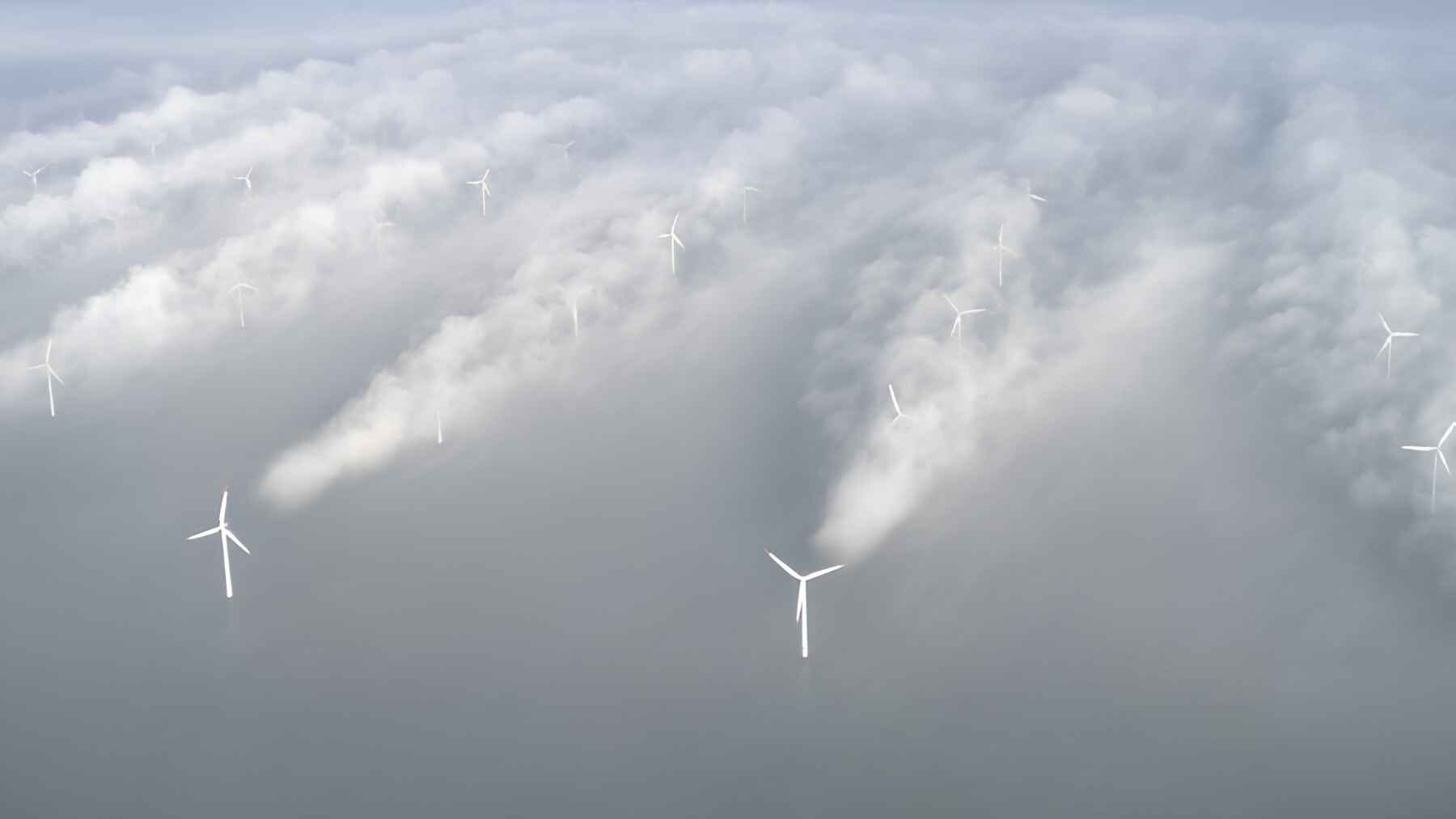
One of the best-known examples appeared at Denmark’s Horns Rev 1 wind farm on February 12, 2008. Researchers found that cold, humid air already primed to condense recondensed as fog inside the turbine wakes as the rotors moved warmer, moisture-rich air upward and cooler air downward, producing long white trails behind rows of turbines.
The weather was unusually specific and wind speeds were close to the turbines’ minimum operating threshold, so most machines were producing little power. The photographs were dramatic, but the study did not show that this happens routinely.
The same turbines can clear fog
A second case at Horns Rev 2 on January 25, 2016, revealed almost the opposite result. Warm, moist air had moved over cold seawater and formed a shallow layer of advection fog, then turbine-generated mixing pulled warmer, drier air from above into the wake and helped disperse the fog farther downwind.
So, are offshore turbines fog machines? Not really. They act more like enormous atmospheric mixers, and the outcome depends on temperature, humidity, wind speed, sea-surface conditions, and the stability of the air before the blades begin stirring it.
What actually causes the change
The primary studies cited by Dutch authorities do not explain the fog as a simple trailing-edge pressure-drop effect. The Deltares report puts it plainly: “wind turbines are mixers of the atmosphere,” pointing instead to wake turbulence and vertical movement between air layers.
Fog forms when nearly saturated air cools enough for water vapor to condense into tiny droplets. If a turbine wake cools and lifts that air, fog can become visible, but if the wake brings in warmer or drier air, the same mixing can thin or erase it.
Why shipping authorities care
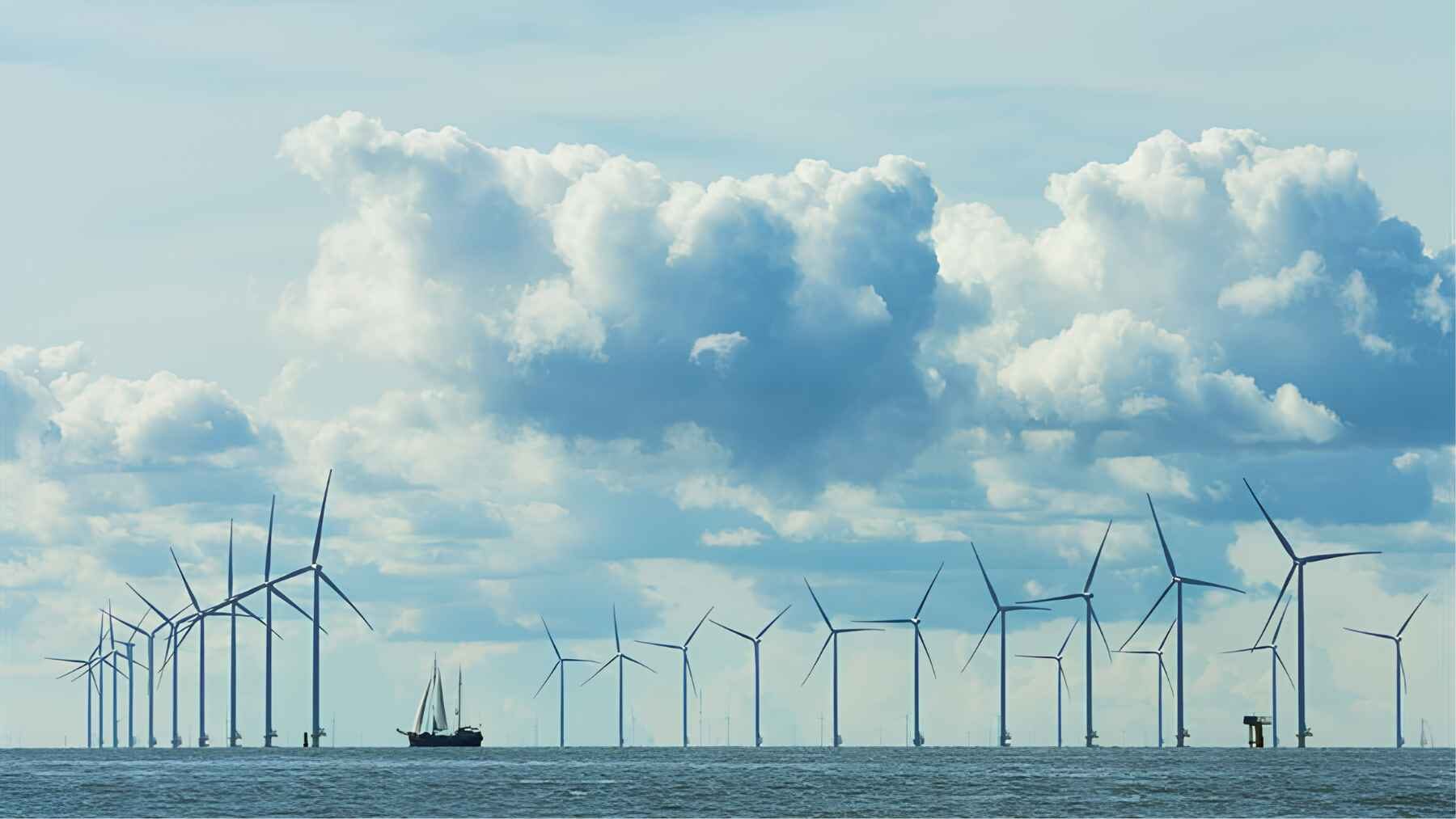
Rijkswaterstaat says offshore wind farms may be associated with faster mist and fog formation, unexpected turbulence, and changes in currents or waves near the installations. KNMI and Rijkswaterstaat operate sensors in wind farms, while the Dutch MOSWOZ safety program is examining whether better forecasts, extra warnings, and real-time weather and water information could reduce risks to vessels.
The scale makes that work more urgent. A 2025 Dutch policy assessment said the Dutch North Sea had about 700 wind turbines, with roughly 1,700 expected by 2032, and offshore wind areas covering about 1,470 sq. miles or more than 6% of the Dutch sector.
Fog is only part of the risk
The clearest documented safety concern is not a newly proven epidemic of turbine-made fog. Dutch officials say expanding arrays reduce room for ships to maneuver, especially during equipment failures or bad weather, and risk analyses cited in the 2025 policy report estimate one to two ship-turbine collisions per year by 2032.
A 2025 MOSWOZ simulator study found no evidence that wind farms inherently damaged crews’situational awareness, although traffic density, tighter navigation space, nighttime lighting, and narrow passages for small vessels created practical challenges. The study was exploratory, and its authors warned that more quantitative research is needed before broad conclusions are drawn.
What a useful warning would require
A reliable fog alert would need more than a humidity reading. Taken together, the documented cases suggest that forecasters must track atmospheric stability, air and sea temperatures, wind direction, wind speed, turbine operation, and the depth of any moist layer before estimating whether a wake will create, deepen, or disperse fog.
That modeling challenge is larger than it first appears. A May 2026 satellite study using 7,122 Sentinel-1 radar images found near-surface wind-speed wake signatures extending more than 60 miles under favorable conditions, although those were aerodynamic wakes and not evidence of 62-mile fog banks.
A rare effect worth watching
For now, the authoritative sources reviewed here support a careful conclusion. Offshore wind turbines can modify shallow fog in exceptional conditions, yet those sources do not document ships routinely encountering dense new fog banks created from clear air.
That nuance matters as clean-energy infrastructure expands into busy waters. The challenge is not to choose between renewable power and safe shipping, but to understand the local microclimate well enough that captains receive useful warnings before visibility changes.
The official HydroMeteo statement was published on Noordzeeloket.