An invention appears that sweeps 100 countries for home energy production. It uses leftover food. If you were surprised by our article on waste recovery, this device will get your attention. Food waste is a global problem with economic, social and environmental consequences.
Preventing the accumulation of food waste is everyone’s job and there are several measures that can be taken on a daily basis. The first begins at the time of purchase. One of the best ways to avoid food waste is to consciously plan what you are going to buy, emphasizing the products that we know we are going to consume. With this simple ‘trick’, we avoid buying in excess and generating more waste than strictly necessary.
Making the most of food is another measure within our reach. This means using all its parts, even those that are not so conventional. For example, some fruit and vegetable peels can be used in the preparation of broths and infusions. Here is the ultimate device for making use of waste and food in general.
Generating your own Energy at Home is Possible: this Invention Sweeps 100 Countries
Homebiogas converts waste into clean gas for cooking. The system used needs six kilos of organic waste per day to work. Almost 40 km from large areas in Middle East, in a small rural cooperative community, is Homebiogas, the company that is making waves with its eponymous product.
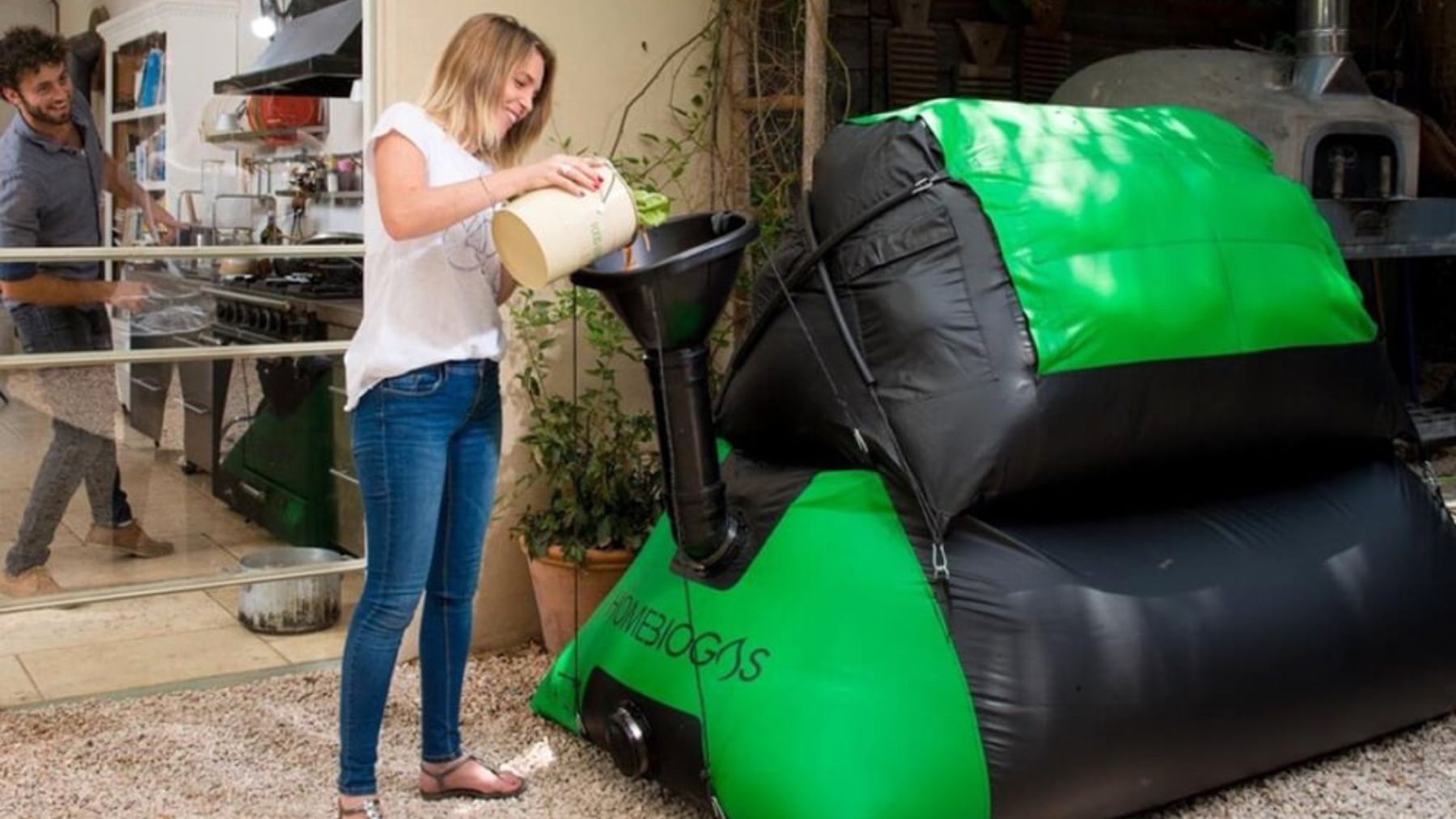
In 2012, a group of three friends created a closed, odorless unit aesthetically similar to a tent. It generates biogas for cooking from organic and animal waste. It also produces liquid fertilizer “with eight micronutrients” that emanate from the decomposition process and increases the “growth rate of plants and their resilience to disease.”
The biodigester is especially recommended for warm climates (minimum 15 degrees). It generates fertilizer and can be used to heat water. This approach has been improving over the years.
Domestic Energy for Cooking: this Invention makes it Out of Waste (and almost Free)
For this reason, most of Homebiogas’ customers come from Africa (Ghana, Kenya, South Africa, and where the price is subsidized); Asia (India, Nepal) and Latin America (Brazil, Guatemala, Dominican Republic, Mexico). His item is valued at $650 and is sold to more than 100 countries through the company’s website.
Other developed countries also trust in the benefits of the product, such as the United States, Italy, France, Holland, Switzerland, Spain (with demand in the Basque Country and Andalusia) and Australia. However, the predilection of the latter is associated more with environmental reasons than with a basic need.
How Homebiogas works: That’s How you Generate almost Free Energy at Home
Its operation is easy to understand and execute. All you have to do is pour the garbage collected through the funnel, which can be more than 6 kilograms per day of fruits, vegetables, meat and fish (with a total capacity of 1,200). With this simple step, the anaerobic bacteria work in digestion or decomposition, as if we were talking about a human stomach.
For proper operation, the key is that the average temperature must be above 20 degrees. In short, Homebiogas is sweeping 100 countries and allows you to generate energy at home with leftover food. An invention as revolutionary as the hydrogen car that ‘consumes’ garbage.