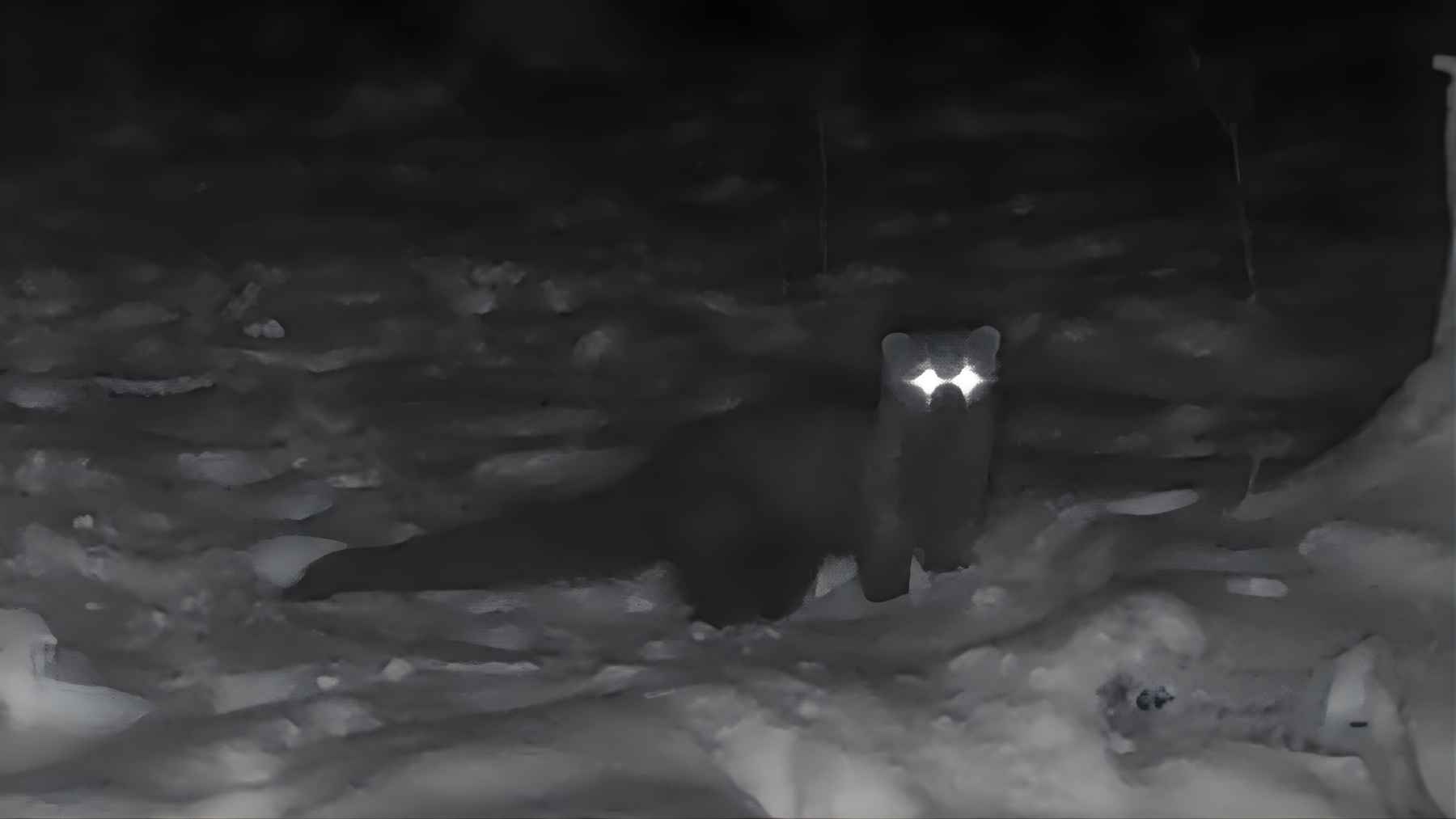
A grainy black and white clip from a forest in Cleveland might not look like much at first. A long, low shape slips through the snow, glances at the lens, and disappears into the dark. Yet that short video confirms something that has not happened in Cuyahoga County since the 1800s. A fisher is back.
Cleveland Metroparks announced that one of its trail cameras recorded a fisher earlier this year, and the Ohio Division of Wildlife verified it as the first confirmed sighting of the species in the county in nearly two centuries.
The animal had been considered wiped out in Ohio by the late 19th century after intensive trapping and large scale forest loss. Today, the state lists the fisher as a “Species of Special Interest,” a reminder of how quickly an animal can vanish when habitat fragments and hunting goes unchecked.
Park officials called the discovery “tremendously exciting” and highlighted that the fisher joins otters, bobcats and trumpeter swans on the list of native mammals that disappeared from the region and are now returning. It is a quiet milestone for local conservation, caught by a camera most hikers will never notice on the side of a tree.
Who is this “new” neighbor in the woods
Despite the nickname “fisher cat,” the fisher is not a cat and rarely eats fish. It is a mid-sized member of the weasel family, related to mink, river otters and martens. Adults can reach two and a half to four feet from nose to tail and weigh up to about fifteen pounds. Their fur is dark brown, their bodies are long and flexible, and they move with the loose confidence of an animal built to weave through dense forest.
Fishers prefer large blocks of mature woodland with heavy tree cover and lots of fallen logs. They make their den in tree cavities and hunt mostly on the forest floor, feeding on small mammals, birds and carrion. Biologists often describe them as mesopredators, meaning they help keep populations of smaller prey in check and fill a middle role between rodents and top carnivores.
In short, if a fisher feels at home in your forest, that forest is doing something right.
How Ohio lost then regained the fisher
Fishers were once native across parts of northern Ohio. As forests were cleared for farms, towns and industry, and as unregulated trapping intensified, the species disappeared from the state by around the mid 1800s. Today Ohio lists the fisher as a “Species of Special Interest,” a reminder of how quickly an animal can vanish when habitat fragments and hunting goes unchecked.
The comeback has been slow and mostly invisible. Reintroduction programs and natural expansion in neighboring Pennsylvania and West Virginia began to rebuild populations. In 2013, Ohio recorded its first modern fisher sighting. Since then, more than forty confirmed observations have been logged in at least ten counties, mostly in the northeast. In 2023, wildlife officers even recovered a pregnant female, evidence that fishers are not just passing through but breeding in the state.
Seen from that angle, the Cuyahoga County video is less a one-off surprise and more a sign that the species is finally reaching restored habitats closer to Cleveland.
Trail cameras as silent conservation allies
Cleveland Metroparks has around two hundred wildlife cameras spread across its system. They sit out in every season, watching while people are at work, at school or stuck in traffic. According to park wildlife staff, those cameras do not catch everything, yet with enough time something interesting almost always wanders past the lens.
Trail cameras have quietly changed how scientists track elusive animals. The same kind of technology recently confirmed the first leopard in South Africa’s West Coast National Park in roughly 170 years and captured striking footage of a grizzly bear inspecting a camera in Canada’s Yukon.
If your doorbell camera can reveal who keeps stealing packages, imagine what hundreds of motion sensors can reveal about a whole forest.
What one fisher says about a whole ecosystem
To a large extent, the fisher’s return is a verdict on decades of work to protect and reconnect green spaces in and around Cleveland. Park biologists point to rising numbers of river otters and bobcats, along with steady growth in trumpeter swan populations since the 1990s, as other signs that wetlands, rivers and woodlands are recovering.
A single animal on video does not guarantee a stable local population. Experts still need to learn whether fishers will find enough continuous habitat in a metro region laced with roads, neighborhoods and shopping centers. But the fact that one showed up at all suggests that the larger landscape of northeastern Ohio now offers the kind of cover, prey and quiet that these shy predators require.
What residents can do next
Most visitors will probably never see a fisher in person. The species is naturally wary and tends to avoid busy trails and backyards. Still, local choices matter. Supporting park levies, backing forest and wetland restoration projects, keeping pets under control and reporting any verified wildlife sightings all help paint a clearer picture of how native species are doing.
For now, that brief clip from Cleveland Metroparks is a small victory with a long backstory. It reminds us that even after a century of absence, a native predator can return when people give land time to heal.
The official statement was published on Cleveland Metroparks Instagram.