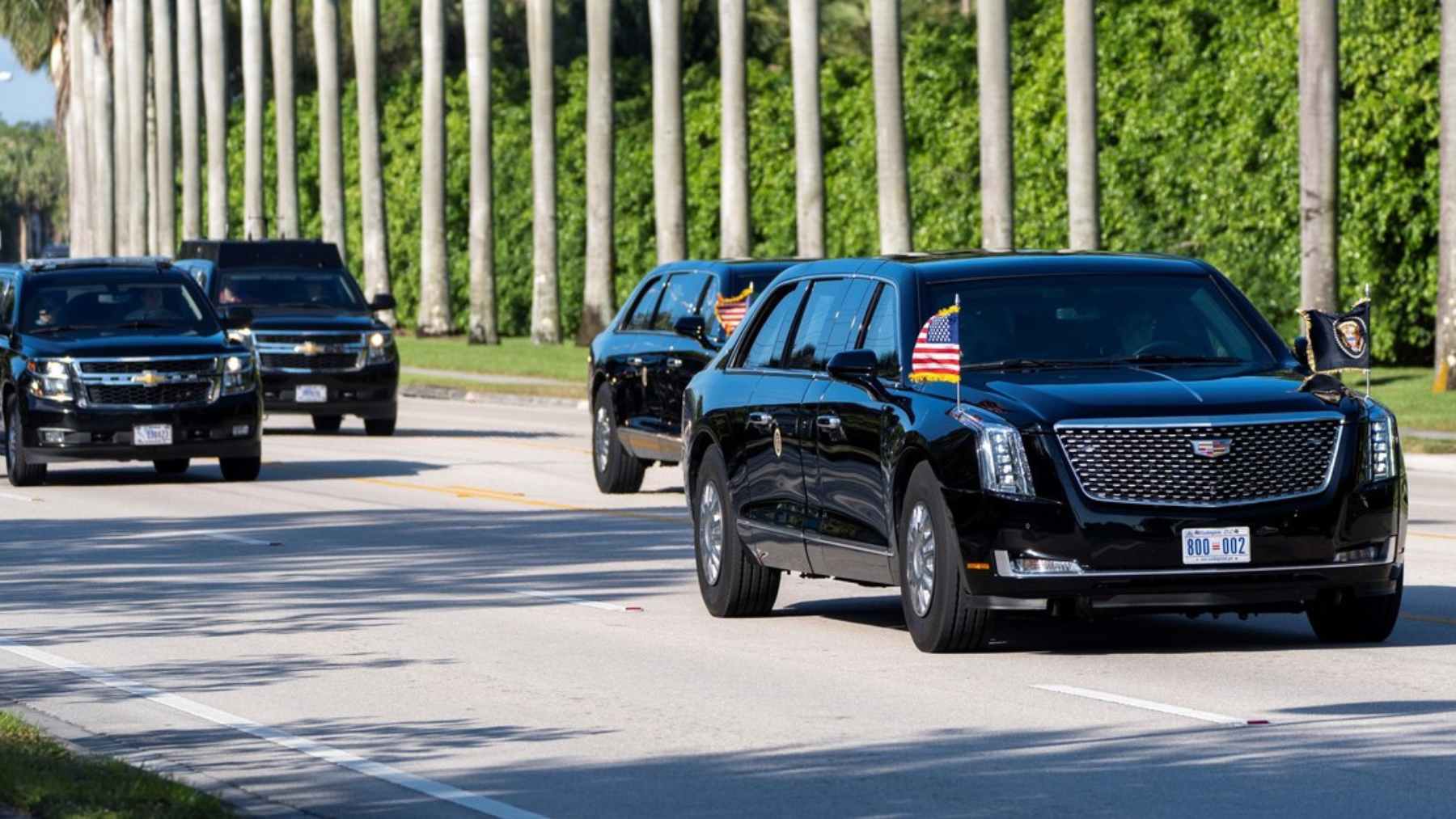
On Sunday evening in West Palm Beach, a routine security sweep turned into a tense moment for both travelers and nearby residents. The United States Secret Service discovered a suspicious object in a treeline across from Palm Beach International Airport during checks ahead of President Donald Trump’s departure on Air Force One, prompting a precautionary change to the presidential motorcade route and a brief disruption around the airport.
White House press secretary Karoline Leavitt said “a further investigation was warranted and the presidential motorcade route was adjusted accordingly.” Officials have not disclosed what the object was or whether it represented a confirmed threat.
By Monday morning, the story had moved from headlines to the morning commute. FBI personnel, Palm Beach County Sheriff’s Office units, bomb squad teams and K9 officers were seen combing the same treeline along Southern Boulevard while two eastbound lanes remained closed, creating significant delays for drivers heading past the airport.
So why does an environmental outlet care about a strip of trees beside a busy road? Because that treeline is doing double duty. Green buffers around airports can provide habitat, soak up some stormwater and soften noise for nearby neighborhoods, yet they also limit direct lines of sight and can conceal human made objects that trigger security alerts.
Palm Beach International has already been the subject of federal studies on aircraft noise and air quality in surrounding communities, with agencies flagging concerns about increased emissions and exposure for people living nearn flight paths. When a security incident closes lanes on a key corridor like Southern Boulevard, those environmental pressures expand. Long lines of slow-moving or stationary vehicles mean extra fuel burned while engines idle.
Federal guidance notes that idling for more than about ten seconds uses more fuel and produces more emissions than shutting off and restarting a modern engine, and a typical passenger car idling fifteen minutes can waste roughly 0.08 gallons of gasoline.
It is only one morning of traffic jams, so does it really matter? On its own, probably not. Yet research on airport regions suggests that constant layers of noise, exhaust and habitat stress gradually shape both local ecosystems and public health, especially where runways sit close to homes, schools and sensitive natural areas.
At the end of the day, the small scare in the PBI treeline is a snapshot of a larger challenge. Airports must knit together tight security, safe operations and serious environmental management so that protecting leaders and passengers does not come at the expense of the communities and habitats just beyond the fence.
Better land-use planning, reliable public transit to terminals and smarter design of green buffers can all help keep both people and ecosystems safer the next time blue lights flash along the access road.
The official statement was published on WPTV.
Image credit: AP