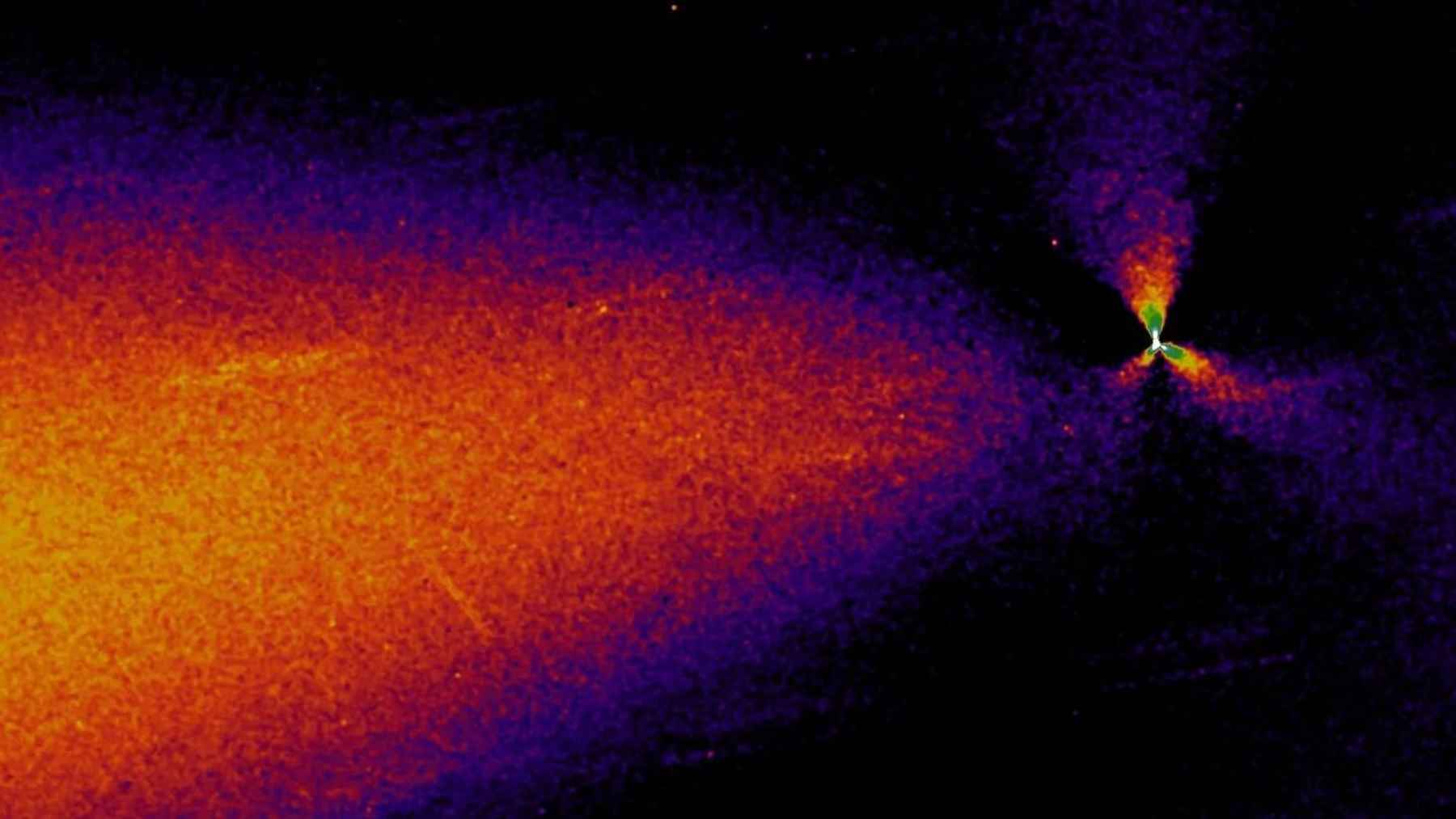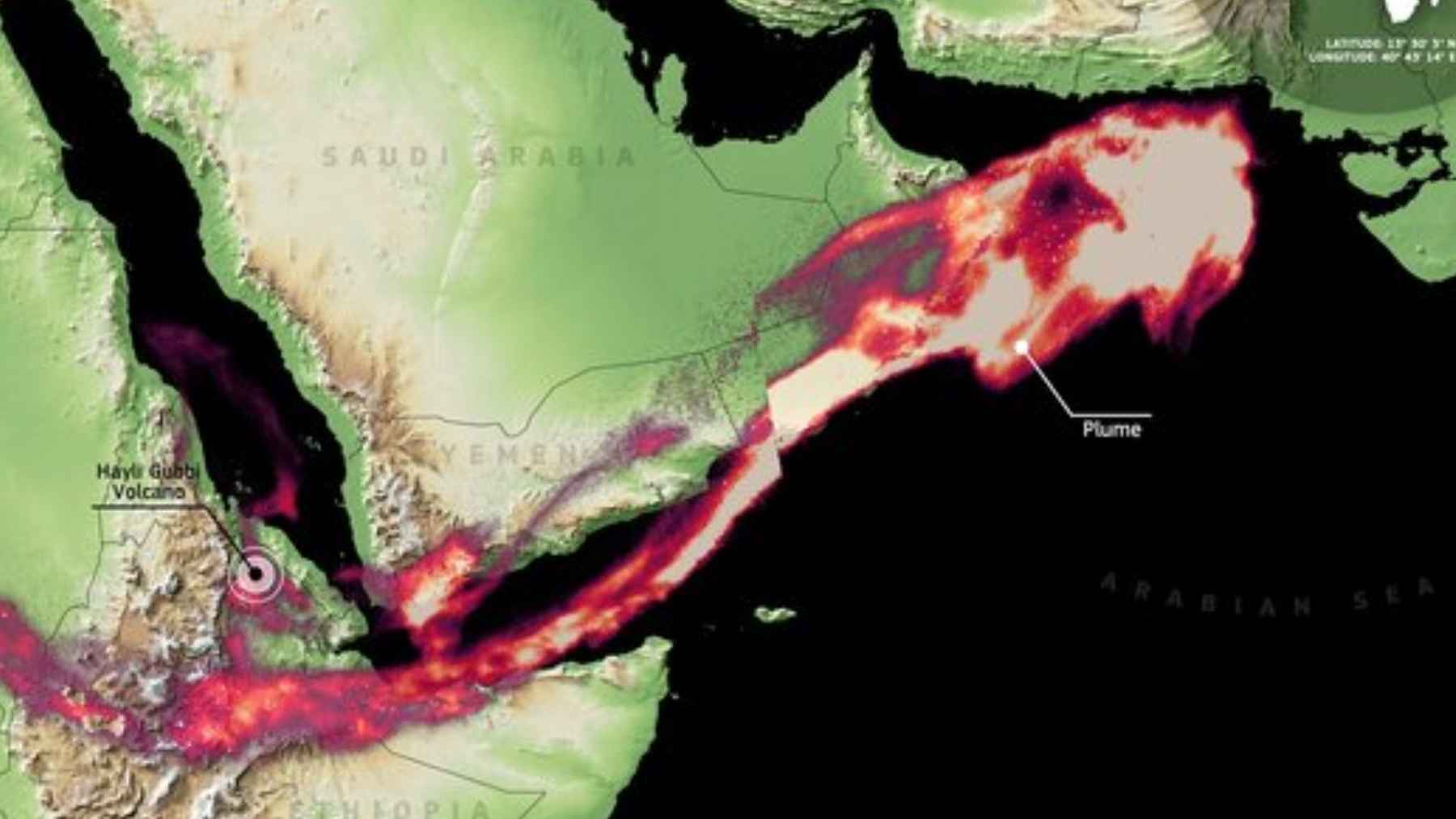
How do you describe a volcano that looked asleep for thousands of years? Carefully. Ethiopia’s Hayli Gubbi produced its first recorded explosive eruption on November 23, 2025, sending ash and gas 10 to 15 kilometers into the sky.
Many reports framed it as the first eruption in roughly 12,000 years, but the Smithsonian’s own geological summary adds an important nuance. Some lava flows on the volcano may be younger than 8,000 years, even if no explosive eruption had ever been documented before. Either way, the big lesson holds. A quiet volcano can still be very much alive.
Why this eruption drew global attention
Hayli Gubbi sits in Ethiopia’s Afar region. The eruption lofted a major ash and gas plume, and the Global Volcanism Program reported about 220,000 tons of sulfur dioxide in the atmosphere during the early phase. Copernicus satellite data tracked the plume for about 3,700 kilometers, from Ethiopia toward the Arabian Sea, while Smithsonian reports said the cloud later reached as far as northern India and China.
No deaths were reported, but ash contaminated water and food sources and blanketed grazing land. For local herders and for airlines far beyond Ethiopia, that mattered right away. A cloud in a remote desert can still end up changing the flight board half a continent away.
The hidden link below the ground
This was not simply a bolt from the blue. Hayli Gubbi is about 12 kilometers south-southeast of Erta Ale, one of Ethiopia’s best-known volcanoes, and researchers had already been tracking magma movement in the same volcanic segment.
A 2025 Frontiers study found that after Erta Ale’s July 2025 eruption, a dike propagated about 36 kilometers southward. Smithsonian’s weekly report later noted that fissure vents opened within 2 kilometers of Hayli Gubbi before the November explosion.
That does not mean every quiet volcano is about to erupt, but it does show how much can happen underground while the surface still looks calm. And that is the real warning.
What Etna and Vesuvius tell us
Italy offers a useful comparison. Civil Protection says Etna was long considered predominantly effusive, meaning lava flows are common, though the volcano also produces explosive activity. Vesuvius tells the other side of the story.
INGV describes it as quiescent today, but also notes that past long quiet phases ended in Plinian or sub-Plinian eruptions, including the AD 79 disaster that buried Pompeii and Herculaneum. So yes, “inactive” can be a misleading everyday word. Sometimes it simply means the system is recharging out of sight.
Why Campi Flegrei is a different puzzle
Campi Flegrei is the case that often worries Italians most, but it is not a copy of Hayli Gubbi. INGV says the caldera has been in a bradyseismic phase since 2005, with about 144 centimeters of uplift recorded by April 2025, along with gas emissions and earthquake swarms. But recent INGV research also said the present conditions, under the modeled scenario, are not capable of generating an eruption right now.
Other studies point to a gas-rich reservoir and strong hydrothermal activity that can drive uplift and seismic unrest without magma necessarily reaching the surface. That is why the same warning signs do not mean the same thing everywhere.
The real takeaway
The Ethiopian eruption suggests that monitoring matters more than labels. In remote deserts, small precursors can be missed or barely measured. At Hayli Gubbi, COMET detected only a few centimeters of uplift in the days before the eruption.
In Italy, by contrast, INGV runs constant multi-parameter surveillance on volcanoes such as Etna, Vesuvius, and Campi Flegrei using seismic, GPS, geochemical, thermal, and other networks. Quiet is not the same as safe. And that is the point readers should keep in mind the next time a volcano is described as “inactive.”
The official volcanic report was published on Smithsonian Global Volcanism Program’s website.