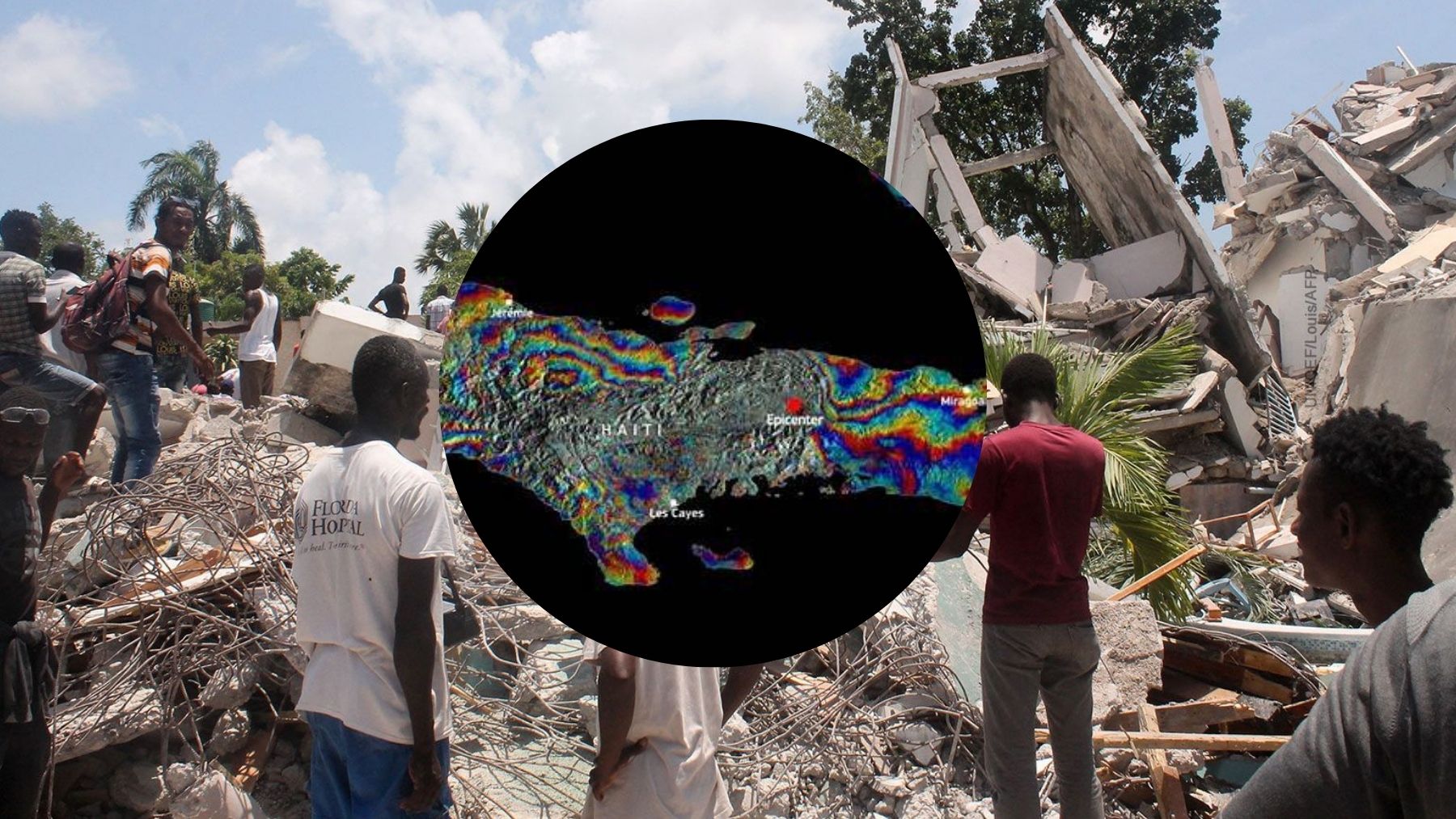
When people think about earthquakes in Haiti, they usually picture a single big fault ripping through the ground. The new science paints a messier picture. Quiet, shallow fractures around the main fault are slowly slipping for weeks after major quakes, almost like tiny safety valves inside the crust.
A team working with satellite radar data has shown that the 2010 magnitude 7.0 and 2021 magnitude 7.2 earthquakes in southern Haiti did not only rupture the main Enriquillo Plantain Garden Fault. They also woke up a network of smaller secondary faults, some up to 20 kilometers away from the main break, which then crept for weeks after the shaking stopped.
The work, published in Geophysical Research Letters, finds that these secondary faults are extremely shallow and mechanically weak. The authors describe them as “very weak” and capable of slipping under “small stress changes” triggered by the main shock.
Satellites watching the ground breathe
To uncover this hidden motion, the researchers used InSAR, a satellite radar technique that compares repeated radar images to measure ground movement down to centimeters. They processed time series from Europe’s Sentinel‑1 satellites after the 2021 Nippes earthquake, and earlier ALOS data after the 2010 event, covering Haiti’s southern peninsula.
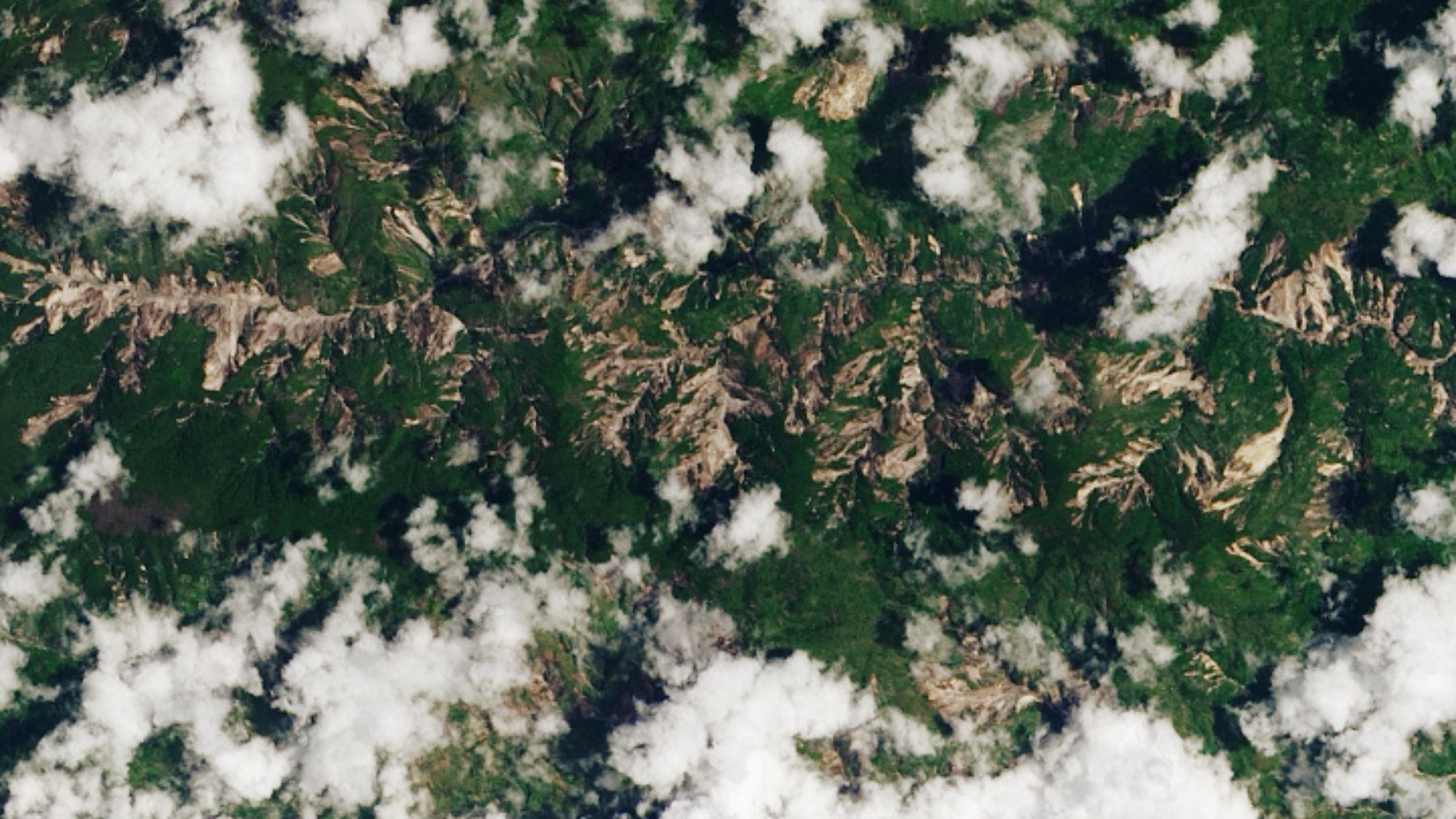
By looking at how the ground moved from different satellite viewing directions, they could spot narrow zones where the surface shifted sideways on either side of a line. That pattern is the fingerprint of shallow strike-slip along a fault. In total they identified 14 such secondary structures after the 2021 quake, most showing only a few centimeters of sideways motion at the surface yet clearly standing out from background noise.
Some of these faults slipped in the same direction as the long-term tectonic motion across the plate boundary. Others did the opposite, moving backward compared to the way the Caribbean and North American plates usually grind past each other. In everyday terms, a few of these cracks briefly pushed against the regional strain instead of going with the flow.
Credit: NASA
Friction, weak faults and time
The team then asked a simple but important question. Was this just an elastic response of damaged rock, or true frictional sliding on real faults that care about time and stress history?
They modeled the observed surface motion using a standard rate and state friction framework. The slip on both the main plate boundary fault and the smaller secondary faults decays roughly logarithmically with time, over weeks to months. That behavior matches what is expected for a velocity strengthening frictional surface that relaxes a sudden stress change through slow sliding.
Stress calculations show that what really controls the sense of motion is the change in shear stress produced by the main rupture, not the change in normal stress that clamps the fault. When the main quake increases shear in the regional direction, a secondary fault slips prograde. Where the main shock reduces shear, that same weak fault can still be pushed into retrograde motion.
Based on the short wavelength of the deformation lobes, the authors estimate that these secondary faults are confined to the upper 1 to 2 kilometers of the crust. Below that, the mature Enriquillo Plantain Garden Fault remains locked through most of the earthquake cycle, storing elastic strain that will eventually be released in future large events.
Rethinking the upper crust and seismic hazard
On paper, many hazard models still treat the upper crust near plate boundaries as a mostly elastic block that loads steadily between earthquakes, then releases that stress abruptly during big events. The Haiti results suggest the reality, at least in the first few kilometers, is softer and more complicated.
If these weak secondary faults are constantly ready to slide whenever stress nudges them, they can act like tiny cushions that bleed off part of the tectonic load before it ever reaches the breaking point on the main fault. The authors argue that this kind of behavior helps explain the so-called shallow slip deficit, where large quakes often show less slip near the surface than simple elastic models predict.
Their conclusions line up with recent global work on fault networks that finds small faults can collectively absorb more than thirty percent of regional tectonic strain. In that view, the crust behaves less like a single rigid block and more like a crowded network of fractures where many small players share the load.
For people living along active faults, this does not mean large earthquakes are less of a threat. Haiti’s recent history is a painful reminder that one big rupture can still bring down buildings, cut roads and disrupt essential services in seconds. What this study offers is a more realistic picture of how the shallow crust behaves between those headline events.
In practical terms, that richer picture can improve how scientists translate satellite measurements of slow ground motion into estimates of future hazard. It also underlines the value of long term Earth observation programs. Quiet centimeter level shifts on little known faults might sound abstract, but they carry clues that can eventually feed into better building codes and land-use planning in some of the world’s most vulnerable regions.
The study was published on the Geophysical Research Letters website.
Image credit: UNICEF / Copernicus