The search for new fuels is getting carmakers up to 10 years ahead of other sectors (except China, which is not moving beyond EVs). However, now it is America that has been challenged with a new fuel that has never been seen before and that could change everything: it is not hydrogen, nor electricity, nor methanol, but something much better and more powerful, and it already has the first engine.
There´s no more place for hydrogen in Toyota: goodbye to EVs and FCEVs
Toyota Motor Company, the largest automobile maker in the world, famously known for its brilliance in innovation and developments in the industry has stepped back from EV and hydrogen fuel cell tech in a surprising move that has rocked the automotive industry to its foundation.
As much as auto makers, especially those operating in the US have been working towards the production and marketing of EVs and HFCVs that are perceived to be better substitutes for traditional vehicles with internal combustion engines, Toyota has said it loud that the two technologies cannot be mass produced.
Growth restraints discussed by the company include inadequate supplies of the key materials used for EV batteries, the expense of producing batteries and developing related infrastructure, as well as the problem of proper disposal of batteries.
Likewise, Toyota still questions the feasibility and the practicality of the hydrogen fuel cell technology as there are many factors to consider such as the energy required in generating and transporting hydrogen fuel. The company asserts that because the present infrastructure has several restrictions on it.
New zero-emission fuel to be developed by Toyota: neither gas, nor methanol
Ammonia, an element formed from nitrogen and hydrogen, has become an apparent candidate to become a special kind of fuel in the automotive industry as it searches for optimization in its energy sources. Thus, despite EVs and hydrogen fuel cells having attracted much attention, ammonia looks quite favorably in this context.
Ammonia offers an exceptionally high energy density, which is a measure of how much energy a certain quantity of substance can hold, and this fact makes ammonia applicable in the storage of a great volume of energy in a small space.
The latter quality turns ammonia into a logistically flexible fuel which may well be transported long distances and which is particularly suitable for heavy-duty applications where overall range and maximum payload are such decisive criteria.
Moreover, ammonia can also be synthesised from non-fossil fuels, including wind, solar, or biomass by employing electrolysis. It thus has the potential of greatly decreasing the emissions of carbon that are inherent in the conventional fossil energy sources across the globe and to make ammonia a green product in the process.
This is the first ammonia engine by Toyota: Large-scale production or just a prototype?
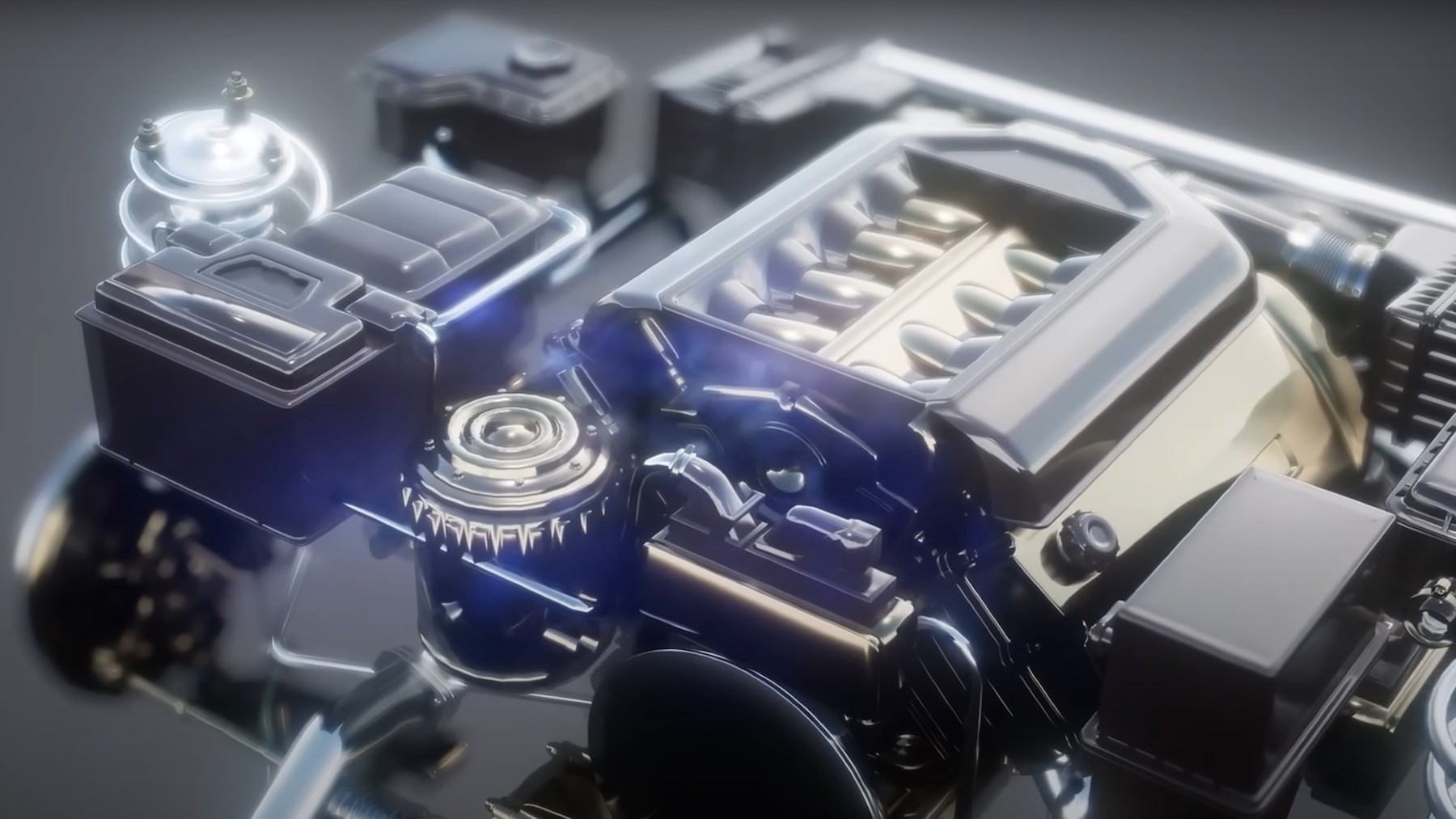
The newest invention from Toyota is their ammonia-powered engine, which is a great advancement in the search for efficient means of sustainable systems in the automotive industry. This technology involves the use of an ammonia-combustion engine, a novel drive system that exercises the possibility to replace FCEVs and EVs.
To make the most of the newly developed gas ammonia, Amec has the following thermal characterization that augments its combustion process: Toyota is also using a unique system of combustion chamber and fuel injectors that have been designed to help the vehicle operate effectively utilizing ammonia.
Another great benefit of using ammonia as fuel, which Toyota has done in its ammonia engine, is that it can easily be integrated into the current ICE foundations. This is because the technology can be implemented in conventional AEHS platforms, which means that a drastic change in the structure may not be required.
As you have seen, this ammonia engine is a proposal that could now take away our leadership in the development of new fuels. Moreover, hydrogen and methanol could be relegated to a dangerous second place. Why do we say this? Basically, because it could increase the risk of our dependence on EVs, which are not convincing in today’s fast-moving market.