What if part of the East Coast’s freshwater story has been hiding under the ocean floor all along? An international team has now directly documented and extensively sampled a buried system of “freshened” water beneath the seabed off New England, giving researchers their clearest evidence yet that these offshore aquifers are real, large, and far more complex than earlier clues suggested.
The finding is eye-catching, but not for the reason many readers might expect. This is not a ready-made new water source for coastal cities.
For the most part, scientists see it as a rare window into how sea level, glaciation, sediments, nutrients, and even microbial life have shaped the continental shelf over long stretches of time, just as modern sea-level rise puts more pressure on coastal groundwater systems.
What Expedition 501 found below the seafloor
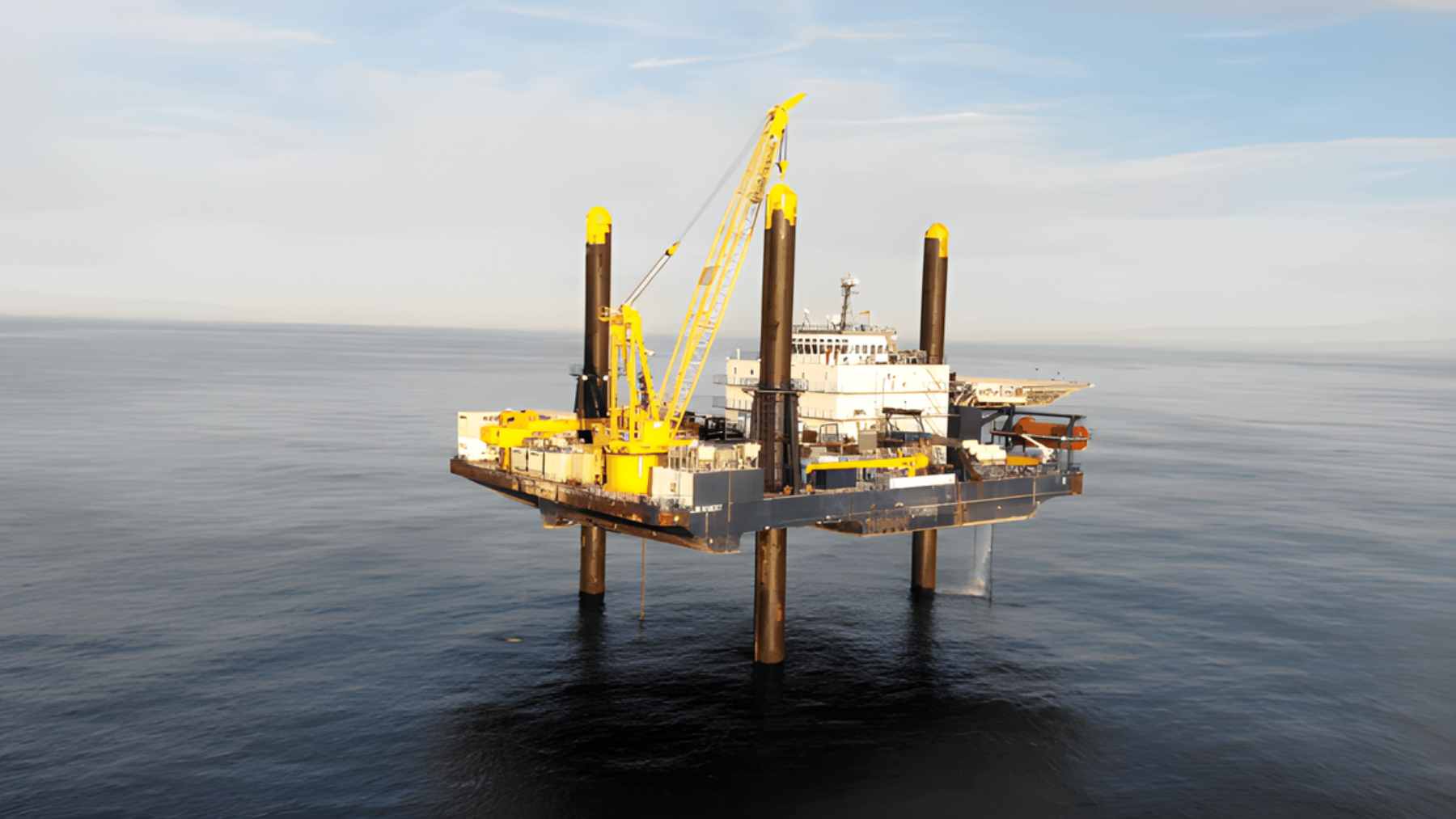
The work comes from IODP³-NSF Expedition 501, a drilling campaign off southern New England that recovered 872 meters (about 2,861 feet) of core and directly sampled water stored in sandy aquifers and clay-rich aquitards.
In the first round of analysis, the team documented freshened water in a zone nearly 200 meters thick below the seafloor, a major step beyond older hints from geophysical surveys and scattered boreholes.
Researchers say the water turned up in more than one kind of sediment, which matters because it hints at a more layered and dynamic history.
Brandon Dugan said the team was “excited to see that freshened water exists in multiple kinds of sediments,” while Rebecca Robinson noted that finding sediment rather than rock throughout the section was an unexpected result that could reshape how scientists interpret the shelf’s development.
There is also a lot of patient lab work behind this. The offshore phase took place between May and August 2025, and the cores are being processed during the onshore science phase in Bremen, where researchers are opening, sampling, and building age models to figure out when this water was emplaced and how the sediments were laid down.
Why this matters beyond one stretch of coastline
Many coastal communities depend on aquifers on land, especially when dry spells hit and salt starts creeping toward wells.
The official expedition summary notes that shoreline-crossing groundwater systems are still poorly understood and can be vulnerable to contamination as sea level rises, which makes their offshore extensions far more than a geological oddity.
Scientists have known since 1976 that offshore freshened groundwater systems exist, but these environments remain largely unexplored.
That is one reason this expedition matters so much. A single well or one geophysical image can only tell part of the story, while direct cores and water samples can show where fresher water sits, how salty nearby layers are, and how the whole system changed through time.
There is a bigger Atlantic story here too.
A 2019 Scientific Reports study used electromagnetic methods to image low-salinity aquifers extending as far as 90 kilometers offshore near New Jersey and Martha’s Vineyard, suggesting a system spanning at least 350 kilometers of the U.S. Atlantic margin and containing about 2,800 cubic kilometers of low-salinity groundwater, but that same paper noted that offshore drilling confirmation near Martha’s Vineyard was still missing.
This expedition begins to close that gap.
Not a quick fix for water shortages
It is tempting to read “freshwater under the ocean” and picture a secret backup reservoir for the next water crisis. But the expedition’s own FAQ is careful on that point, stating “We are not evaluating if or how this fresh-to-freshened water could be used,” because the current mission is focused on salinity, chemistry, age, and origin, not extraction.
In practical terms, that means researchers are sampling everything from near-zero salinity water to water closer to seawater, then mapping how those zones are arranged.
It also means the wells are temporary, no pumping system is being installed, and the project says the drilled holes will naturally close and reseal once operations are complete. So no, this is not a new faucet waiting offshore.
The hidden aquifer may be a time capsule of older coastlines
So where did this buried water come from? The leading idea is that sea-level change and glaciation helped charge these offshore aquifers over tens to hundreds of thousands of years, possibly when more of the continental shelf was exposed or influenced by ice-related processes. That is why the team is now so focused on dating the groundwater more precisely.
And that is where the discovery gets even more interesting. Researchers say the samples should also help reveal how nitrogen moves through continental shelf sediments, how microbes survive in these unusual environments, and how similar hidden aquifers might behave in coastal regions around the world.
Forty scientists from 13 countries are involved, and after a one-year moratorium the cores and expedition data are expected to become openly available through PANGAEA.
The press release was published on the British Geological Survey’s website.