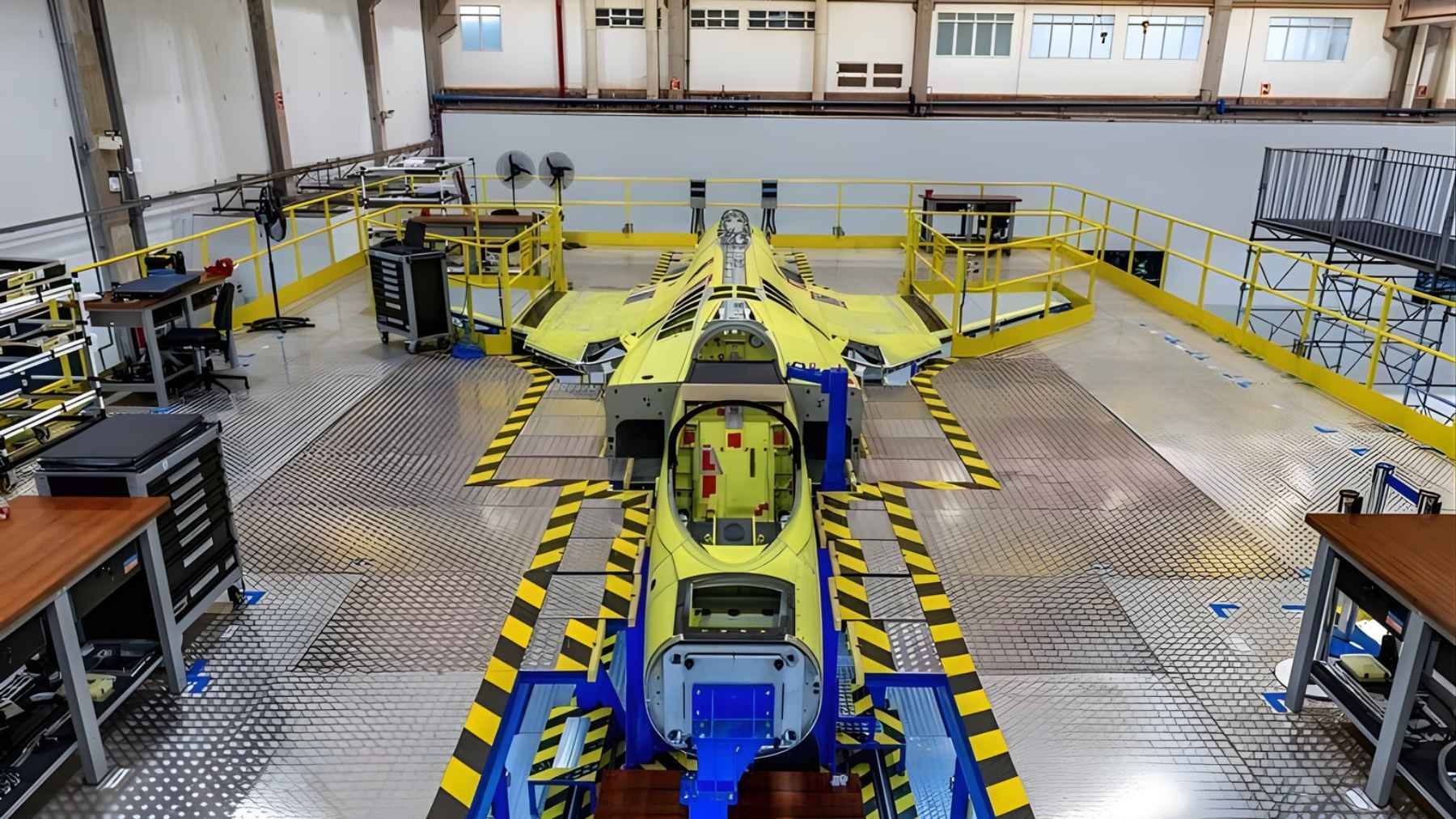
In late March, Brazil plans to roll out its first F-39 Gripen fighter fully assembled on home soil, a sleek supersonic jet that will make the country the only nation in Latin America able to build a modern combat aircraft.
The aircraft is coming together at Embraer facilities in Gavião Peixoto in São Paulo state, under a partnership with Swedish manufacturer Saab, and is expected to be unveiled on March 25.
For the Brazilian Air Force the milestone marks a new level of strategic autonomy. Under the FX-2 program signed in 2014, the service ordered 36 Gripen E and F jets. Fifteen of those are due to be assembled in Brazil, with the remainder produced in Sweden, as the combined lines ramp toward a capacity of roughly 36 aircraft per year for domestic use and export.
Technology transfer and Brazil’s defense industry
The project is about much more than final assembly. Brazilian engineers and technicians have spent years training in Sweden as part of an extensive technology transfer effort, while suppliers at home now manufacture structural parts and sensitive electronics.
AEL Sistemas in Porto Alegre supplies the wide area display and head up display for Brazilian Gripen cockpits, and Saab notes that these systems are now offered on future Gripen E and F orders worldwide.
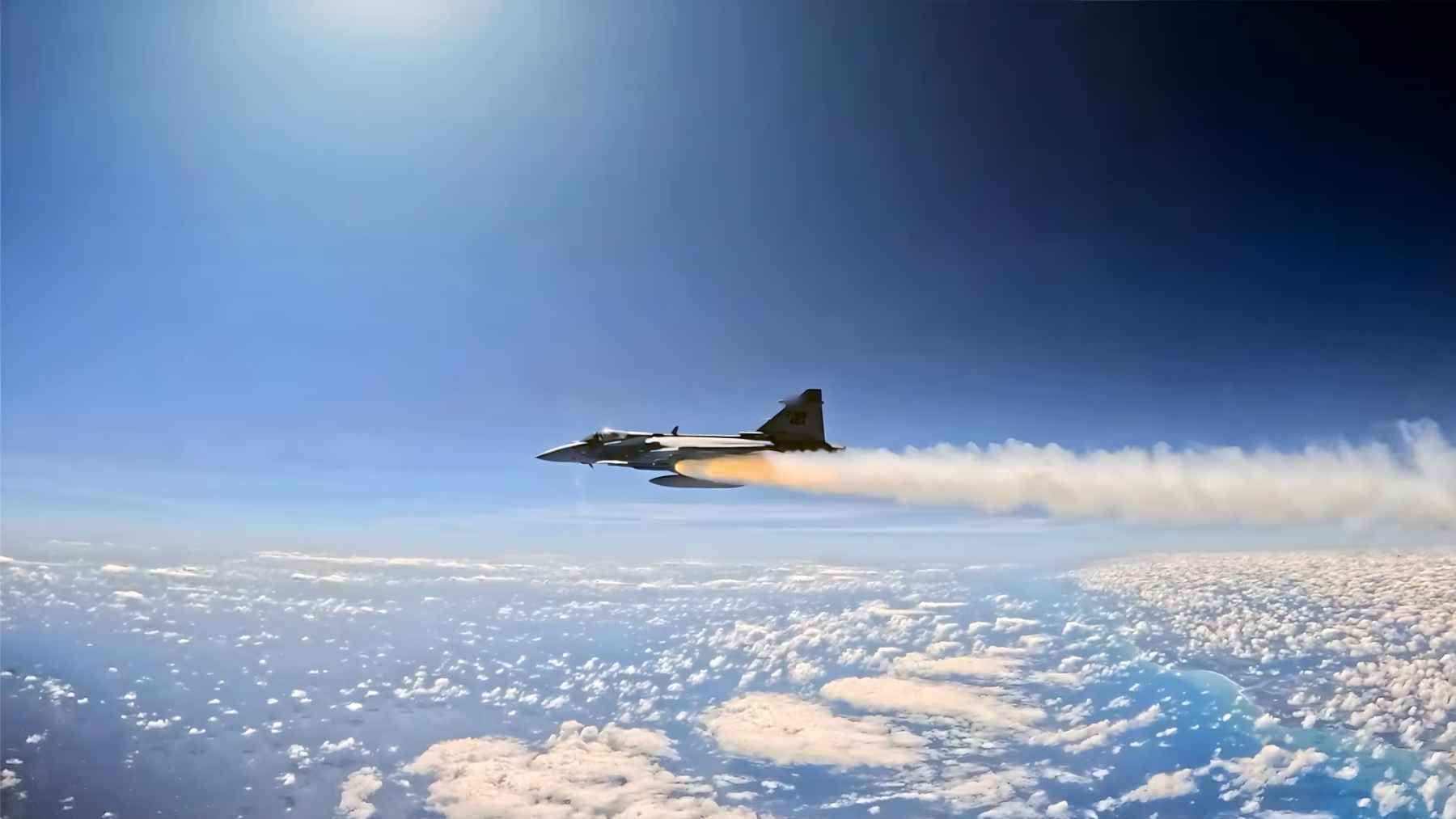
On the ramp, the fighter is already becoming a familiar sight. The Brazilian Air Force currently operates 11 F-39E jets received from Sweden, and recent exercises such as Operation Samaúma and BVR-X have tested aerial refueling with the KC-390 transport, live firing of the long-range Meteor air-to-air missile and guided weapons employment from Brazilian soil.
Saab says the Meteor launches in late 2025 were an important step on the path to full operational capability planned for 2026.
Military aviation and greenhouse gas emissions
So far, the story looks like a textbook case of defence modernization. The climate picture is less tidy. Analyses suggest that the defence sector may be responsible for up to 5 percent of global greenhouse gas emissions, a footprint similar to the entire civil aviation or maritime shipping sectors, even though military emissions are often only partially reported.
Aviation sits at the heart of that problem. Globally, flying accounts for about 2.5 percent of carbon dioxide emissions, and its contribution to warming is higher because aircraft release gases and particles high in the atmosphere.
Modern militaries typically burn most of their fossil fuel in aviation, from fighters on alert to training sorties and cargo flights.
Fuel burn for high-performance fighters can be staggering. One assessment of the F-35, another advanced combat aircraft, found that a single hour of flight can emit more than two metric tons of carbon dioxide.
At the same time, Saab and independent studies have long highlighted Gripen’s relatively-low operating cost per flight hour compared with heavier jets, in part because of lower fuel use and faster maintenance. Even so, every training flight by a supersonic fighter leaves a noticeable carbon trail in the atmosphere.
Public budgets, climate targets, and everyday tradeoffs
At this point, someone might ask what any of this has to do with the electric bill at home. The link is that large defence programs draw on the same public budgets that finance climate adaptation and clean energy, and they sit inside the same emissions accounts that countries report under global climate agreements.
When a government invests heavily in fuel-hungry platforms, it makes national decarbonization targets a bit harder to reach unless there is a clear plan to manage that impact.
To a large extent, Brazil’s Gripen deal is also a story about industrial policy. Local assembly and technology transfer help build an aerospace ecosystem that could, over time, support cleaner technologies such as more efficient airframes or future hybrid propulsion in both military and civilian fleets.
The skills engineers gain while integrating radar and mission software on a fighter jet can spill over into regional jets, air taxis or even unmanned aircraft that might one day run on greener fuels.
Export demand and the carbon footprint question
Foreign demand is now turning Brazil into a potential export base for the Gripen family. Saab has a firm contract for 17 Gripen E and F aircraft with Colombia and an order for four aircraft with Thailand, while Ukraine and Sweden have signed a letter of intent that could see up to 150 jets delivered in the coming years.
Company executives say the Brazilian assembly line is designed not only to equip the Brazilian Air Force, but also to help meet that growing export demand.
For environmental groups and many climate researchers, that raises a straightforward question. As more air forces line up for new fighters, who is keeping track of the global “carbon bootprint” of these fleets.
Some experts call for militaries to publish full fuel use data, set explicit reduction targets and invest in measures such as more efficient training patterns, smarter routing and, in the longer term, sustainable aviation fuels tailored for high-performance engines.
In practical terms, that would mean tracking the emissions of jets like the F-39 with similar rigor to power plants or commercial airlines.
It would also mean an open debate inside countries like Brazil about how to balance legitimate security needs with promises to protect forests, cut pollution and shield communities from the heat waves and flooding that already define so many seasons.
For now, the first Brazilian assembled Gripen stands as a symbol of technological ambition and new geopolitical weight. Whether it can also fit into a credible climate strategy is a question that will remain long after the unveiling ceremony in Gavião Peixoto.
The press release was published by Saab.