California is becoming a hotspot for zero-emission mobility, something that was almost unthinkable just two decades ago. One invention after another, and each experiment more ambitious than the last. Until now, they seem to have reached a ceiling that is difficult to break (you’ll see that they will eventually do it) with a hydrogen engine that has shattered all forecasts. It’s 1000 times better than expected (hence the metaphor in the title), and not only that. It has the biggest fuel cell ever built.
California has made it (again): Now, with the biggest fuel cell ever built in history
Universal Hydrogen, a Californian firm, has found its niche in the creation of hydrogen-related aircraft engines; the company has recently presented the biggest hydrogen-based fuel cell for aviation. This is a historic moment in the industry, which is significant in the realization of green air travel and empowers the notion of zero emission flight technology.
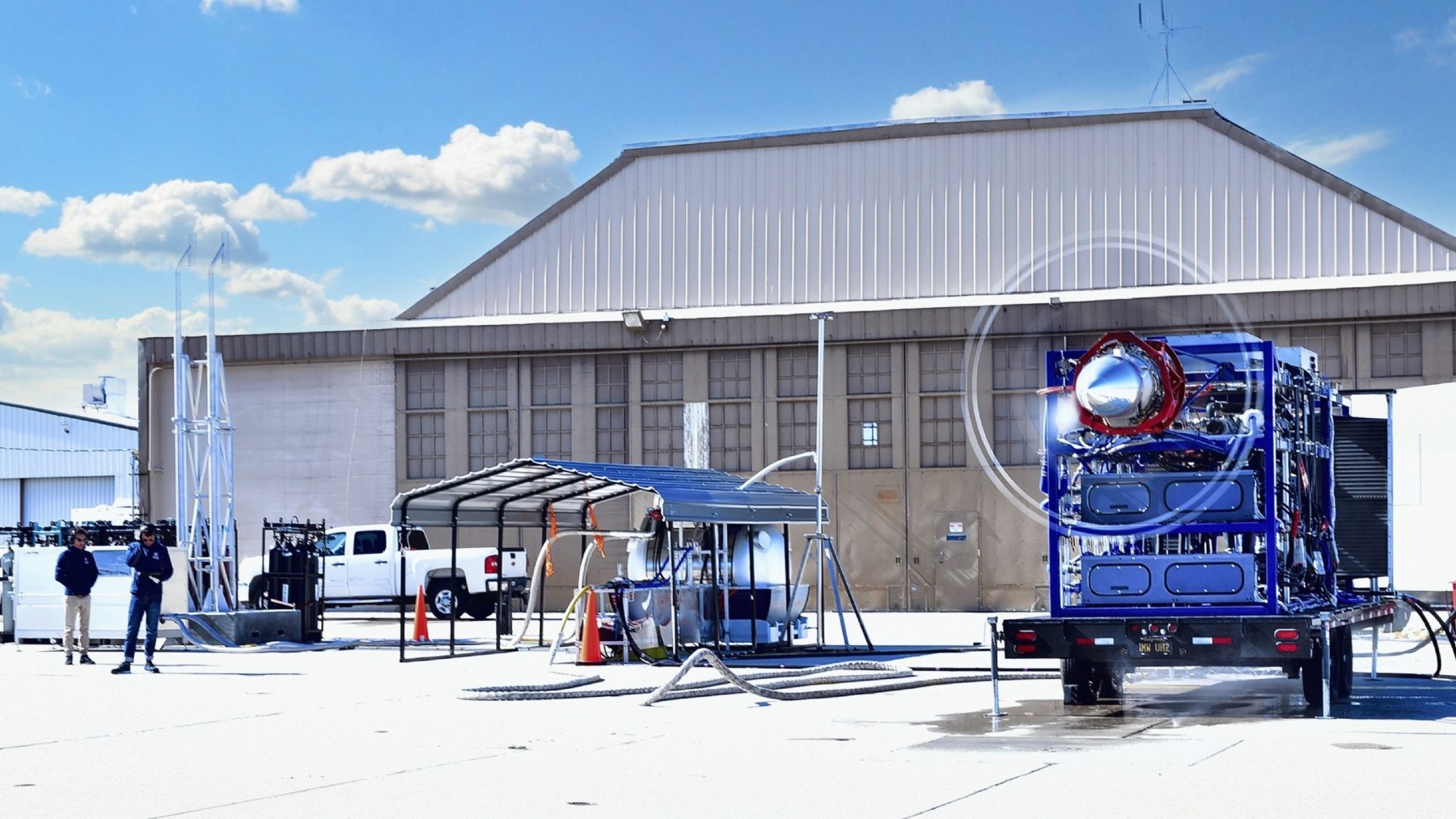
The newest product of Universal Hydrogen is a megawatt-class fuel cell powertrain; the company’s liquid hydrogen module integrated into the powertrain has been tested and proved to be effective as a fuel source. The fuel cell powertrain showcased impressive performance during testing:
- Duration: It powered the company’s ‘iron bird’ ground test rig for more than one and a half hours, thus emulating a regional aircraft profile.
- Range: Two liquid hydrogen modules thus supply enough fuel to power an ATR72 regional airliner for a usable distance of 500 nautical miles, exclusive of reserves.
- Fuel Capacity: In a liquid hydrogen module, each hydrogen module carries about two hundred kilograms of liquid hydrogen.
Universal Hydrogen has a great opportunity: It’s 1000 times better than expected
Universal Hydrogen has ambitious plans for the commercialization of its hydrogen-powered aircraft technology:
- Passenger Service: The company plans to operate a converted fuel cell ATR 72 regional passenger aircraft in service by 2025.
- Retrofit Strategy: The business plan of Universal Hydrogen is in the process of designing aftermarket retrofit conversion kits to bring into operation the hydrogen power for the regional airplanes; the current fleet is being targeted, as opposed to the new airplanes’ designs.
- Modular Hydrogen Logistics: The company is developing a flexible hydrogen supply chain that will deliver hydrogen to airports and directly to its customers, ATR 72s.
- Market Expansion: Universal Hydrogen’s primary business is serving regional airline applications, but it desires to grow its aircraft up to planes of a larger size and extend into the delivery of hydrogen fuel for other mobility requirements in its launch markets through its logistics modules.
- Customer Base: The company has received commitments from customers for 247 aircraft conversion businesses with 16 firms in the global market, and the value of this business is 1 billion US dollars.
Beyond the “biggest fuel cell ever built”: Why is this hydrogen engine so innovative, in 5 keys
Universal Hydrogen’s liquid hydrogen module and fuel cell powertrain incorporate several innovative features:
- Cryogenic Storage: Depending on the specifics of the project, the module should be able to hold liquid hydrogen for as long as no boil-off is desired.
- Conversion System: It consists of systems to warm the cryogenic liquid hydrogen stored in gaseous form for the use by the powertrain.
- Safety Measures: The module also incorporates systems for detection of hydrogen leaks and venting of the same for safety purposes.
- Quick-Connect Interface: A seal is incorporated in the module for easy connection and disconnecting the module from the aircraft without dripping.
- Direct Drive: They engage the electric motor directly without regard to batteries, resulting in less weight and cost.
The new liquid hydrogen engine can be considered a historic milestone for a number of reasons. One of them is dispensing with its gaseous version and developing a new type of combustion. Another is because of its size, which has increased considerably without affecting efficiency. And, based on the latter, it has broken records in thermal conversion without emitting a single polluting particle. Will this prototype be the prototype that ends up decarbonizing air mobility?