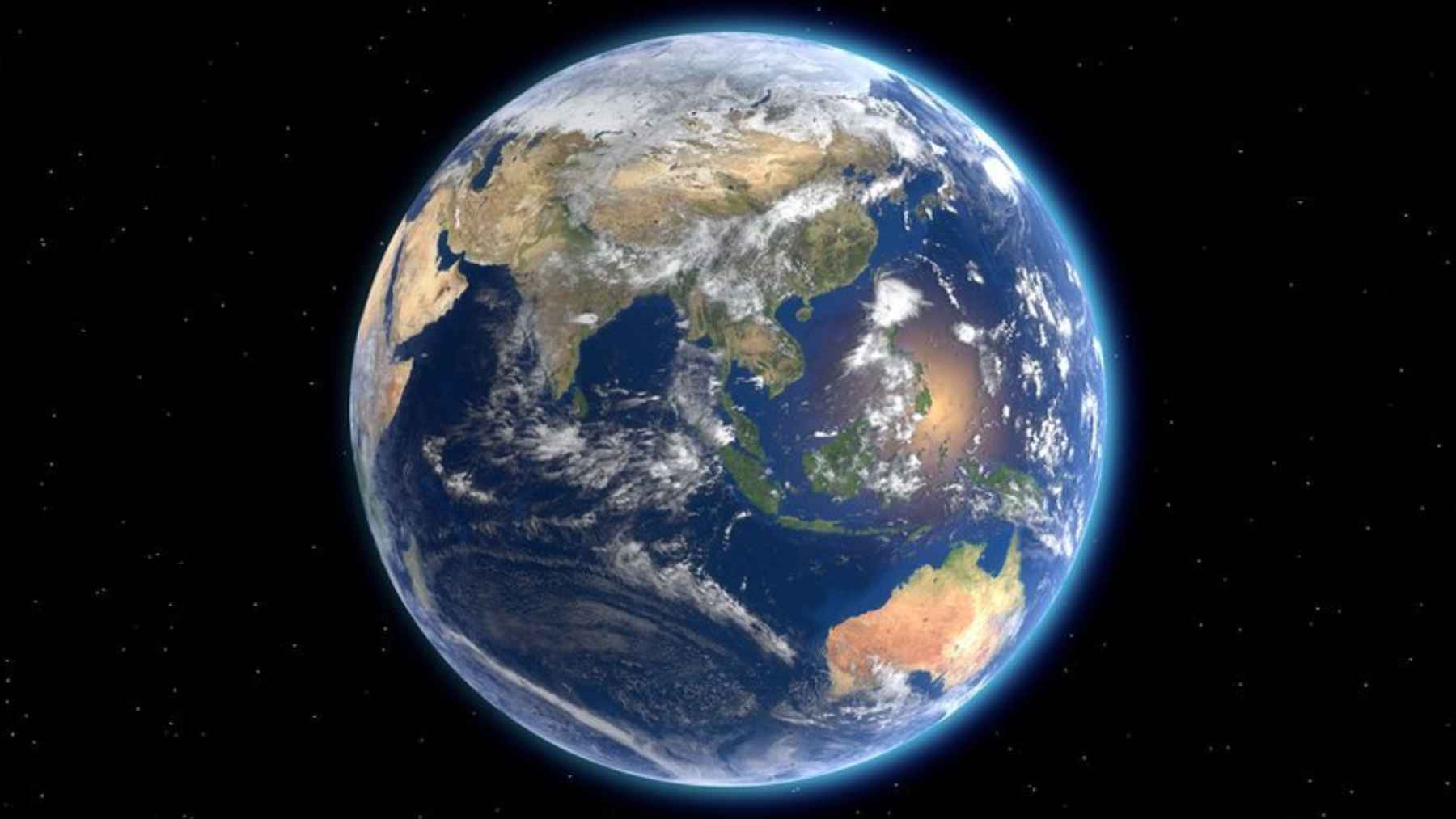
Can a place so dry it is nicknamed the “Sea of Death” really help us breathe easier? That is exactly what is starting to happen along the edges of the hyper arid Taklamakan Desert in northwest China.
New research shows that decades of tree and shrub planting around this huge desert have flipped its outer rim into a net carbon sink that absorbs more carbon dioxide than it releases.
The work combines twenty five years of satellite records, ground measurements and global carbon cycle models and ties the shift directly to large-scale ecological engineering.
From “biological void” to green ring
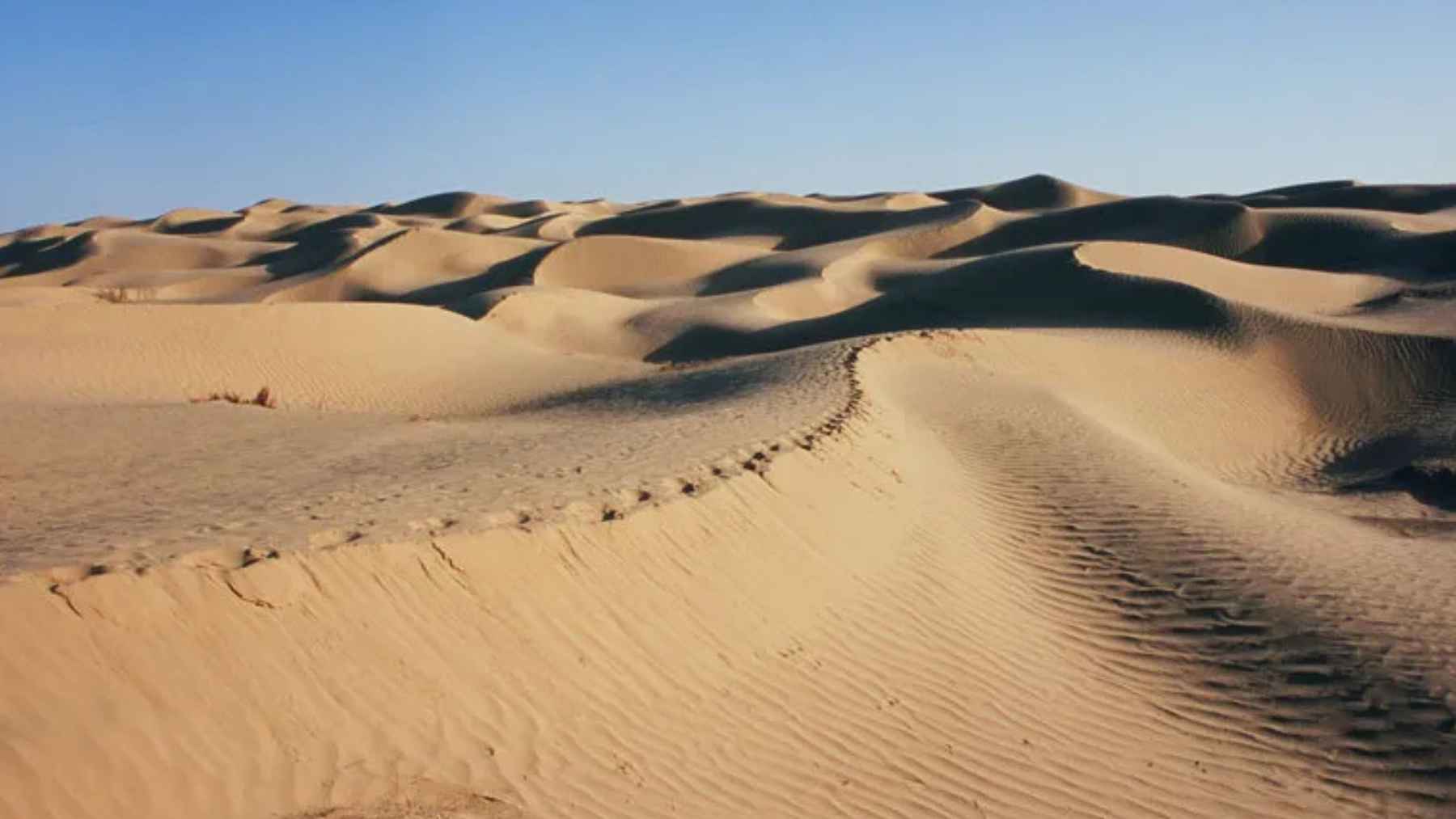
The Taklamakan covers about 130,000 square miles of shifting sand, slightly larger than the state of Montana. Surrounded by tall mountain ranges that block moist air, it was long considered a “biological void” with almost no vegetation.
That began to change in 1978, when Beijing launched the Three-North Shelterbelt Program, often called the Great Green Wall. The idea was simple on paper and daunting in real life. Plant billions of hardy trees and shrubs along the borders of the Taklamakan and the nearby Gobi to stop sand from marching into farms, roads and cities.
Since then, Chinese officials say more than sixty six billion trees have been planted in the north of the country, and by late 2024 a continuous green belt about 3,046 kilometers long finally wrapped all the way around the desert.
Forest cover nationwide has risen from roughly 10% in 1949 to more than 25% today, according to government and independent analyses.
How the desert’s “sand lungs” work
The new study, led by researchers at University of California, Riverside and Caltech, looked at what this green ring is doing to the local carbon balance.
They found that during the short wet season from July to September, rainfall over the region climbs to about sixteen millimeters per month, roughly two and a half times the rest of the year. That extra water feeds the planted forests and shrublands.
As they leaf out and photosynthesis ramps up, satellites detect stronger “green” signals and a measurable drawdown of carbon dioxide over the desert, about three parts per million lower than in the dry season.
To double check, the team compared those patterns with NOAA’s Carbon Tracker model, which estimates where carbon is absorbed or released across the globe. Both the satellite data and the model showed the same trend.
Over time, vegetation cover and photosynthetic activity along the Taklamakan’s margins have risen, while net ecosystem carbon flux has shifted more firmly into negative territory. In plain language, the rim of the desert is now a functioning biospheric carbon sink.
Study co-author Yuk L. Yung has described this as the first clear example of human intervention turning a hyper-arid desert border into a stable carbon sink, something many scientists once doubted was possible.
Changing weather on the desert’s doorstep
For people living near the sand, the changes are not just abstract graphs. In Makit County on the southwestern edge of the desert, a shelterbelt forest of about 3.6 million trees has been planted since 2019 with a reported survival rate above 85%.
Local records show that annual sandstorm days have dropped from more than one hundred fifty to under fifty, while average yearly rainfall has risen from around fifty three millimeters to about one hundred ten.
For farmers, that can mean fewer days when rice-sized grains of sand shred cotton plants and fewer choking dust events in town. For anyone who has scrubbed fine grit from windowsills after a windy day, the appeal is obvious.
On a broader scale, separate research across northern China finds that vegetation recovery since the early two thousands has cut dust emissions by about one third, helping to tame the spring dust plumes that once regularly swept into Beijing and even across the Pacific.
A powerful example, not a silver bullet
None of this comes without tradeoffs. The trees and shrubs survive thanks to meltwater running off surrounding mountains and to carefully managed irrigation. Expanding similar projects into deserts that lack reliable water would be far harder.
Scientists also note that parts of the Great Green Wall have suffered from high tree mortality and vulnerable monocultures, especially where thirsty species were planted in already stressed landscapes.
Researchers involved in the Taklamakan work stress that the climate benefits, while real, are modest compared with global emissions. One of the co-authors from NASA Jet Propulsion Laboratory and Riverside has said that planting in deserts alone will not solve the climate crisis and that this project should be seen as one piece of a much larger puzzle.
Their caution fits a bigger picture. Analyses from the United Nations Convention to Combat Desertification and partner groups estimate that about one third of the world’s agricultural land has been degraded over the past forty years and around twenty million hectares are lost to degradation every year. Land restoration is urgent almost everywhere, not only in deserts.
Lessons for a warming world
So what should we take from this new “sand lung” on the edge of Asia’s great desert? To a large extent, it proves that well-planned, long-term restoration in drylands can cool the local climate a bit, clean the air and quietly pull carbon from the sky.
It also shows that success depends on details such as water supply, species choice and patient maintenance, not just planting impressive numbers of seedlings.
At the end of the day, the Taklamakan experiment is a reminder that degraded land does not have to stay dead. For communities downwind of the sand and for a planet looking for every credible climate solution, that is no small thing.
The study was published in Proceedings of the National Academy of Sciences.