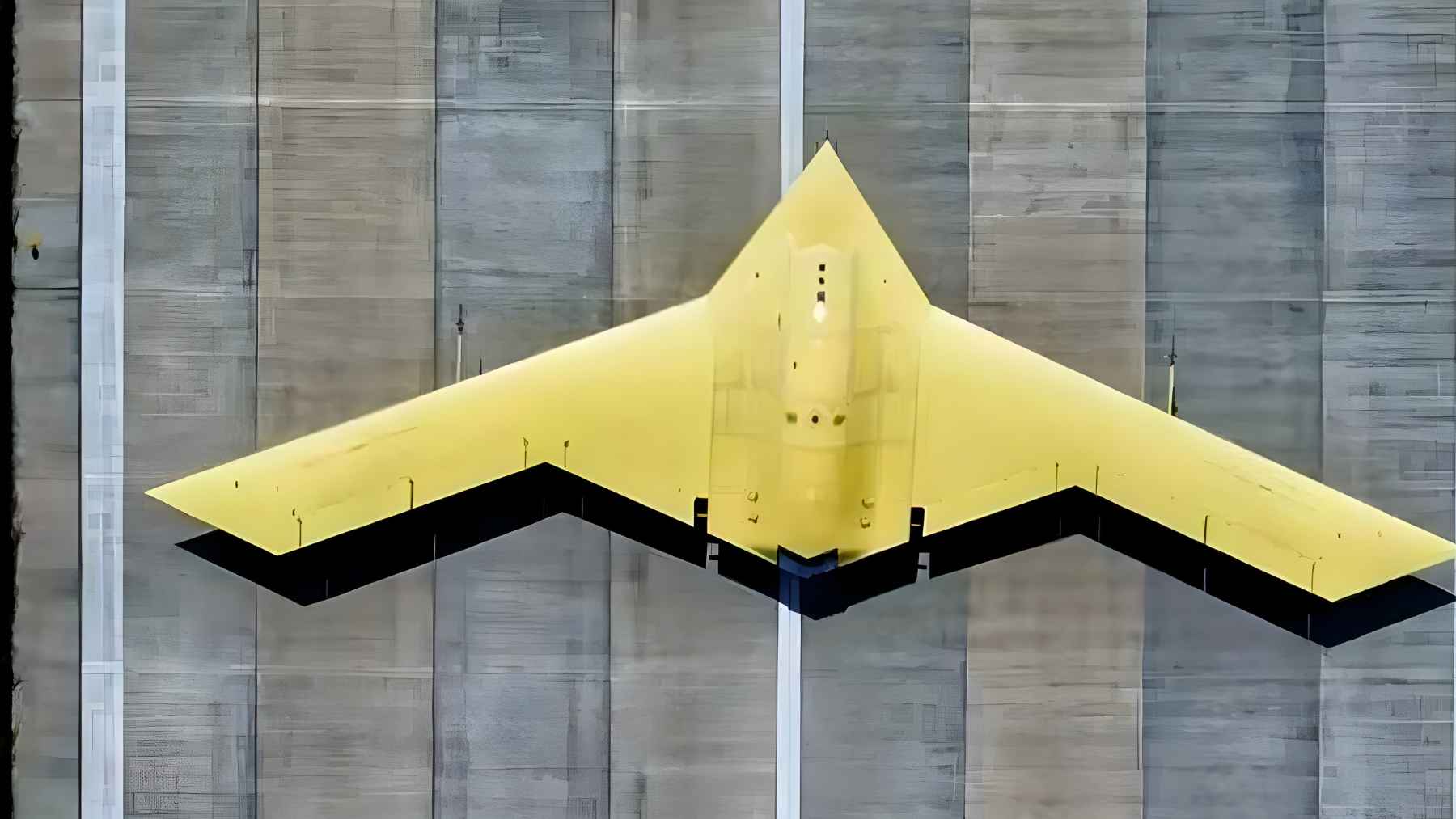
China has completed the first reported flight of the CH-7, an uncrewed stealth drone designed for long-range reconnaissance. Openly published specifications cited in a defense report put its maximum speed at about 926 kilometers per hour (roughly 575 mph), close to the 925 figure reported by some Chinese outlets.
So what did the maiden flight actually prove? Officials say it was about the basics, confirming that the aircraft’s shape and control systems behave as predicted before more demanding tests begin. It is a simple milestone, but it matters.
A test flight that focused on control and safety
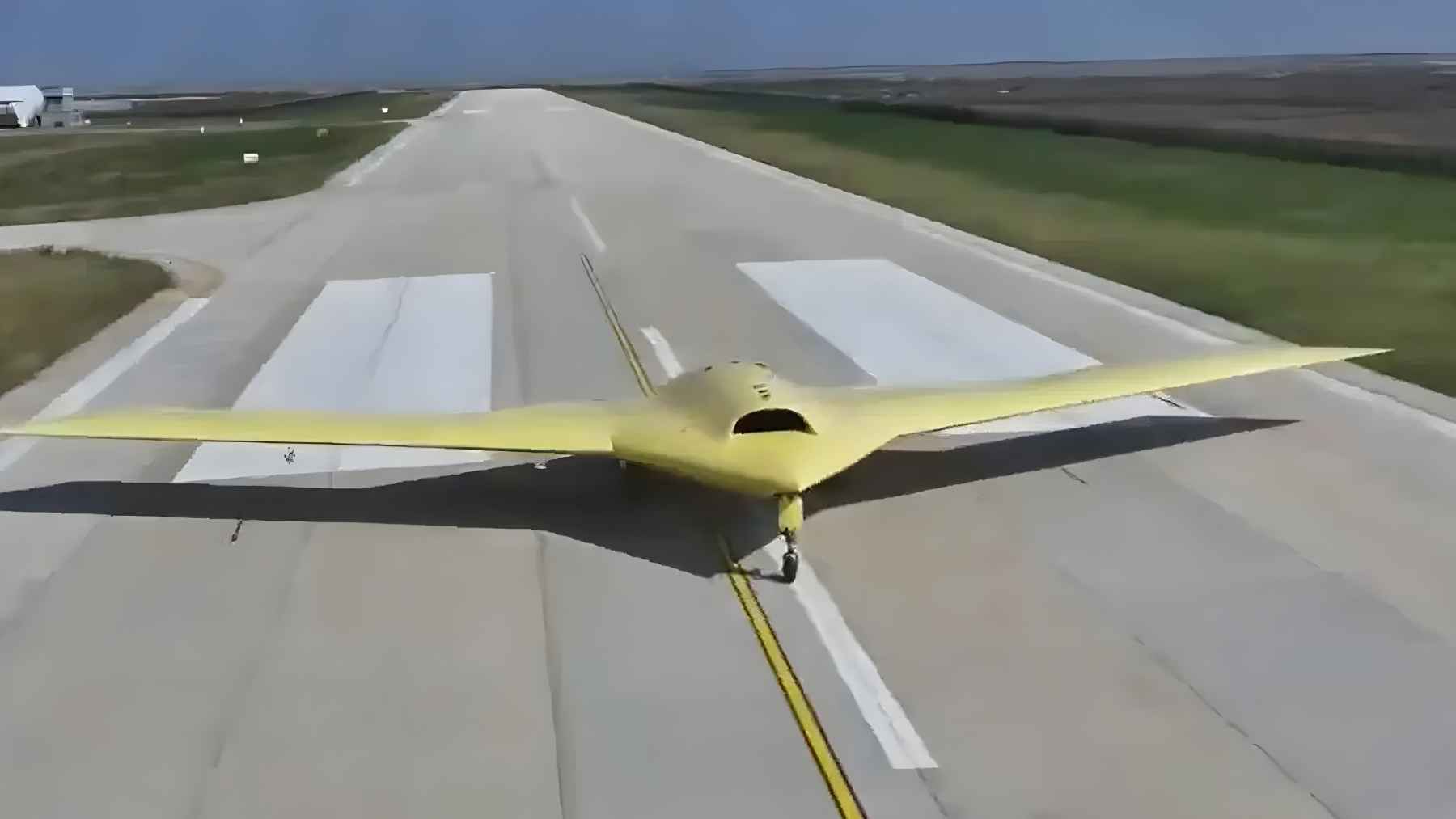
A China Daily report said the China Academy of Aerospace Aerodynamics described the maiden flight as a check of autonomous takeoff and landing, in-flight position control, communications, and tracking at an airfield in northwestern China.
Project leader Li Jianhua said the test achieved the “desired results,” which is especially important for a flying-wing aircraft that depends on computers to stay stable.
Engineers are now expected to expand the “flight envelope,” meaning the safe range of speeds, altitudes, and maneuvers. In practical terms, that is the jump from a careful first drive to pushing the limits, step by step, without breaking anything. Specifications can shift as prototypes evolve.
What “stealth” looks like in plain language
The CH-7 uses a flying-wing layout, a shape that can reduce radar detection by smoothing the aircraft’s outline and avoiding a traditional tail. Radar works by sending out energy and listening for a bounce-back, and stealth design tries to weaken that return.
Reports describing the drone say it uses radar-absorbing structures and stealth coatings in areas that tend to reflect strongly, including leading edges, access panels, and landing gear doors. Those small surface choices are part of what “low observable” means, and they are aimed at helping the drone slip closer to defended areas.
The aircraft is also described as carrying electro-optical and infrared payloads, which are basically high-end cameras that see visible light and heat.
An official description posted on a China Aerospace Science and Technology Corporation news page said follow-on tests will verify payload performance under “complex conditions,” a broad phrase that can include distance, weather, and electronic interference.
Why analysts say it is not a fighter sidekick
Some Chinese analysts have argued the CH-7 is not well suited to the “wingman” idea, where a drone flies tight formations with a fighter jet in fast, hard turns. Instead, it appears aimed at strategic reconnaissance, including battlefield surveillance and long-range maritime monitoring, such as spotting large ships and relaying what it sees.
That role has drawn comparisons to the still-unconfirmed RQ-180, a stealthy flying-wing aircraft widely linked to Northrop Grumman in Western reporting. A 2013 Aviation Week investigation described it as a highly classified effort that was already moving toward flight testing in the early 2010s, a reminder that some of the most important details remain out of public view.
The main report has been published in Global Times.