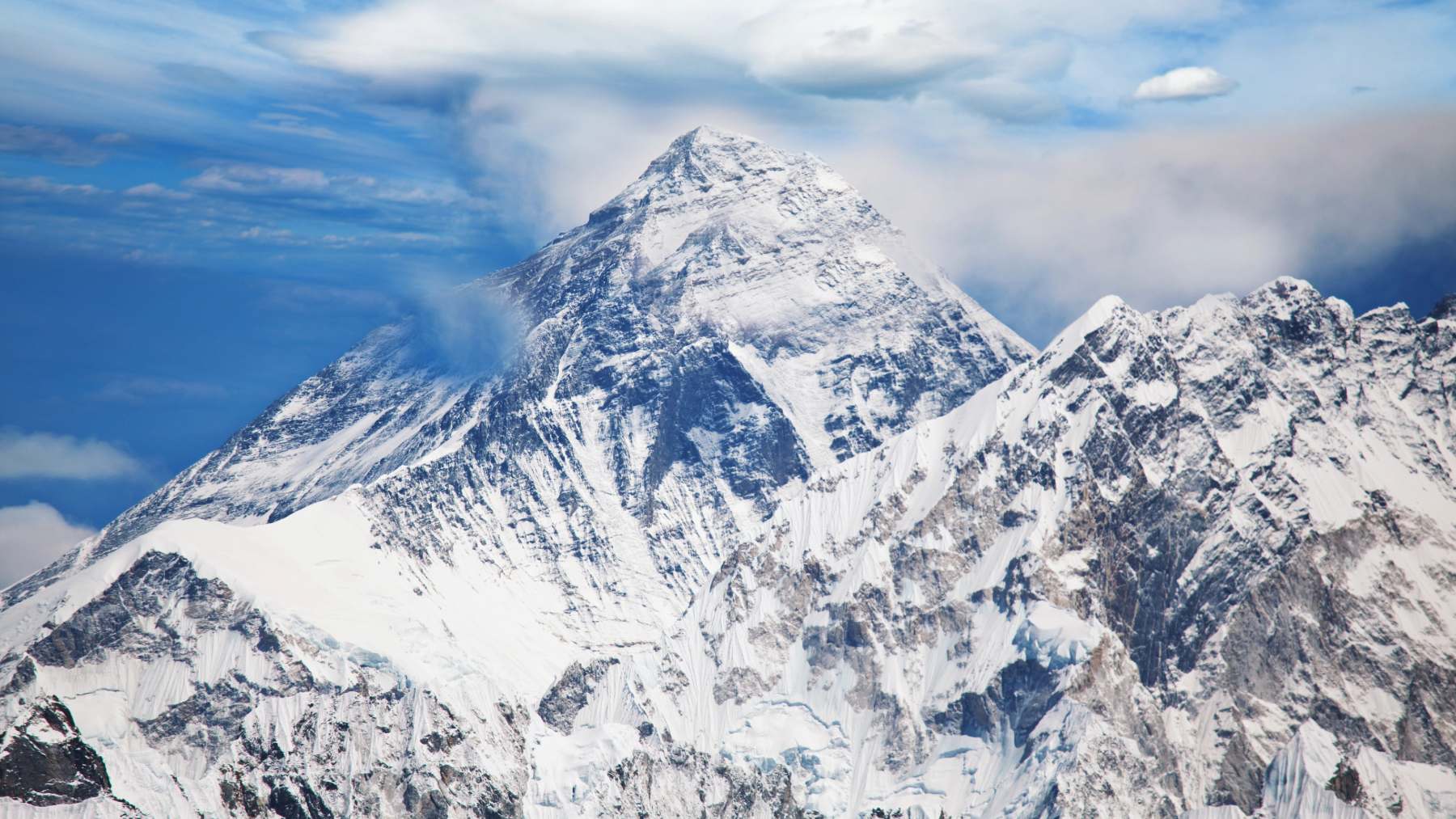
China’s 5,500-meter discovery is setting off all global alarms and is sparking global conversation around climate conservation. It was Chinese scientists who recently stumbled across the nation’s third-largest lithium deposit in a high-altitude region of Mount Everest with elevations at 5,390 and 5,581 meters. Lithium has considerable advantages, but the talk surrounding the environmental implications linked to extracting this white gold may trigger dire consequences if the lithium is extracted.
More about the 5,500-meter discovery made by China
The white gold reserve seems to be close to the Qiongjiagang Peak in the Qinghai-Tibet Plateau and is said to be quite an impressive discovery of over one million tons of lithium oxide. Lithium oxide is used for electric vehicle batteries and other electronics. The deposit contains hard-rock spodumene, which is also mined in Australia, and is considered a high-grade source of lithium.
This rich white gold site is just 3 kilometers outside of the Mount Qomolangma (Everest) Nature Reserve and is possibly one of the most scalable lithium sites yet. It has an elevation of 5,390 to 5,581 meters and can be considered one of the largest mining prospects in the world. While this is merely the early exploration stages, geologists from the Chinese Academy of Science believe that the deposit has much value and could assist with efforts towards a sustainable future.
Why have mining efforts raised much concern?
While the potential of the discovery is great, especially in terms of the volume discovered, the location has sparked concerns. The main concern was that mining at a high altitude has led to environmental and logistical concerns for scientists, conservationists, and policymakers.
There are a few factors and red flags that need to be considered in terms of mining efforts:
- Ecological fragility: This is of major concern as the Everest region is part of the greater Himalayas, which is considered an ecologically fragile zone, with the glacier-fed rivers being a concern as well. Should mining operations occur, contamination of the water sources may result, and glaciers may melt more readily.
- The cost of carbon against climate goals: Since lithium is part of the green energy transition, extracting the lithium goes against climate goals. Lithium extraction may pose further environmental complications since energy-intensive, high-altitude hard-rock mining could minimize all the efforts of climate gains when relying on lithium as a sustainable energy source.
- Social and geopolitical implications: Since China has a hold of much of the global lithium chain, the Everest region could strengthen global dependence on China’s lithium, but at the same time raise concerns pertaining to environmental degradation in geopolitical lands.
“White gold” is in abundant supply and is being called the “new oil”
Due to the abundant supply of lithium found, lithium is being called the new oil or white gold; however, harnessing the potential of this oil comes with trade-offs. The Everest region is one region abundant in lithium potential; however, the climate upset is surely something to be aware of. Although an American mine challenged China’s global lithium dominance, threatening to bring China down with 40 million metric tons underground, China is yet again emerging as the dominant leader of lithium.
China is inching forward in becoming a dominant global lithium leader
China’s newest lithium find near Mount Everest is an exciting find, but one that alerts the world that, in the race to decarbonize, extracting lithium from such sources could very well dismantle ecosystems that sustain life. A clean energy future does exist; however, we might have to climb up mountains to reach it if we are keen on mining to gain the potential. As China taps into lithium reserves, it is also looking at unveiling the ‘perfect battery’ made out of living beings that may challenge lithium’s dominance in China as well.
Disclaimer: Our coverage of events affecting companies is purely informative and descriptive. Under no circumstances does it seek to promote an opinion or create a trend, nor can it be taken as investment advice or a recommendation of any kind.