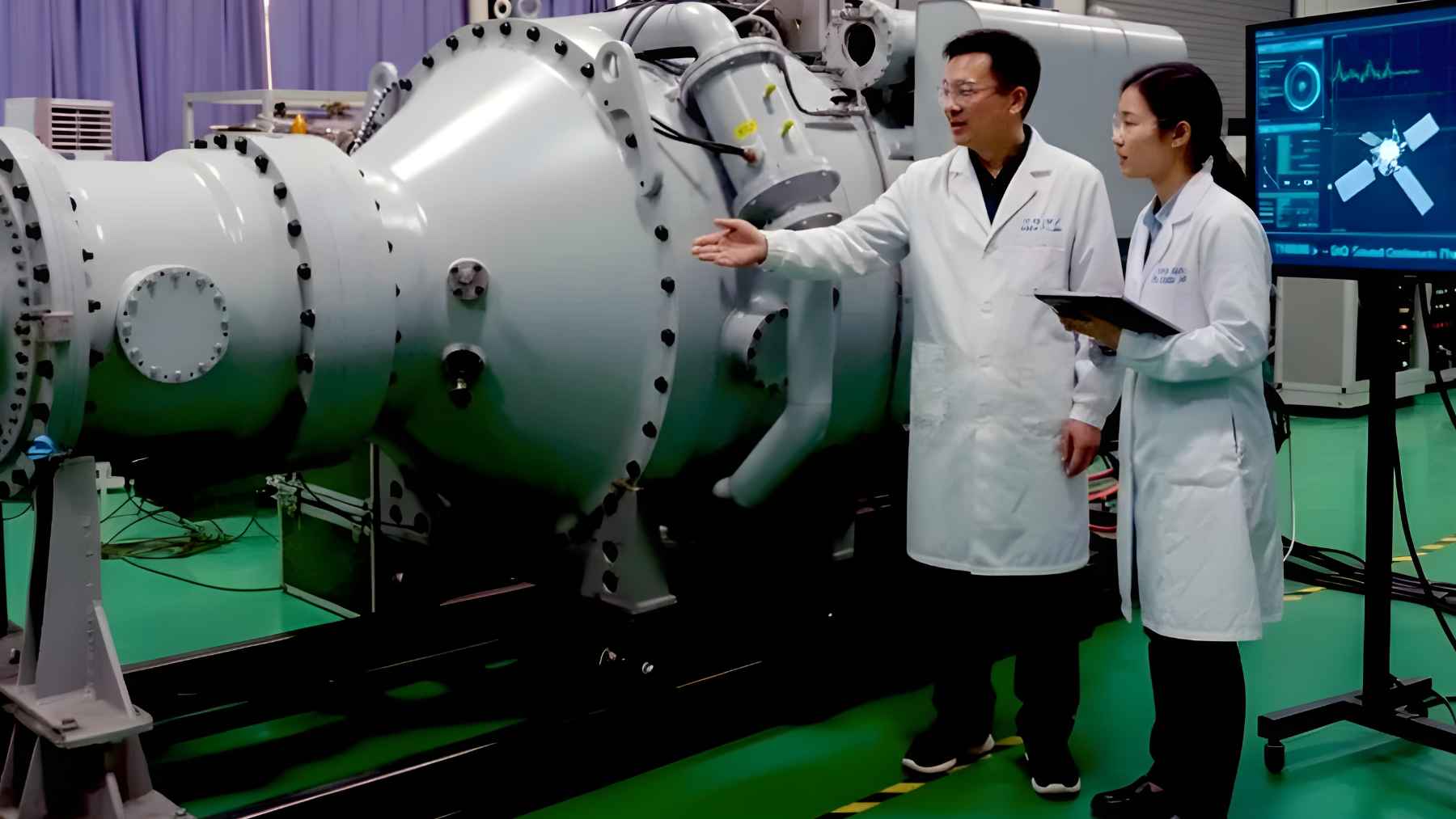
Europe has just taken a major step toward building its own high-speed weapons. In early February, Anglo German startup Hypersonica tested a prototype missile at Andøya Space in northern Norway that accelerated beyond six times the speed of sound and flew more than three hundred kilometers.
The test is being framed as the opening move in a plan to field a “sovereign” hypersonic strike system by 2029. It also lands at a tense moment, after a new Oreshnik missile from Russia hit targets in Ukraine and as European states import large volumes of United States made weapons, with analysts at the Stockholm International Peace Research Institute reporting in a recent arms transfers study that US arms exports to Europe have more than tripled.
A startup-built missile over Norway
The February flight took place at Andøya Space, a remote launch site active since the early 1960s. During the mission, the single-stage vehicle reached speeds above Mach six, about 7,400 kilometers per hour, and glided for more than 300 kilometers before splashing down over the sea.
The missile carried no explosive payload, serving instead as a technology demonstrator to collect data on sensors, guidance, and materials under hypersonic conditions. Co-founders Philipp Kerth and Marc Ewenz, former researchers at the University of Oxford, say the flight validated major subsystems and showed that a small private team can move from design to launch in about nine months.
What hypersonic missiles are and why they are hard
Hypersonic missiles are usually defined as vehicles that travel at more than five times the speed of sound while staying inside the atmosphere and keeping enough control to maneuver. At those speeds, the air around the nose heats up to extreme temperatures, so engineers must use special materials and cooling methods to stop the structure from melting or breaking apart.
Flying through that kind of hot, thin air also makes steering difficult because sensors can be blinded by plasma and control surfaces lose effectiveness.
To cope, the startup is following a step-by-step roadmap, starting with basic hypersonic flight, then testing advanced maneuvering, and eventually proving full mission profiles with a modular design it says can cut development costs by more than 80% compared with traditional programs.

Oreshnik and Europe’s rush for autonomy
According to reporting by Euronews, Russia has used its Oreshnik missile twice against Ukraine, including a January strike on critical infrastructure in Lviv near the Poland border at an estimated speed of 13,000 kilometers per hour. The system can carry conventional or nuclear warheads, has a reported range of around 5,500 kilometers, and has been deployed in Belarus.
European leaders see those shots as signals that key rail hubs, power grids, and even ports could be hit in a crisis. German chancellor Friedrich Merz called the January attack “unacceptable”, and European Union foreign policy chief Kaja Kallas warned that it was meant as a political warning to Europe and the United States.
At the same time, SIPRI data show US arms exports to Europe have more than tripled, supplying most new equipment bought by European NATO members.
Shields, spears, and what comes next
Europe’s response is not only about building its own long-range missiles. The European Defence Fund 2026 work program sets aside about €168 million for systems that can counter hypersonic weapons and for high-end interception inside the atmosphere, including projects such as the HYDEF interceptor program managed by OCCAR and the HYDIS 2 study coordinated by missile maker MBDA, which link companies and research centers.
The startup’s roadmap calls for a series of demanding flights between now and 2029 that would add more complex maneuvering and mission profiles, in line with NATO and United Kingdom hypersonic frameworks, before any operational weapon is fielded. Whether this young company becomes a pillar of Europe’s defense industry or not, its first Mach six flight shows that hypersonic technology is no longer reserved for superpowers.
The main press release has been published on the official website of Hypersonica.