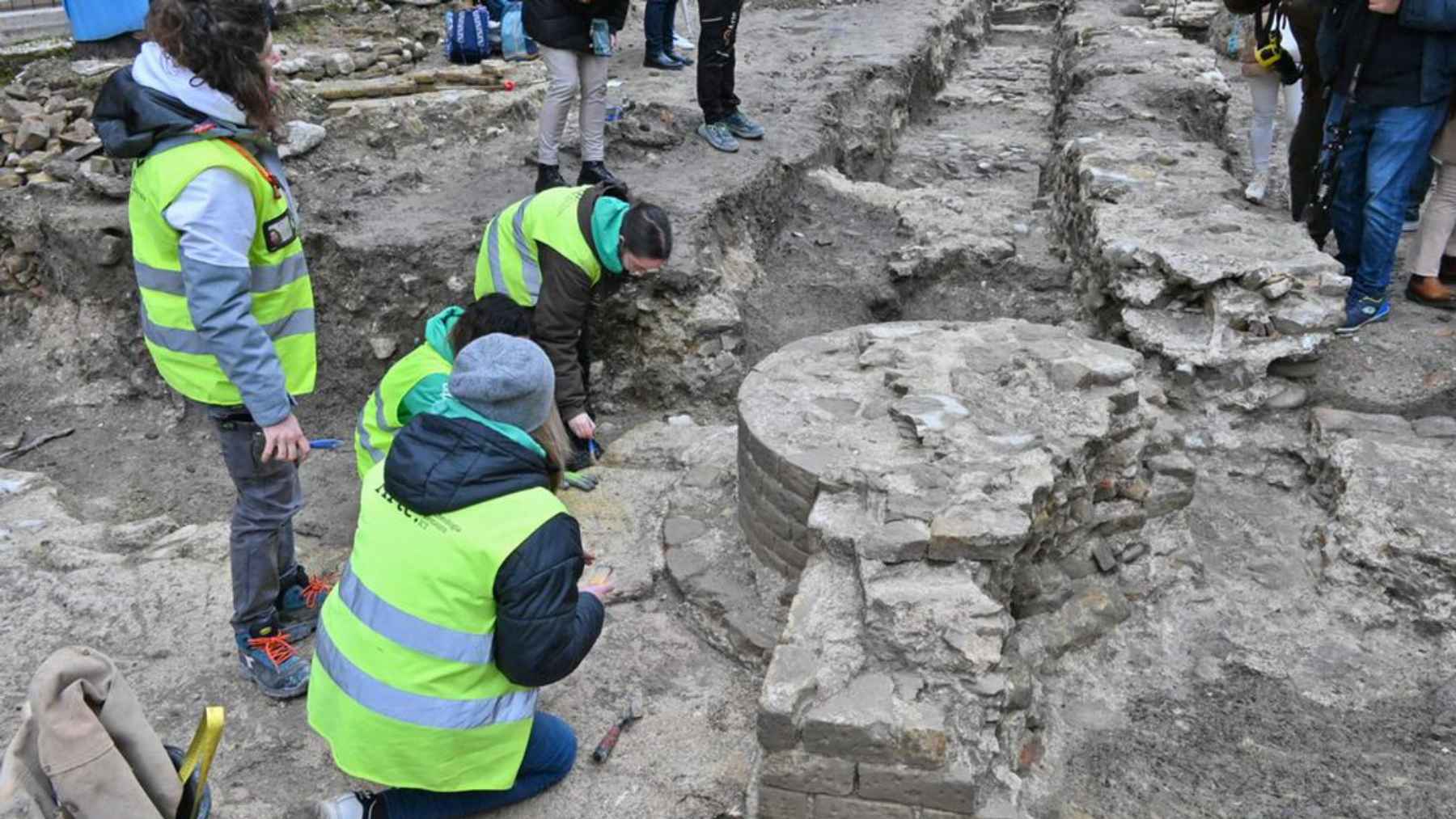
After more than five hundred years of searching, archaeologists in the coastal city of Fano have confirmed that a cluster of stone walls and towering column bases under a busy town square is the long-lost basilica designed by Marcus Vitruvius Pollio around 19 BCE.
The find is the first and only building that experts can link to him with certainty, and it is already reshaping how planners think about this corner of the modern city.
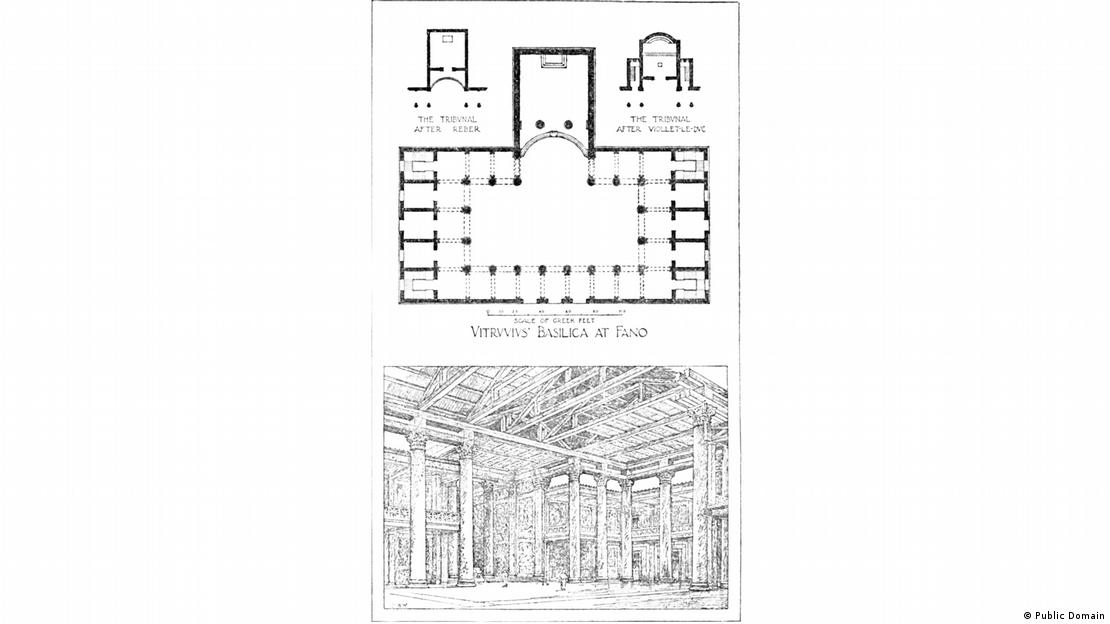
Italian authorities announced the discovery after new excavations beneath Piazza Andrea Costa matched the floor plan described in De Architectura, Vitruvius’s famous treatise that underpins much of Western architecture.
The basilica follows a regular rectangle with a perimeter colonnade, eight columns along each long side and four along each short side, exactly as the text specifies.
Those columns were not modest. According to measurements released by Italy’s cultural heritage office, they measure about five Roman feet in diameter, around one and a half meters, and are thought to have risen roughly fifteen meters high.
They were attached to sturdy pillars that supported an upper floor, signaling a monumental civic hall meant for legal, commercial, and administrative life rather than worship.
At a press conference, Culture Minister Alessandro Giuli called the find “a sensational discovery” and said it splits the history of archaeological research into a before and an after. Local officials went even further, describing it as an event the city’s grandchildren will still be talking about.
An ancient manual for healthy cities comes back into focus
Why does this matter for today’s environment conscious cities, beyond the thrill of finally putting a roofline to a legendary name?
Vitruvius was not just sketching pretty facades. In his first book he insists that choosing a healthy site for any town is “of the first importance,” favoring higher ground, good air, and a temperate climate while avoiding marshes that can trap fog and disease.
He also writes about orienting streets and rooms to manage sun and wind so that spaces stay comfortable without mechanical help, an early form of climate responsive design.
Seen through that lens, the Fano basilica becomes more than a Roman courtroom. It turns into a full-scale case study of how one of antiquity’s most influential designers actually applied ideas about light, air, and human comfort to a real public building. In a time when many city centers overheat under dark asphalt and glass, that kind of precedent feels surprisingly current.
Inside such basilicas, high ceilings, colonnades, and open entrances would have encouraged air circulation and filtered daylight, offering shade and respite from Mediterranean sun without air conditioning.
For ancient residents, it was a place to escape heat and noise from the streets, not entirely unlike how people now step into a cooler atrium or shaded mall on a sweltering afternoon.
A live lab for greener urban regeneration
The story of the discovery is tightly bound to contemporary urban policy. The remains surfaced during a municipal redevelopment of Piazza Andrea Costa that is financed through Italy’s National Recovery and Resilience Plan, a post-pandemic investment program that includes funds for culture, sustainable cities, and climate-friendly regeneration of public spaces.
Archaeologists were on site as workers peeled back the pavement. Once the outlines of the ancient hall emerged, a last exploratory trench revealed a crucial corner column that locked in the orientation of the whole complex.
With that, centuries of speculation about where the basilica once stood came to an end, and the city suddenly had to rethink what its redesigned square should look like above ground.
Regional leaders say the challenge now is to protect the ruins and at the same time use them as an engine for local development based on culture and tourism. In practice, that likely means new questions about traffic, tree planting, shading, and materials in and around the square.
Do you keep cars crossing a place that now sits on top of a two thousand year old civic monument? Or do you seize the moment to turn it into a largely pedestrian, cooler, more climate-resilient public space that showcases both ancient stone and new greenery?
Italy’s recovery plan already highlights the need to transform vulnerable urban areas into smarter and more sustainable districts, with investments in public housing, social services, and green regeneration of public spaces. Fano now has a rare opportunity to fold world-class archaeology into that agenda rather than treating it as an obstacle to construction.
What this basilica can teach tomorrow’s cities
For environmental planners, the rediscovered basilica reinforces a simple but powerful idea. Long before modern climate science, designers were already linking healthy air, careful orientation, and generous public space.
Vitruvius’s treatise influenced generations of architects, from Renaissance masters such as Leonardo da Vinci to contemporary sustainable design handbooks, and the Fano discovery finally anchors those theories in a physical building we can measure and model.
As excavations continue under the square, researchers will study how the basilica relates to surrounding Roman streets and other structures already known in the area, including remains near the church of Saint Augustine.
That work should help reconstruct how people actually moved, gathered, and cooled off in Fanum Fortunae, the ancient city that lies beneath today’s traffic and shopfronts.
At the end of the day, this is not only a win for archaeology. It is also a reminder that climate aware city making has deep roots. If planners in Fano and elsewhere choose to listen, a basilica designed two millennia ago could still influence how we shade our plazas, route our streets, and carve out quieter, cooler places in the middle of daily life.
The official statement was published by the Ministero della Cultura.