The idea sounds unthinkable at first glance. What if the German giants that fill European highways with sedans and SUVs no longer existed in their current form by the end of this decade?
That is the stark warning from German economist Moritz Schularick, president of the Kiel Institute for the World Economy, who says premium brands like BMW, Volkswagen, and Mercedes-Benz may no longer exist in their current form by the late 2020s.
He delivered that prediction on a major Sunday night political talk show in Germany, sparking a heated debate about the future of the country’s car industry and its millions of jobs.
Behind his words sit powerful forces that many drivers already feel when they look at their next monthly payment or wonder whether their next car should plug in instead of fill up.
Electric motors, new software, and looming autonomous driving technologies are reshaping how cars are built and sold, while high energy prices and global competition add more pressure. The question is how much of Germany’s traditional car world can survive that storm intact.
A stark warning for Germany’s big three
In his television appearance, Schularick argued that the current structure of Germany’s big three carmakers is unlikely to make it to 2030 untouched. He said he does not believe that Volkswagen, BMW, and Mercedes Benz will still exist in their present form at the end of the decade, given how the German auto sector is positioned right now.
He did not predict that the brands would vanish from the road overnight. Instead, he pointed to the likelihood of deep restructurings, major mergers, or strategic investors taking control and pushing through radical change.
As an example, he mentioned Swedish brand Volvo Cars, which entered the orbit of Chinese group Geely in 2010 and later reinvented itself as a leader in electrification and safety-focused design.
Schularick’s comments carry extra weight because of his role at the Kiel Institute, a leading research center that advises policymakers on global economic trends. The institute specializes in globalization, trade, and structural change, which puts Germany’s export-heavy car sector squarely in its field of view.
Electric cars, software, and the race for autonomy
In Schularick’s view, the main problem is not simply swapping a gasoline engine for an electric motor under the hood. He argues that electric mobility requires a full redesign of production lines, supply chains, and business models, with batteries, energy efficiency, and integrated digital systems now at the center of competition.
On top of that comes the race for autonomous driving and advanced driver assistance. Schularick warned that Germany risks focusing too much on past successes and past policy mistakes while others move ahead on self-driving technology, connected services, and artificial intelligence in vehicles.
He called it a serious concern that Germany could again fall behind in what he describes as the next revolution in mobility.
For ordinary drivers, these shifts appear in small but noticeable ways. New cars arrive with large touchscreens, constant software updates, and phone-like apps, while worries about charging points and the home electric bill replace old discussions about fuel prices and oil changes. The hardware still looks familiar on the driveway, yet the business behind it is changing quickly.
Industry and politicians push back
Not everyone accepts Schularick’s bleak outlook. Hildegard Müller, who leads the German Association of the Automotive Industry, called his prediction an “absurd forecast” and defended the strength of German manufacturers.
She argued that many companies remain successful but are held back by national policy choices and high energy costs that weigh on factories and suppliers.
Müller and the association she heads have repeatedly warned that Germany is facing a location crisis in car manufacturing. Surveys cited by the group show many firms delaying or canceling investments at home and looking instead to regions such as China and the United States, while a large share report cutting jobs and fearing for their competitiveness.
From the political side, Green Party figure Cem Özdemir expressed more confidence in the industry’s ability to adapt. He played down fears that Chinese investors would simply take control of companies like Mercedes Benz and insisted that, if everyone involved does their work properly, the transformation can be managed.
Financial stress at Porsche, Volkswagen, and Mercedes
The broader tension also shows up in company results. Porsche has suffered a reported drop of 95.7% in profits, a slump that drags down average earnings for the wider Volkswagen Group and highlights how quickly margins can evaporate in a changing market. That kind of plunge puts pressure on management to cut costs, delay projects, or look for new partnerships.
At the same time, Mercedes Benz is not enjoying its brightest period either, although the company appears to be stabilizing. The latest generation of the compact CLA model has drawn strong media attention and buyer interest, offering a small sign that the brand can still create buzz in a crowded premium market.
These examples help explain why Schularick talks about existing structures rather than brand names alone. What he foresees is a world in which familiar logos may still shine on grilles and steering wheels, but ownership, control, and strategy may look very different behind the scenes.
For investors, workers, and customers, that kind of silent shift can matter as much as a new badge.
What this could mean for drivers and workers
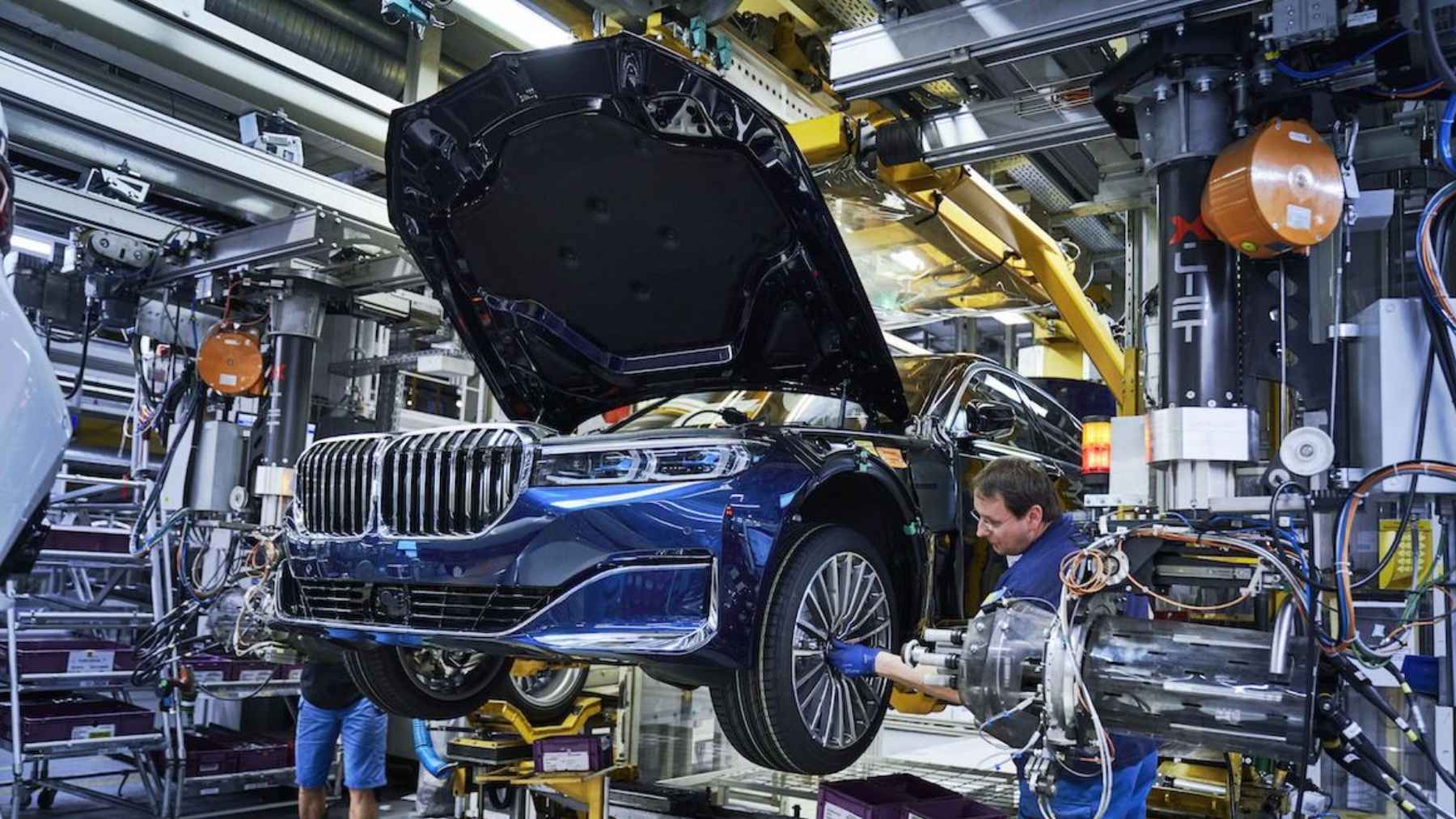
Warning signs are already visible in employment statistics. Since 2019, the German car industry has lost around 120,000 jobs, with supplier companies hit especially hard and many describing their current situation as poor or very poor in recent surveys.
For people on the factory floor, structural change can mean uncertainty about shifts, retraining, or even whether a plant will still be there in a few years.
For buyers, it can translate into higher prices, fewer model choices, or more cars built in joint ventures with foreign partners that bring in critical battery or software know-how. So how worried should fans of BMW or Mercedes really be?
Most experts would say there is no need to expect these brands to disappear from roads in the next few years. At the same time, Schularick’s warning suggests that by the time today’s teenagers are shopping for their first car, the corporate map behind those badges may have been redrawn, possibly with new foreign investors or deeper alliances.
The debate now unfolding in Germany is really about whether the country will help shape the future of mobility or mostly adapt to decisions taken elsewhere.
The official broadcast has been published on ARD Mediathek.