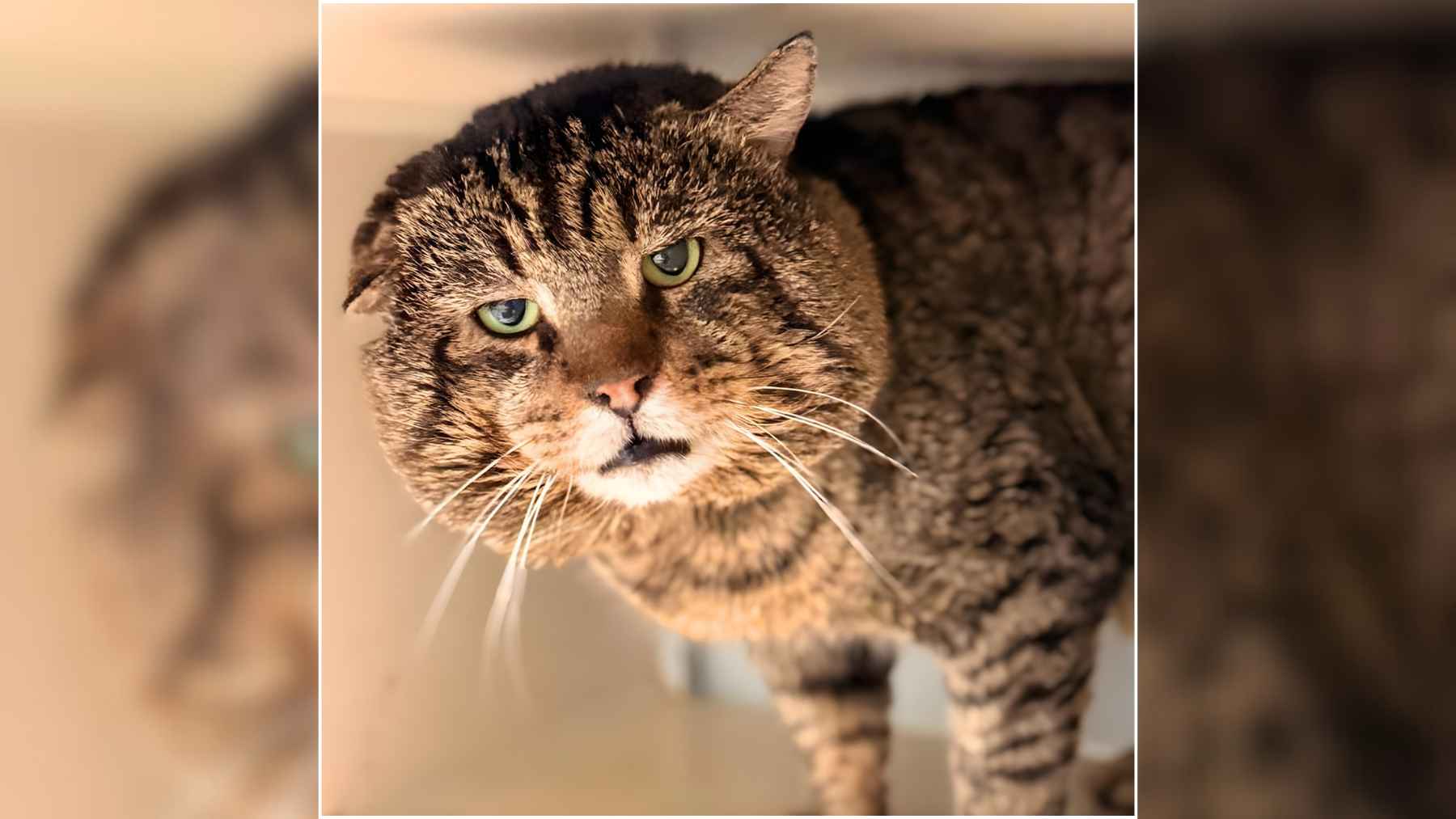
When staff at Furkids Animal Rescue and Shelters in East Cobb, Georgia, opened a Christmas Day intake crate and met a huge tabby with cheeks like a movie gangster, they expected trouble. Instead, the cat they named Katpone turned out to be a gentle, head‑butting softie who just wanted pets and a warm bed.
His story is funny at first glance, but it quietly captures a serious issue that reaches far beyond one shelter hallway.
A tough face that tells a harder truth
Furkids staff joked on social media that Katpone was “15 pounds of pure street cred” with “the jowls of a mob boss” and looked like “the type of cat to settle disputes behind a dumpster and come out on top every time.” In photos, his cheeks are dramatically swollen, giving him that exaggerated tomcat look that makes people smile online.
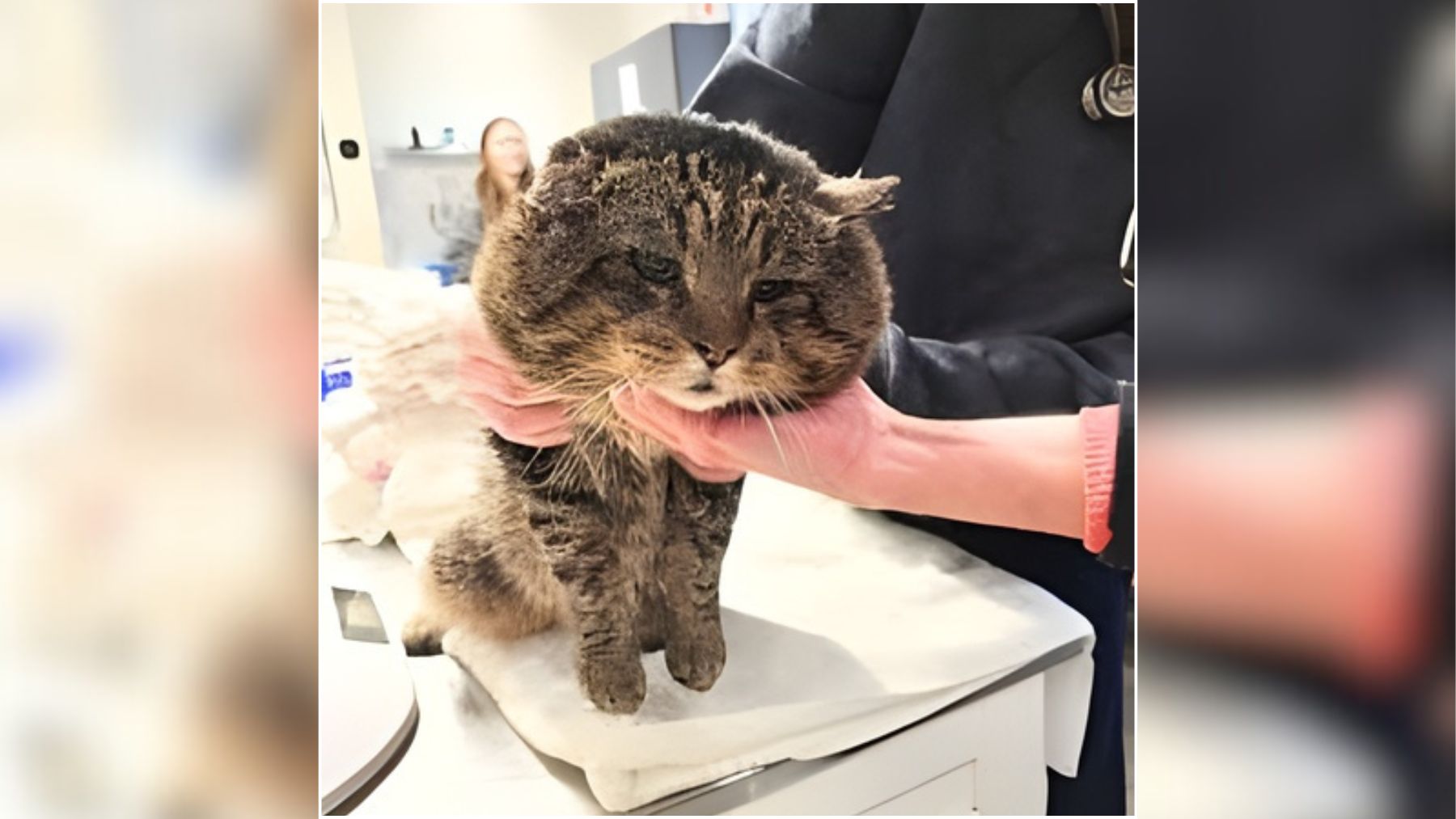
Those cheeks are not just a quirky feature. Furkids explained that unneutered male cats produce high levels of testosterone, which can cause the skin and muscles around the face to thicken. It is a billboard for dominance and also a bit of armor when fights break out with other males.
In Katpone’s case, years on the street left more than cosmetic marks. The shelter discovered he carried feline immunodeficiency virus, was battling an upper respiratory infection, and had ears that looked “a little wonky” from ear mites and old scuffles.
What FIV really means for outdoor cats
Feline immunodeficiency virus, often compared to HIV in humans, slowly weakens a cat’s immune system. Infected cats become more vulnerable to everyday germs that a healthy animal would fight off without trouble. The virus spreads mainly through deep bite wounds, which are much more common among roaming, unneutered males that fight over territory and mates.
Veterinary experts stress that neutering dramatically reduces roaming and aggression, so it lowers the risk that cats will both contract and spread FIV. Keeping infected cats indoors and sterilizing them protects other animals in the neighborhood and gives the positive cat a much better chance at a long, comfortable life.
So Katpone is not just a meme worthy face. He is a walking reminder of what happens when community cats are left unneutered and unmanaged.
Free-roaming cats and the quiet loss of wildlife
There is another side to this story that plays out far from the shelter exam room. Free-roaming domestic cats, whether owned or feral, are now considered one of the biggest human-related threats to small wildlife in the United States. A landmark analysis in the journal Nature Communications estimated that these cats kill roughly 1.3 to 4 billion birds and 6.3 to 22.3 billion mammals every year across the country.
Most of that toll comes from unowned outdoor cats, not indoor pets. For people who enjoy morning birdsong at the window or watch squirrels racing along power lines during the commute, the numbers are not abstract. They are the reason some backyards are getting quieter.
Scientists and conservation groups increasingly describe outdoor cats as an invasive predator in many ecosystems. At the same time, animal welfare organizations see the suffering of sick, injured, or starving strays first hand. Katpone sits exactly at that crossroads.
How spay and neuter programs help cats and ecosystems
Trap-neuter-return programs try to bridge this gap. Volunteers humanely trap community cats, sterilize and vaccinate them, then return them to their territory or relocate them to barn homes when appropriate. Studies of long-running projects, such as campus colonies in Florida, have found that these programs can stabilize and then gradually shrink feral cat populations while improving overall health inside the colonies.
Advocates say TNR also eases the strain on local wildlife. Fewer kittens are born, there are fewer hungry mouths to feed, and sterilized adults tend to roam and fight less, which reduces hunting activity and noisy late-night conflicts that neighbors complain about.
What shelters like Furkids are really up against
On paper, Katpone is a big, FIV-positive, middle-aged tom who arrived with a respiratory infection and battle scarred ears. In the shelter, he is now “running the place” while his health rebounds and staff search for an adopter who will keep him safely indoors.
Multiply his case by the countless unneutered outdoor cats in cities and suburbs and you get a sense of the challenge. Shelters work every day to pick up the pieces from years of unmanaged breeding, preventable disease, and conflicts with wildlife. It is compassionate work, but it is also a kind of emergency environmental management done on a shoestring budget.
What ordinary people can do
The fixes are not glamorous, yet they are surprisingly simple. Spay or neuter pet cats. Keep them indoors or in secure outdoor enclosures so they are not hunting songbirds around the bird feeder or dashing through traffic. Support local TNR projects and shelters with donations or volunteer time. Talk with neighbors about that friendly stray who keeps appearing on the porch instead of assuming someone else will handle it.
Most of all, remember that behind the viral photos and funny captions there is a living animal who did not choose life on the streets. Katpone’s giant cheeks tell a story of survival, but his new life at Furkids shows what can happen when communities decide to step in earlier and more often.
The story was published on The Dodo.
Images credit: Furkids.org