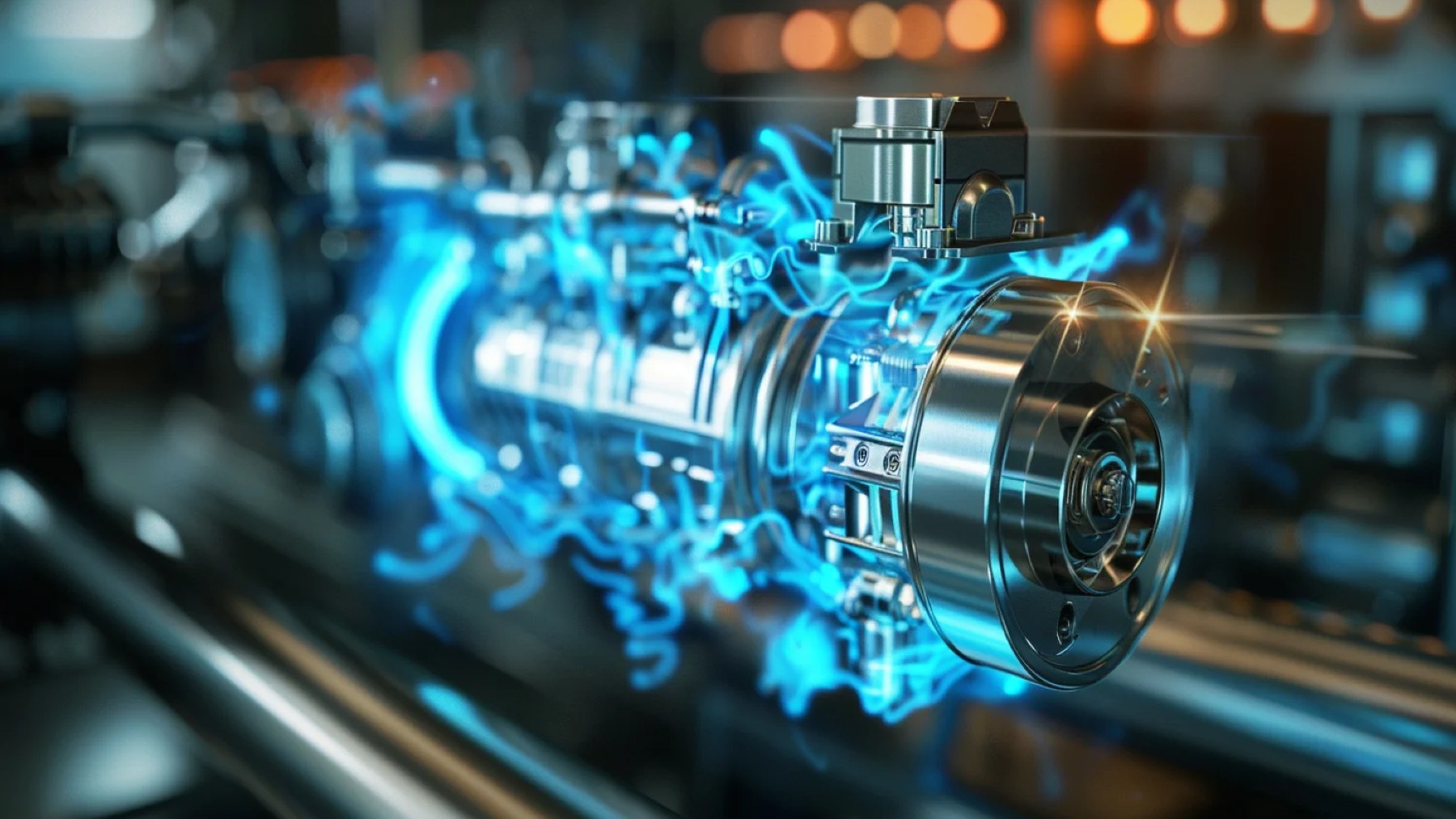
Remember when EVs seemed to be the future of sustainable mobility? There was a time when we considered them as such, until hydrogen came along to offer a promising alternative. Now, however, a group of scientists has found a new way to develop the most powerful engine ever: aluminum. You won’t believe how they plan to use it and what the first prototypes you’ll see on our roads will be (Tesla has reasons for concern, as you imagine).
This New Engine could be the End of Hydrogen: Metal as the Ultimate “Fuel”?
A newly discovered nickel-aluminum super alloy, also known by the name AlCrTiVNi5, will have a major influence on hydrogen combustion engines in the future. This material eminently responds to thermal and mechanical solicitations and could become suitable for high-temperature use, for instance in aero gas turbines, thermal power stations, and automobile engines.
Among those materials that the University of Alberta has noted as resourceful for coatings, there is one that has potential for use in high-temperature applications, such as the combustion of hydrogen in engines. It can be applied as a coating, and it is created using a concentrated alloy that includes metals, including aluminum and nickel.
The new system, designated as AlCrTiVNi5, is aimed at confronting extreme heat and appears to be nominating for use on surfaces that often get exposed to high temperatures, like the ones in a gas turbine or even a power plant or a car engine. Its alloy is a new dioxide coating for entropic stabilization that forms from a valve metal multiproduct concentrate alloy.
Why are we Talking about an “Aluminum Engine”: an Imminent Revolution in FCEVs
It possesses various desirable effects of application, including high stability, low thermal expansion rates, efficient fracture resistance, and a high melting point. These attributes ensure that it is ideal for use in high-temperature applications in places where other materials cannot endure the heat.
The AlCrTiVNi5 alloy indeed holds vast enter for the advancement of hydrogen combustion engines. These engine types necessitate materials that are capable of withstanding or resisting high temperatures and/or corrosive conditions. Due to its enhanced thermomechanical characteristics, the new alloy is suitable for use in the meantime as a clad material to extend its durability.
When we say that this is an “aluminum engine,” we do so because, although it is a technology for hydrogen engines, it can solve three of their main problems (which you have been seeing with us for several months, you will remember):
- Autonomy, which is usually no more than 400–600 km.
- Thermal efficiency, an aspect in which China is making progress.
- Engine life, which is the main concern for drivers.
The Hydrogen Industry is shocked: Toyota, Hyundai and other Brands that could Change their Strategies
In other AL wires, needed sheets and pieces used in high-temperature applications come in the form of Coatings using some commercially available alloys that are definitely inferior to AlCrTiVNi5 in performance. It is also more stable and has a lower expansion coefficient than aluminum oxide, so the material is more appropriate for use in high-temperature conditions.
This is crucial, more so for hydrogen combustion engines under particularly strict conditions, as shown above.
Work on the research and development of the new AlCrTiVNi5 alloy is major progress for the future of hydrogen combustion engines, as you may recall we “predicted” weeks ago.
These engines can bring about a change in the transportation system due to their efficiency in saving energy by not using fossil fuels. Some of the features of the new alloy include the capability of manufacturing engines that can work at high temperatures and in corrosive environments, and as a result, it is a core input in the construction of such engines.
Imagine the potential that an aluminum engine could have on our sustainable mobility system, with a horsepower raised almost to the limit and a range that would exceed the 1000–2000 miles that Chinese EVs present. Will this be the end of hydrogen and, with it, the end of FCEVs? We are not sure, but everything points to this sooner rather than later. In fact, the first steps in the innovation and development phase have already been taken and are promising.