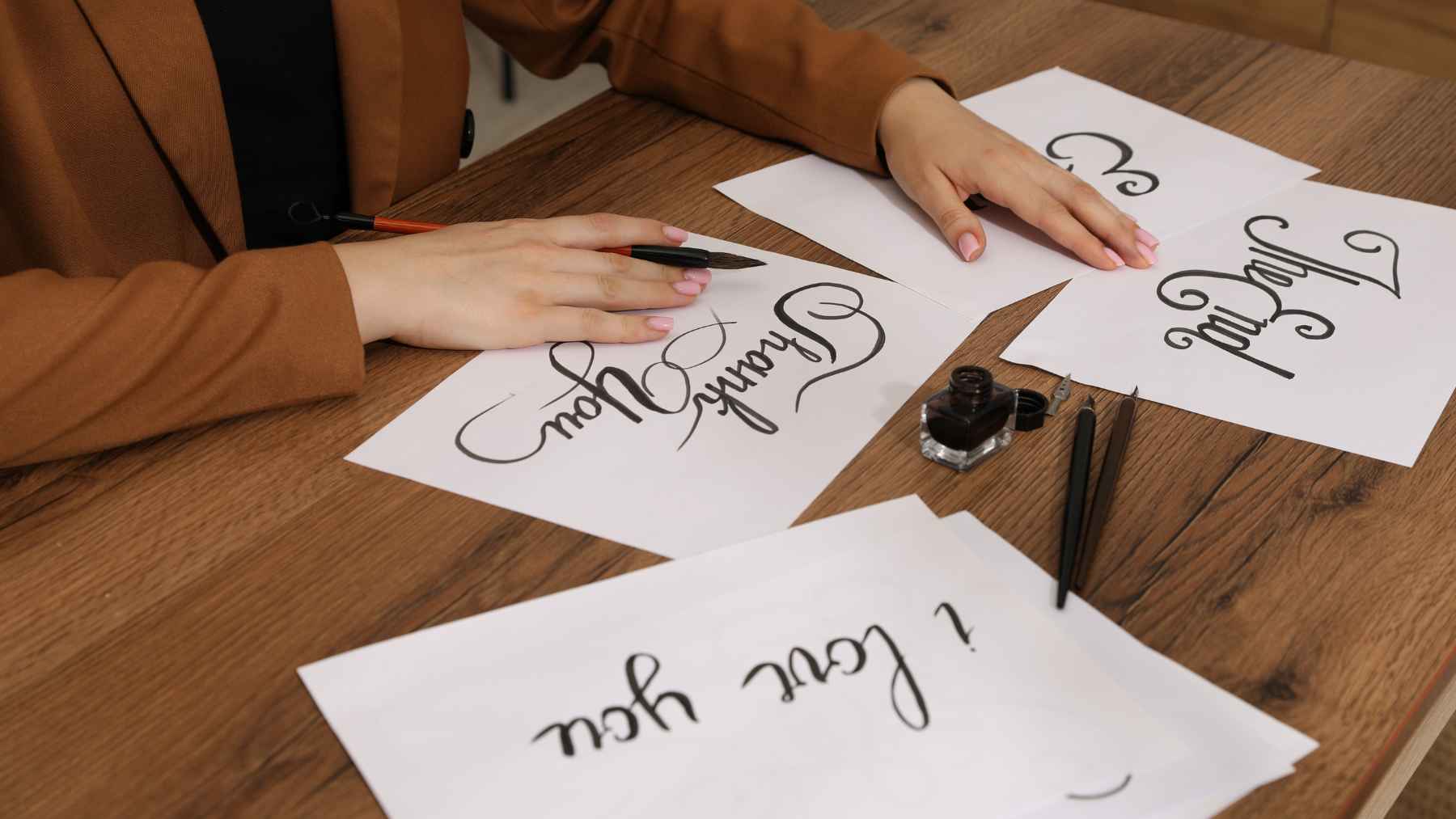
Have you ever caught yourself writing a note with random capital letters in the middle of words and wondered why you do that? Psychologists and handwriting experts say this quirk can reflect emotions, stress, or a desire to stand out, not just a messy writing habit.
When someone mixes uppercase and lowercase letters within the same word or sentence, it can act like a quiet signal of what is going on inside. For the most part, it points to how a person expresses themselves and copes with tension rather than to any mental disorder or disease.
Why some people mix uppercase and lowercase letters
One common explanation is the search for originality or a subtle rejection of strict rules. The writer may want their words to look different, almost as if they are saying I am not like everyone else without speaking out loud.
This style can also appear in moments of strong emotion. In aquick handwritten note or a rushed journal entry after a long day, changing letter size can work like an unconscious way to highlight what feels important or urgent.
What psychologists and handwriting experts see in this pattern
Studies in handwriting analysis, also known as graphology, often link this mixture of letters to the wish to attract attention or emphasize certain ideas. It can suggest inner conflicts or emotional contradictions, as if the person were pulling in two directions at once on the page.
Some experts associate it with impulsivity or anxiety while writing, especially when the script looks uneven or rushed. Others see it as part of a creative or exploratory phase of thinking, a kind of visual experiment where the line between order and freedom becomes a personal code.
A personal quirk that needs context
Specialists warn that this habit should not be read as something negative or as a clinical symptom by itself. It is considered a form of nonverbal language that gains meaning only when seen together with personality, mood, and the situation in which the person wrote.
People who feel sensitive, creative, or uncomfortable with rigid structures may be more likely to write this way, at least from time to time. At the end of the day, it is one more clue about how someone feels and how they choose to show that on paper.
The main work on this topic has been published in specialized journals on psychology and graphology.
The main study was published in the journal Applied Sciences.