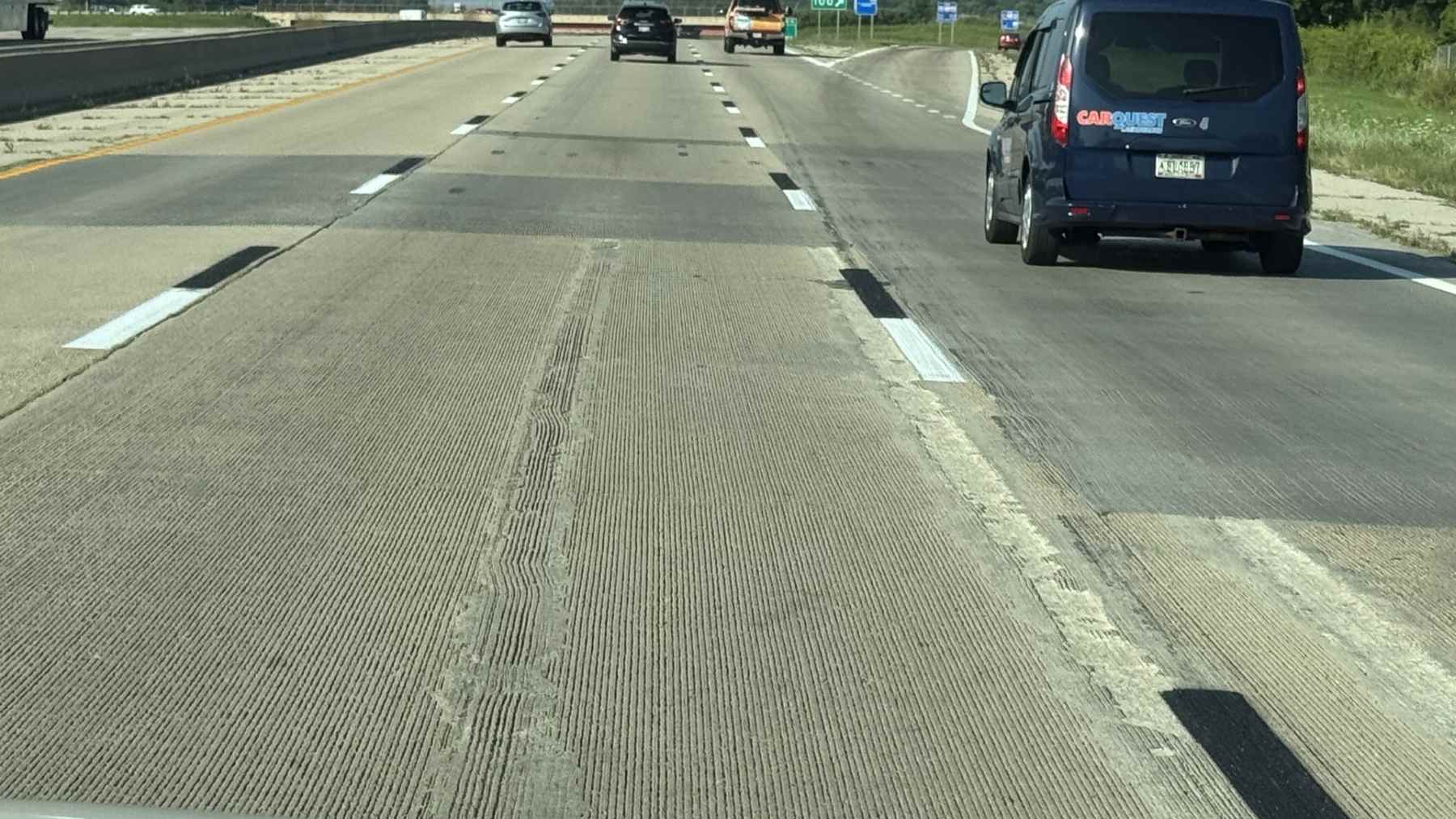
On many new concrete highways, the familiar white lane stripe now travels with a thin black band beside it, like a painted shadow on the pavement. It can look cosmetic at first glance, yet it is a safety feature with surprisingly large effects.
These contrast pavement markings tackle a simple problem. On pale concrete, bright sun or headlight glare can make plain white paint nearly disappear. The darker band beside or behind the stripe gives human eyes and in-car cameras a much clearer edge to follow.
That small change shows up in crash statistics. Roadway departure crashes, when a vehicle drifts out of its lane into a ditch or oncoming traffic, are among the main causes of fatal and serious injuries on high-speed roads in the United States.
Researchers at the Illinois Center for Transportation analyzed light-colored roadways in six states that switched to contrast markings. They found that these markings reduced roadway departure crashes by up to about 29 percent.
A project in Indiana looked at two interstate stretches that adopted contrast markings on concrete. One used bordered centerlines, where a white stripe is outlined in black. The other used alternating white and black segments, a pattern engineers call lead or lag. Together, these designs were associated with crash reductions of about 42 and 44 percent on the two sites.
For transportation agencies, those numbers translate into fewer emergency responses, fewer traffic jams, and fewer damaged vehicles that must be hauled away or scrapped. Every avoided pileup also means less exhaust from engines idling in long backups and less wasted fuel.
Why white lines can seem to vanish
Traditional markings work well on dark asphalt, where contrast comes for free. On pale concrete in bright sun or in rain glare, the edge of the lane can almost disappear. Many drivers know that moment on the commute when the afternoon sun hits the windshield, the road turns pale, and you squint to keep the car centered. What happens if the lane line almost disappears at the same time?
Contrast markings address that weak spot with a simple visual trick. The slim black band beside the stripe creates a sharper boundary that the eye can pick up quickly. Glass beads in the paint make the markings sparkle under headlights and help them stay visible even when a thin layer of water covers the pavement.
Helping humans and machines share the road
Modern cars now use forward-facing cameras that scan for lane lines so lane-keeping assistance systems can keep the vehicle centered. Those systems look for changes between light and dark pixels in each frame. When the white stripe on concrete is barely visible, the software can struggle, just as a tired driver might.
By adding a darker outline, agencies are repainting the road in a language that both people and algorithms can read. Federal researchers and state departments of transportation are testing how automated and connected vehicles respond to different markings and how to keep those markings visible in rain, low sun, and work zones.
A low carbon safety upgrade
From an environmental perspective, contrast markings are relatively inexpensive measures that can be added when concrete pavements are built or resurfaced. They can improve safety without widening roads or pouring more material.
The Illinois research team also created a benefit-cost tool and concluded that the savings from avoided crashes far outweigh the extra cost of contrast markings on high speed roads. When a safety measure pays for itself, it frees up public budgets for other green choices such as better transit, protected bike lanes, or electric bus fleets.
So the next time you notice that small black band hugging the lane line, it is worth a second look. For the commuter fighting glare, the trucker relying on lane-keeping tech through the night, and the future electric shuttle that will share that pavement, those tiny stripes could be the quiet difference between a routine trip and a serious crash.
The research report was published on the Federal Highway Administration Crash Modification Factors Clearinghouse.