Sleep is usually defined as a reversible state of deep rest, with a special posture and a higher threshold for waking up. In mammals and birds it also shows up as distinctive brain waves that can be picked up by sensors on the scalp.
Using those behavioral and brain clues, neurologist Chiara Cirelli at the University of Wisconsin Madison argues that sleep, or something very close to it, has been found in every species studied so far. In a widely-cited article in the journal PLOS Biology, she and colleague Giulio Tononi concluded that there is no clear evidence of any animal that lacks sleep completely.
At the same time, their review highlights a few “difficult cases” that push sleep to its limits. That is where our five unusual animals come in, each equipped with special tricks that let them stay active far longer than we could manage during a late night study session.
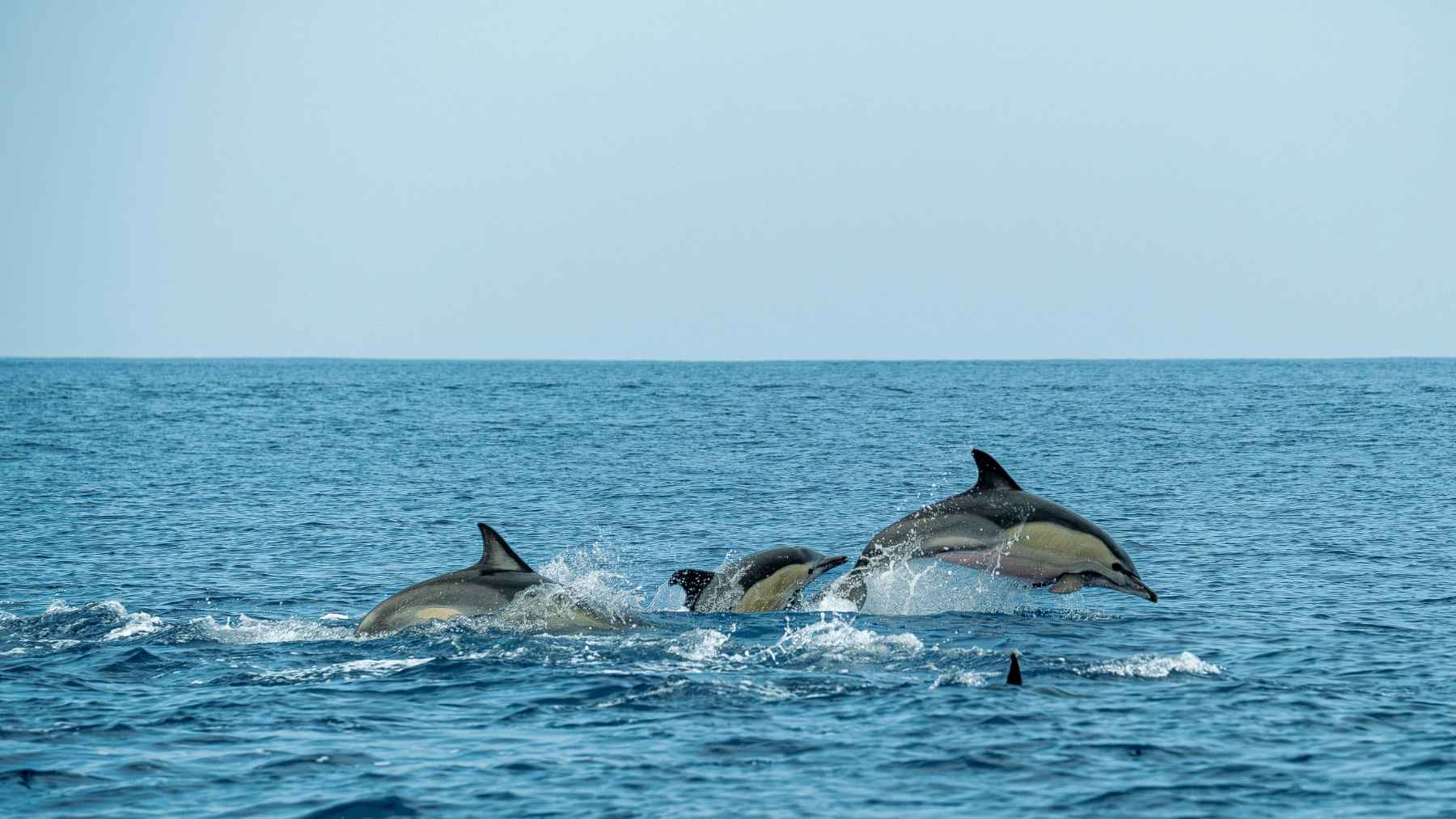
Dolphins sleep with half a brain awake
Dolphins need to move to breathe and must keep watch for predators and their own calves, so zoning out entirely would be dangerous. Instead, they enter what researchers call unihemispheric sleep, meaning slow waves appear in one half of the brain while the other half stays in a waking state.
Work summarized by Chiara Cirelli shows that during these periods a dolphin can close one eye and keep swimming slowly in circles. At the same time it responds less to sounds or touches on the resting side of the body, which fits basic definitions of sleep.
In separate experiments, Brian Branstetter at the National Marine Mammal Foundation trained bottlenose dolphins to use sonar to detect targets underwater. He found that two animals could perform this task continuously for at least fifteen days with no loss in accuracy, a result reported in a PLOS ONE study on dolphin vigilance that suggests unihemispheric sleep lets them rest without ever fully “going offline”.
Bullfrogs and the myth of the sleepless frog
Bullfrogs are often held up as classic animals that never sleep, an idea that traces back to a 1967 study in which scientists delivered mild shocks and watched for changes in breathing. The frogs reacted even during quiet periods at night, so the authors concluded they were always awake.
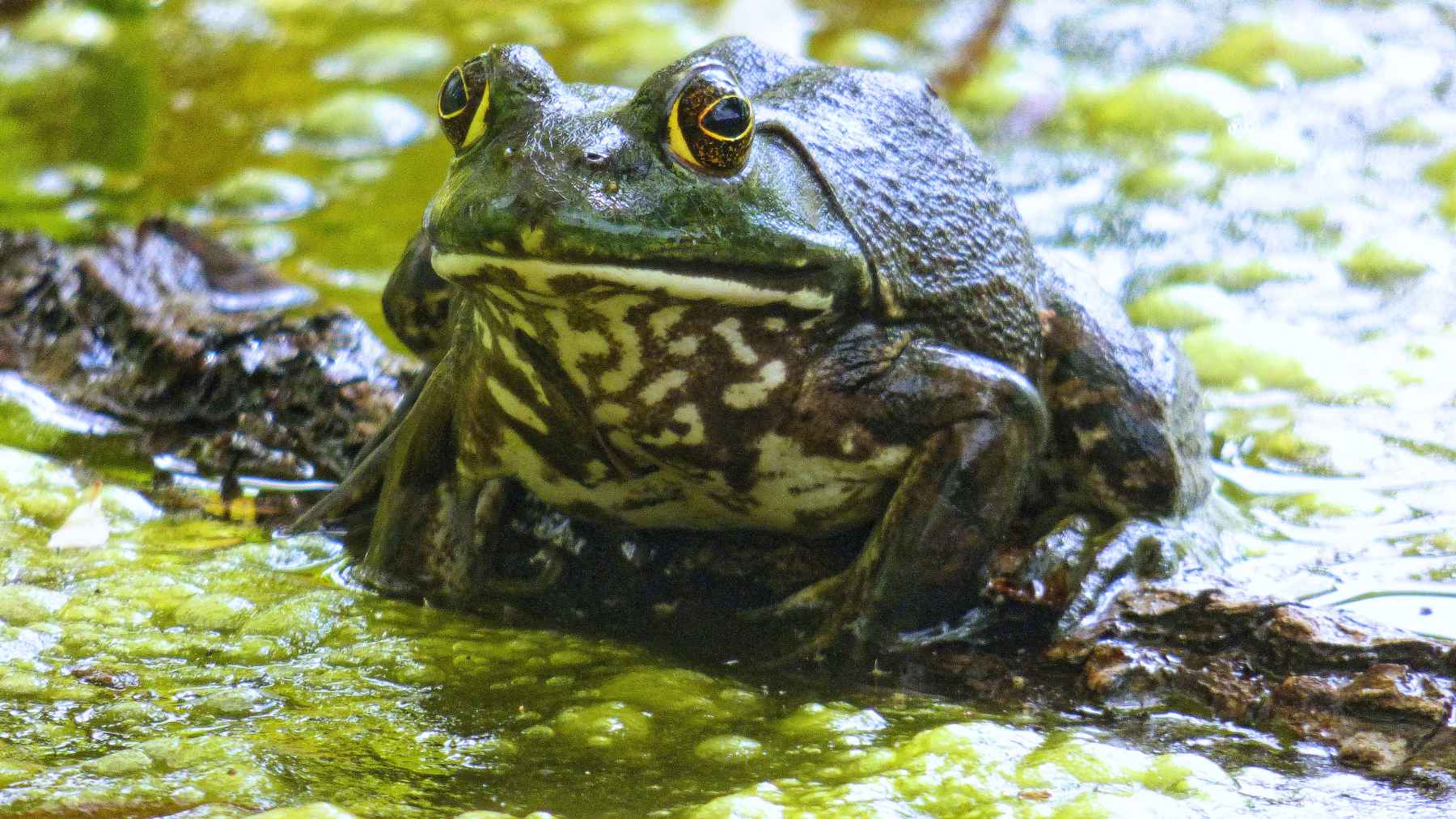
Later reviews point out that this experiment measured only one type of reflex and never checked whether the frogs were less responsive to gentler signals such as light or sound. Modern sleep researchers now say that more work is needed before anyone can claim that bullfrogs truly stay awake for their entire lives.
Bluefish that swim around the clock
Bluefish, known to scientists as Pomatomus saltatrix, are fast-moving ocean predators that chase schools of smaller fish near the surface. They support commercial and recreational fisheries and sometimes end up as fillets in seaside markets or on a beachside grill.
A detailed synopsis from the National Marine Fisheries Service notes that wild bluefish swim continuously day and night, with their speed changing depending on water temperature and body size. There is no direct evidence yet about what their brains are doing during those slower glides, so some experts suspect they may rely on a form of “sleep swimming” similar to coral reef fish that keep moving while still showing reduced responses to danger.
Tilapia on the menu and in the lab
Tilapia is a hardy freshwater fish originally from Africa that is now farmed across the globe, including in ponds, cages, and even backyard tanks. If you have ever ordered a mild white fish at a chain restaurant, there is a good chance you have eaten tilapia without thinking much about its sleep habits.
Back in the 1970s, sleep researcher Colin Shapiro reported that Mozambique tilapia rested motionless on the bottom of their tanks at night, with slower breathing and a higher threshold for waking when food or mild electric currents were introduced. Those observations matched standard behavioral criteria for sleep and showed that tilapia do in fact have daily rest periods.
More recent work on fish biological clocks, led by Francisco Javier Sánchez Vázquez at the University of Murcia, shows that a tiny structure called the pineal organ in many species produces the hormone melatonin at night, helping set rhythms of activity and stress.
That research on endocrine rhythms in aquatic animals is summarized in a Frontiers in Endocrinology review on fish circadian systems, and it suggests tilapia may be flexible in how they rebound after sleep loss rather than truly sleepless.
Fruit flies that cope with extreme sleep loss
Fruit flies from the species Drosophila melanogaster are famous lab organisms that share many genes with humans and are often used to study sleep. For years they were thought to show a simple pattern of many hours of quiescence each day, much like miniature versions of us.
In 2019, Quentin Geissmann and colleagues in the lab of Giorgio Gilestro at Imperial College London used automated tubes to monitor thousands of flies and gently rotate them whenever they sat still for more than twenty seconds.
They found that some flies naturally slept only five to fifteen minutes per day, and that males kept awake by the device did not die earlier than normal, while females lived only about three days less out of a forty to fifty day lifespan.
The team concluded that most sleep in flies might be “useful” rather than strictly “vital” in the way calories are, and that short micro sleeps or sleep like walking could still be sneaking in between rotations. Their work does not mean flies never need rest, but it shows that at least some animals can tolerate far more lost sleep than we once thought.
What these animals can teach us about our own sleep
For humans reading this on a tired evening, the message is not that sleep suddenly became optional. Instead, these unusual animals reveal how evolution has stretched and reshaped rest to fit different challenges, from breathing at the surface of the sea to chasing prey through dark water.
A separate review by Vanessa Hill and Mimi Shirasu Hiza at Columbia University links chronic sleep restriction in people to higher risks of diabetes, heart disease, and neurodegenerative conditions, so experts still view sleep as critical for long-term health.
At the end of the day, these five species help scientists probe what sleep is really for, and the main research on extreme sleep reduction in fruit flies has been published in the journal Science Advances.