Britain has been told to prepare for at least two degrees Celsius of global warming by 2050. Its independent Climate Change Committee says the country is not ready for extreme heat, drought and floods that are already happening.
The warning comes in a new letter to the government, sent after the hottest summer on record in the United Kingdom and a year when global carbon dioxide levels jumped by a record three and a half parts per million.
At the same time, a separate study led by Tianle Yuan at NASA’s Goddard Space Flight Center finds that cleaner ship fuels have accidentally removed a cooling shield over the oceans, likely speeding up the rate of warming in the 2020s. So what does that mean for people heading into yet another hot summer and watching their energy bills and insurance costs creep up?
Why advisers now see two degrees as the new baseline
In its advice, the Climate Change Committee says governments should plan for global temperatures to reach around two degrees Celsius above pre-industrial levels in the 2050s, based on the current pace of warming of about a quarter of a degree per decade.
The committee still believes the Paris Agreement goal of limiting warming to 1.5 degrees remains technically possible, yet it warns that the chance of missing that target is getting higher every year. Its analysis builds on work by the Intergovernmental Panel on Climate Change, which shows that even under the most aggressive emissions cuts, warming is expected to keep rising until at least the middle of the century.
Baroness Brown of Cambridge, who chairs the committee’s adaptation panel, writes that people in the United Kingdom are already feeling the impacts of a changing climate and that leaders “owe it to them to prepare, and to help them prepare, for what we know is ahead.”
The committee’s risk assessments point to more frequent and widespread heatwaves, longer droughts, heavier downpours and a longer wildfire season at two degrees of global warming, along with extra sea level rise that will keep building for centuries.
Record carbon dioxide rise is locking in long-term heat
The letter arrived as the World Meteorological Organization reported that global carbon dioxide concentrations climbed to about 424 parts per million in 2024, the highest level ever measured. From 2023 to 2024, the average concentration jumped by 3.5 parts per million, the largest annual increase since modern records began in the 1950s, and growth rates have roughly tripled since the 1960s.
WMO deputy secretary general Ko Barrett said the heat trapped by carbon dioxide and other greenhouse gases is “turbo charging our climate and leading to more extreme weather,” adding that cutting emissions is essential “not just for our climate but also for our economic security and community well being.”
For the most part, scientists say this rise still comes from burning fossil fuels, now amplified by more wildfires and by forests and oceans that seem to be absorbing a smaller share of our pollution.
Cleaner ship fuels removed a hidden cooling shield
Until 2020, most large cargo ships burned high-sulfur fuel that released tiny particles into the air and helped brighten low clouds over busy sea lanes, a side effect sometimes described as marine cloud brightening. New international rules from the International Maritime Organization sharply cut the sulfur content of shipping fuel, reducing those particles by about 80% and clearing the air over many ocean regions.
The study by Tianle Yuan and colleagues in Communications Earth & Environment combines satellite data with computer models and estimates that this change adds about 0.2 watts of extra heat per square meter over the global oceans, roughly doubling the warming rate in the 2020s compared with the long-term average.
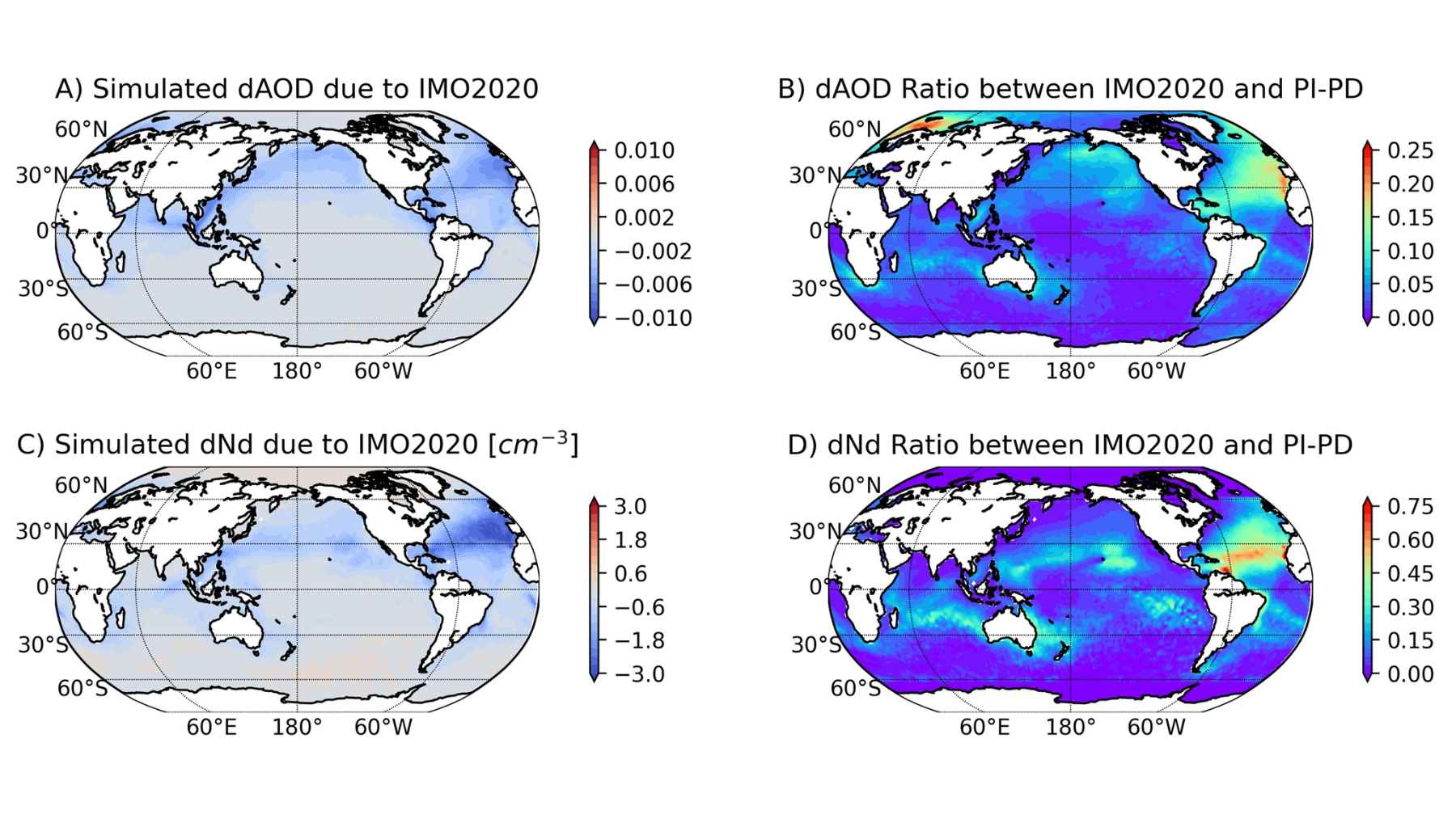
The authors describe this as an inadvertent geoengineering termination shock, in other words a sudden end to an accidental cooling effect that lets extra heat build up.
The effect is strongest in the North Atlantic and some subtropical seas, where fewer reflective clouds mean warmer sea surface temperatures, a pattern that lines up with recent record-breaking ocean heat, although scientists stress this is likely one important factor among several rather than the only cause.
A hotter UK is already visible in everyday life
For many people, the warnings are no longer abstract graphs but the memory of sweltering classrooms, restless nights and parched parks during recent summers. Is it any surprise that climate change now feels personal rather than distant.
Met Office statistics show that the summer of 2025 was the warmest on record for the United Kingdom, with an average temperature of 16.1 degrees Celsius, more than 1.5 degrees above the long-term norm, and accompanied by four official heatwaves.
Met Office attribution studies suggest that a summer as hot or hotter than 2025 is now about seventy times more likely than it would be in a climate without human-driven greenhouse gas emissions.
Hospitals, care homes, schools and rail lines have already struggled in the heat, and the Climate Change Committee has warned that without faster action the country faces growing risks to health, food supplies, water security and key infrastructure.
In its latest progress report the committee concluded that governments “have repeatedly failed on their ambitions to make the UK resilient to climate change,” a gap that shows up every time roads soften, crops wither or train services are cut back during hot spells.
What experts say needs to happen next
The committee is urging ministers to set clear long-term adaptation objectives to be achieved by 2050 at the latest, backed by five yearly targets and specific responsibilities for each department.
It highlights six priority areas that range from protecting public health and food security to strengthening infrastructure and making towns and cities safer in the face of more frequent floods, storms and heatwaves. At the end of the day, the message is that planning for a two degree world is now a minimum requirement, not a distant worst case.
The shipping study adds a twist, since it shows how cutting air pollution can briefly accelerate warming by removing a veil that had been masking some of the greenhouse effect, a finding that makes ideas such as deliberate marine cloud brightening look even riskier, even though cleaner air clearly brings major health benefits and does not change the need for rapid cuts in carbon dioxide and other greenhouse gases combined with much stronger adaptation on the ground.
The main scientific study on the shipping emissions shock has been published in Communications Earth & Environment.