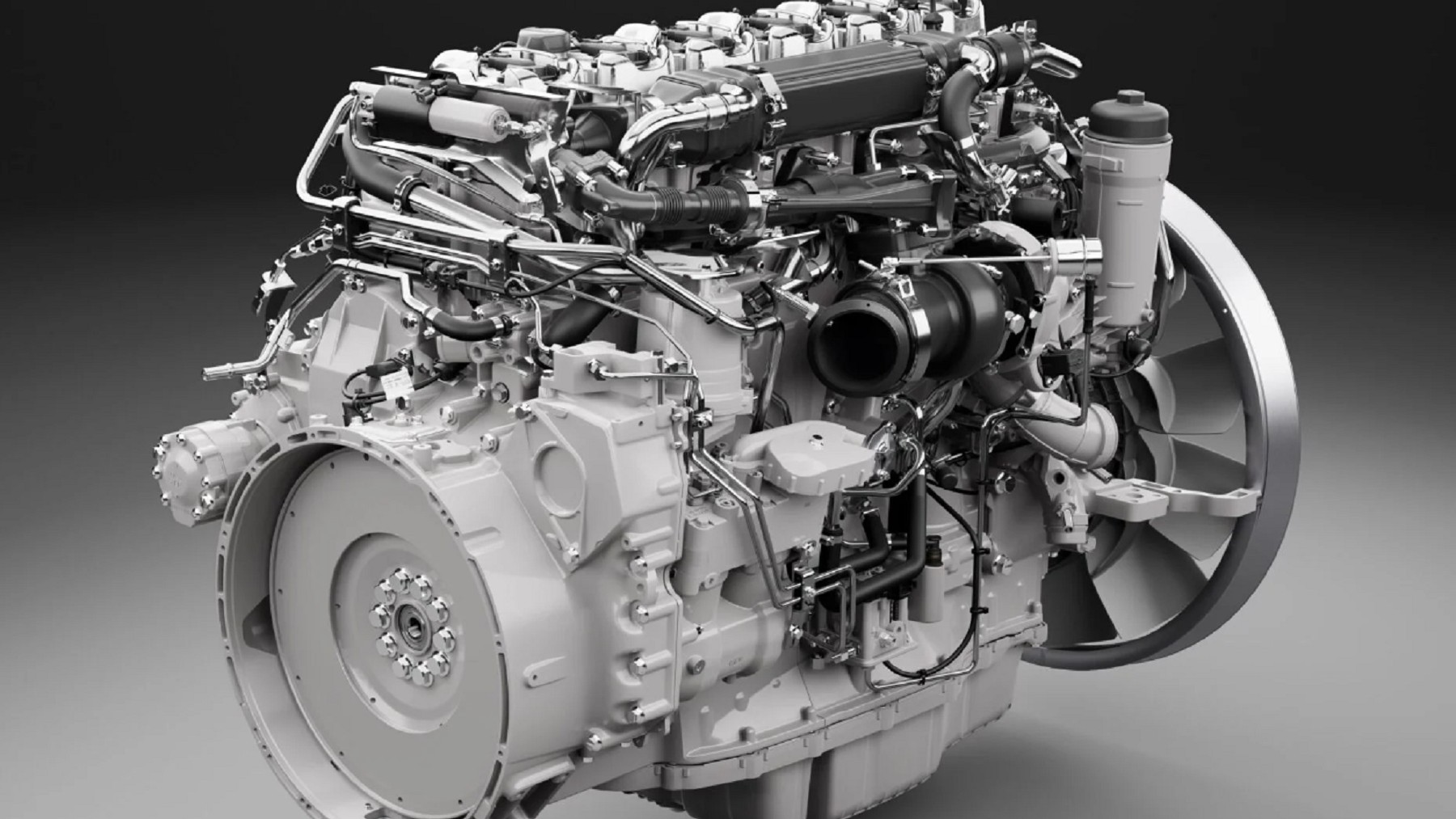
A new fuel has just arrived to replace hydrogen and accelerate the transition to new forms of mobility that involve stopping using gasoline. Best of all, it will save you 5%, but there is even more optimistic news: the first massive engine that runs on it already exists, although it has the experts in shock: it is invisible, and it is here to change everything.
New massive engine to put an end to FCEVs: it runs on an invisible fuel
Scania has yet to release its next-generation biogas engines, which promise better fuel economy and better performance when it comes to environmental conservation. These are new 13-litre biogas engines on offer, and they only offer 5% fuel saving, which can be a good option for those who want to shift to the green road transportation solution.
The new biogas engines are available at 420 or 460 hp, whereby the Biogas engines are a step up in Super diesel powertrain components. Altogether, these components with the noted pressure-fuel injection control attain a five percent fuel saving as established in long-haul operations.
The engines are also developed to run at a lower decibel level than diesel to give the operators premiere comfort while operating.
Could this biogas engine be the future of our roads? Pay attention to these figures.
The new Biogas engines are just an evolution of the preceding generation of thirteen-litre gas engines. The capacities have been raised, and the engines have been put in condition to face future legal standards. This has made the new engines perform better and be more efficient.
- On average, the new biogas engines deliver 30% less CO2 emissions, while biomethane-based solutions can lead to a 90% decrease in CO2 emissions on a well-to-wheel basis.
- This reduced emission is realized through Bio-LNG or Bio-CNG, locally produced biomethane, easily accessible through emerging fuelling stations/ports.
- It is essential to appreciate that biogas engines are versatile enough to adapt to different industries and usages, including long hauls.
- These range levels are equivalent to those provided by a 40-tonne tractor-and-trailer combination when equipped with the most extensive Bio-LNG tank solutions.
Biogas engines will not be for cars but for vehicles used in America and Europe.
These engines will function well for European operations, especially long-haul ones, and provide the highest fuel economy and spare environment. Thus, Scania views biogas vehicles as critical in transitioning from diesel and other fuels too much greener solutions.
New and significantly improved forms of biogas engines applicable to future legal requirements and emissions related to the company’s business are some of the developments the company is undertaking in this line. As you have seen, there is an increasing interest in biomethane transport fuels locally.
Scania’s biogas engines will offer a solution that is ideal for the market and organizations to offer a sustainable system. It is accurate, and you know it, that this is not a zero-emission engine but an alternative to reduce dependence on fossil fuels.
This new massive biogas engine aims to be the key to ending dependence on fossil fuels, not only because of their high cost but also because of their environmental impact. The challenge is to generate it in large quantities, but with renewable energy sources, something is happening now with hydrogen (otherwise, it will be of little help).