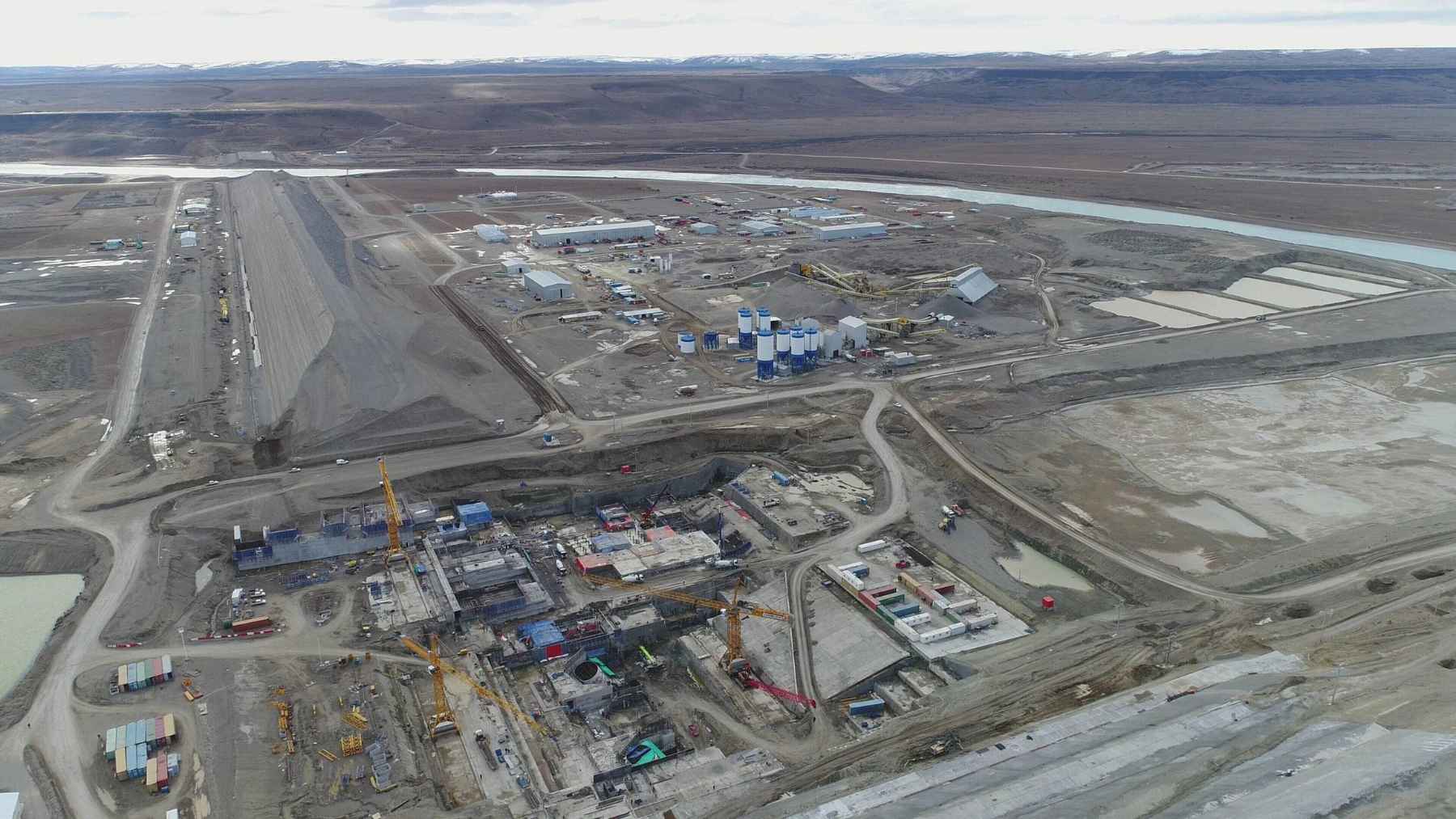
More than $130 million from China have finally arrived in Argentina to restart a major hydroelectric project in Patagonia. Provincial authorities confirmed that $136 million from an international credit line are now in local accounts, part of a $150 million tranche tied to the La Barrancosa Jorge Cepernic dam on the Santa Cruz River.
The money ends a paralysis that began in December 2023, when work on the dam complex stopped just as Javier Milei took office. Provincial governor Claudio Vidal led negotiations in Beijing with support from Argentina’s Ministry of Economy of Argentina to unlock the latest financial addendum with Chinese lenders and bring the project back to life.
Chinese funds restart a frozen project
Under the new financing package, $136 million have already been credited in Argentina, while the remaining $14 million stay in China to pay directly for imported machinery, turbines, and other key components. Officials say the money is earmarked exclusively for restarting work on the La Barrancosa Jorge Cepernic hydroelectric complex.
After more than two years of absolute standstill, the project will move back into its core construction phase, focused on concrete works and electromechanical assembly. The Jorge Cepernic dam, also known as La Barrancosa, stands at about 42% completion, while the Cóndor Cliff dam site is around 20%.
In simple terms, the fresh funds will pay for crews to pour more concrete, install turbines, and extend power lines along the windswept Santa Cruz valley. For a project that many locals had started to see as a monument to unfinished promises, that shift matters.
Jobs and local workers back on site
Provincial energy minister Jaime Álvarez described the credit disbursement as the final step toward the “definitive restart” of the project. He underlined that the money is already available in the country and that a staffing agreement with the construction workers’ union UOCRA is close to being signed, aimed at a predictable restart that respects labor rights.
The restart is expected to bring back about 1,800 direct workers to the site and create another 2,200 indirect jobs in services, transport, and supplies. Law in Santa Cruz Province requires that 90% of the workforce be local, and authorities say people who already worked on the dams and have a registered address in the province will receive absolute priority.
For households that lost their main income when the project stopped, a call from the human resources office can mean paying off debts, reopening a small store, or keeping up with the electric bill. What does it look like when a mega project turns back on in a small Patagonia town? Many residents are about to find out again.
Geopolitics, hydropower, and a race against winter
The new stage of the project also reflects a pragmatic choice in Argentina’s foreign policy. Despite the presidential palace in Buenos Aires aligning more closely with Washington D.C. in diplomatic terms, the need for fresh dollars and a stable power supply have, to a large extent, led the government to keep open the credit line with Chinese banks ICBC and Bank of China that finances the dams.
The Santa Cruz River complex is designed as a pair of large dams that hold back river water and send it through turbines to generate electricity, instead of burning imported fuel. Once fully operational, official estimates suggest the dams could supply around 4.5% of Argentina’s national power demand, which over time could help ease pressure on a grid that struggles during heat waves and winter cold snaps.
With the funds already available, provincial authorities want to use the short summer weather window in Patagonia to push ahead with concrete work and electromechanical assembly before snow and icy winds slow everything down again. Local officials, union leaders, and representatives of the Chinese company China Gezhouba Group agree that only a few details remain before a new phase of construction begins in earnest, and the real test will be how much lost time they can recover before next winter closes in.
The official announcement has been published by the Government of Santa Cruz.