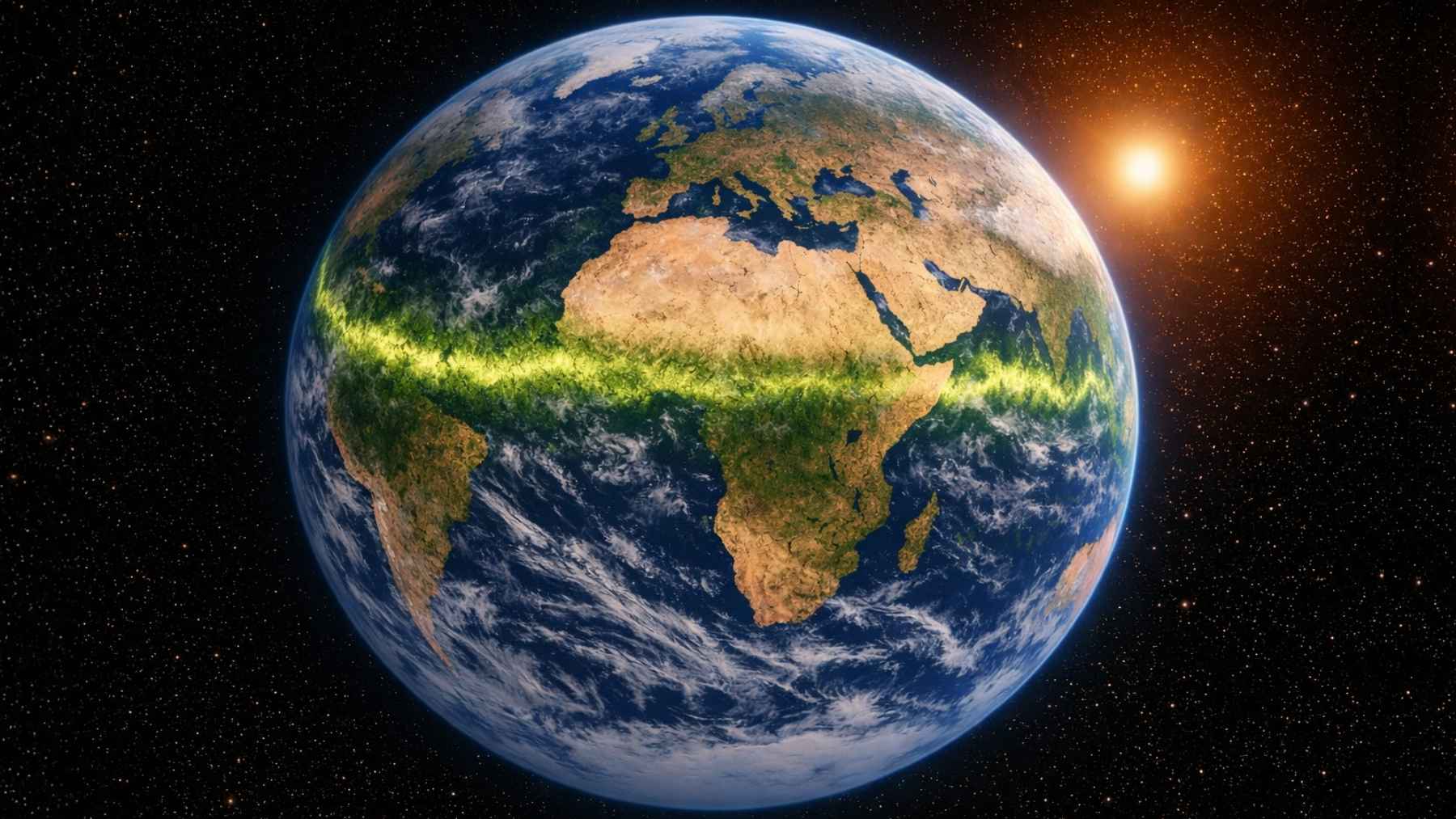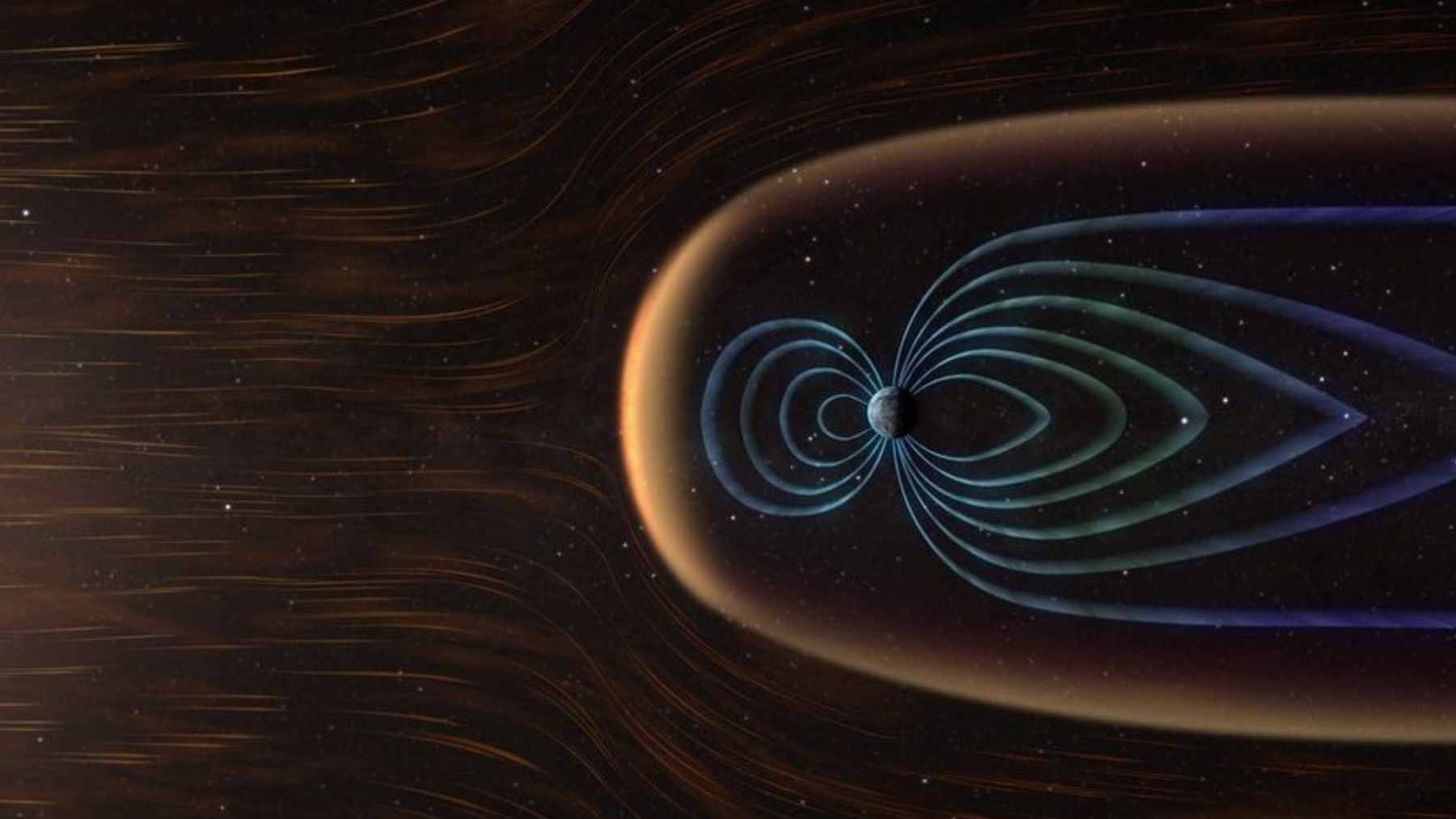
Take a breath and imagine the invisible forces that made that gulp of oxygen possible. A new study led by NASA researchers suggests that the strength of Earth’s magnetic field has risen and fallen in step with atmospheric oxygen for the past 540 million years, the entire span of complex life on our planet.
A surprising rhythm between magnetism and oxygen
Scientists combined two huge geological records. One tracks the virtual geomagnetic axial dipole moment, a measure of how strong the global magnetic field has been at different times.
The other reconstructs how much oxygen filled the air using chemical clues in ancient rocks and sediments. When the team lined them up, the curves were strikingly similar.
Both records show an overall rise through the Phanerozoic, along with a major shared surge between roughly 330 and 220 million years ago, when oxygen may have reached about 35% of the atmosphere compared with about 21% today. The statistical link is strong, with a correlation of about 0.7 on a scale where one would be a perfect match.
“These two datasets are very similar” said lead author Weijia Kuang in a NASA summary of the work. He noted that Earth is the only known planet that supports complex life and a long‑lived internal magnetic field, so seeing the two evolve together could be a key clue to how habitability is maintained over deep time.
Ancient rocks as an environmental archive
How do we even know what the magnetic field or oxygen looked like hundreds of millions of years ago? The answer sits quietly in old rocks. When molten material cools, tiny magnetic minerals inside lock in the direction and strength of the field that surrounded them, like microscopic compass needles frozen in place.
Oxygen levels, in turn, can be inferred from several independent proxies. Charcoal in sediments tells scientists when wildfires were common. Ratios of carbon and sulfur in rocks record how much organic matter was buried or oxidized.
Together, these records map a long, if imperfect, history of atmospheric oxygen through the eras, from the Cambrian explosion of diverse animals to the rise and breakup of supercontinents.
A shared engine inside the planet
At first glance, it might seem obvious to credit the magnetic field itself. A stronger field can deflect more charged particles from the Sun, which should help shield the atmosphere from erosion. Yet the numbers do not really add up.
Calculations in the new paper indicate that oxygen loss to space is tiny compared with the huge oxygen exchanges driven by volcanism, weathering, and the global carbon cycle.
So the authors lean toward a different picture. Both oxygen and magnetic intensity may be responding to the same deep‑Earth processes. When tectonic plates assemble into supercontinents like Pangea and later break apart, they rearrange heat flow at the boundary between the rocky mantle and the liquid metal core.
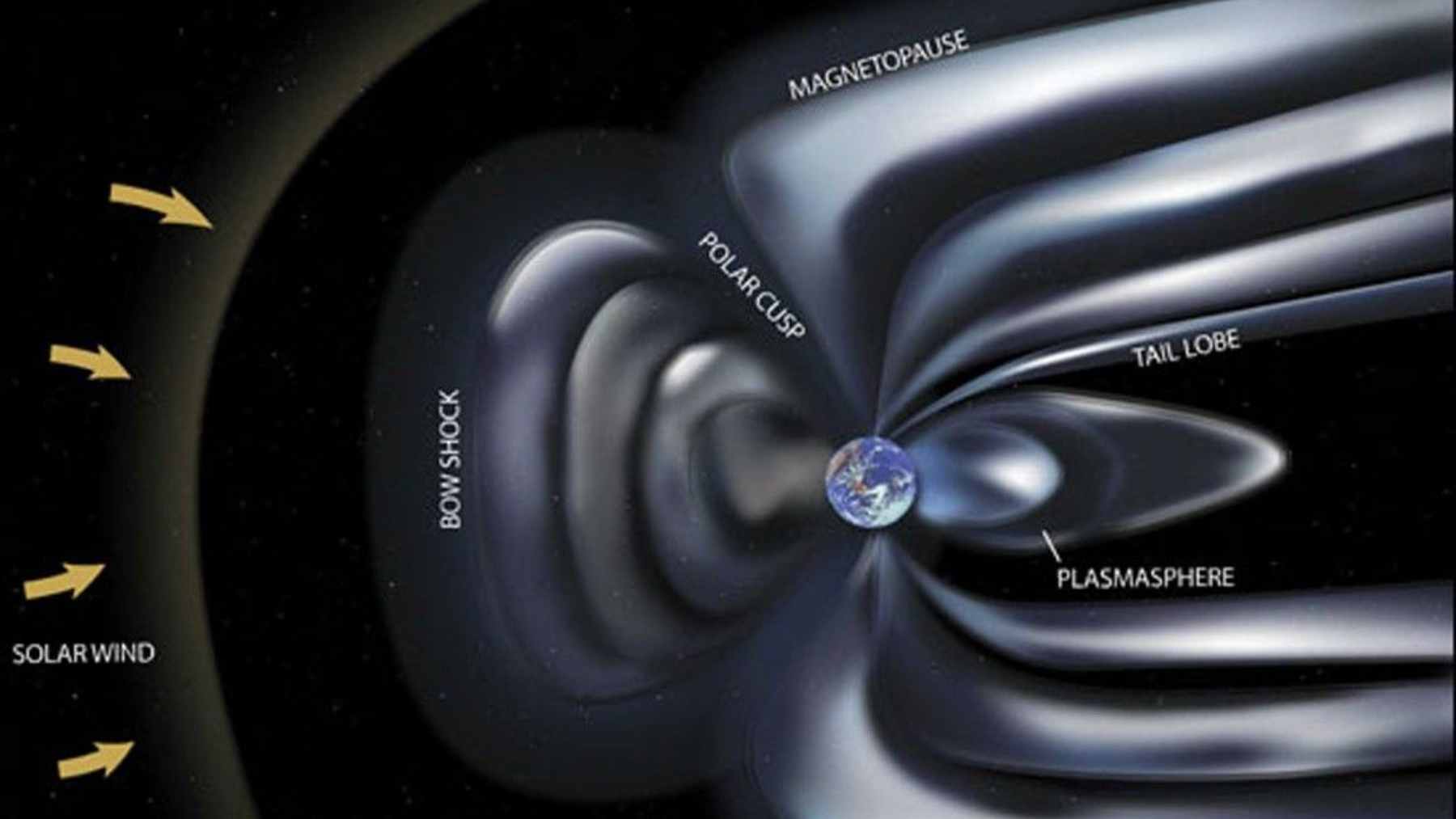
That can alter convection in the core that powers the geodynamo while also changing volcanic degassing and weathering at the surface, which shape the long‑term oxygen budget.
Biogeochemist Benjamin J. W. Mills, a co-author based at University of Leeds, suggested that magnetic strength and oxygen may both be “responding to a single underlying process, such as the movement of Earth’s continents.”
In practical terms, that means plate tectonics might be tuning both the shield that protects our atmosphere and the chemistry of the air itself.
Clues for worlds beyond our own
For exoplanet hunters, this quiet rhythm in our own planet’s history could be a game changer. Earth is, so far, the only rocky world known to combine an oxygen‑rich atmosphere with a robust internal magnetic field.
If the two are linked over geological timescales, then simply finding a planet in the right temperature zone around its star may not be enough. Its interior and magnetic behavior might matter just as much.
Researchers in projects like the Sellers Exoplanet Environments Collaboration, which includes coauthor Ravi Kopparapu, already study how stellar flares and magnetic shielding shape planetary climates.
This new work hints that the deep interior also needs a spot on the checklist when we talk about habitability on distant worlds.
Many questions still open
The study does not claim that magnetism alone controls oxygen or that life on Earth was somehow pre‑planned.
Instead, it highlights a long‑term pattern that current models do not fully explain. Co-author Joshua Krissansen-Totton and colleagues emphasize that higher‑resolution records and better simulations will be needed before scientists can pin down the exact mechanisms.
As Kopparapu put it, “There’s more work to be done to figure that out.” Future studies will look at other key elements such as nitrogen and try to extend both magnetic and oxygen records farther back in time. For now, the message is simple enough to carry into everyday life.
The breathable air that fills our lungs and the invisible field that steers compasses and paints auroras in the night sky may be two faces of the same slow, planetary heartbeat.
The study was published in Science Advances.