A strange, web-like pattern spotted from orbit in 2006 has finally been explained on the ground. NASA’s Curiosity rover is exploring these formations on Mount Sharp in Gale Crater, and the team says the “spiderwebs” are boxwork, mineral-hardened ridges created by groundwater billions of years ago.
This is more than a geological curiosity. The ridges suggest subsurface water kept moving through rock fractures later than scientists expected, even as Mars was drying into the freezing desert we see today. If water can hide underground, could livable conditions have held on there longer too?
A mystery that began with a 2006 snapshot
The first clear look came from NASA’s Mars Reconnaissance Orbiter, which photographed a weblike patch of ridges on December 10, 2006. Dark sand collected between the lines, and mapping showed the network can run 6 to 12 miles long (10 to 20 kilometers).
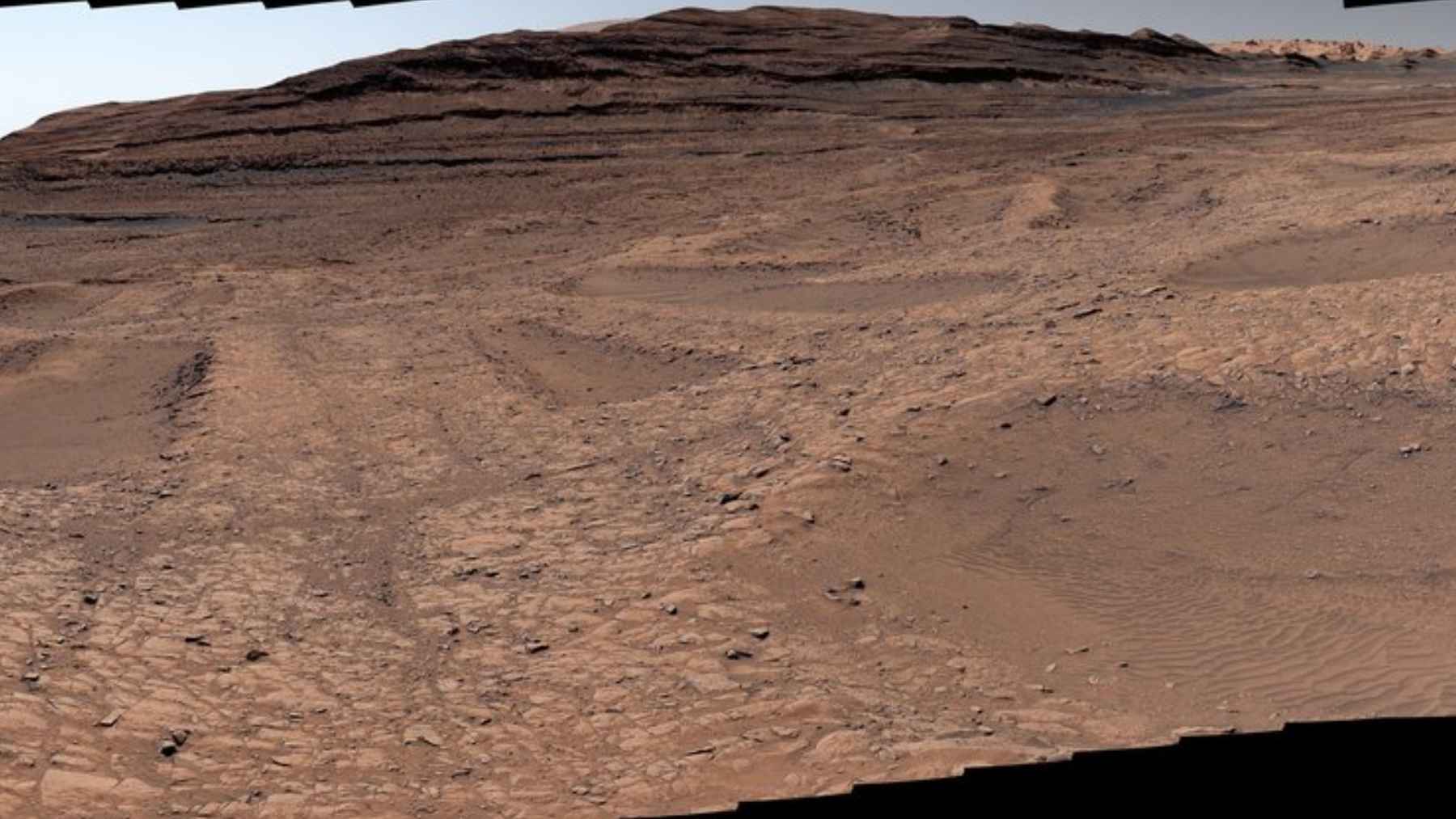
Curiosity has been climbing Mount Sharp since 2014 and began close-up work in the boxwork region in 2025, spending about six months crossing ridges and sandy hollows. Up close, those “threads” are real terrain, with ridges about 3 to 6 feet tall (1 to 2 meters) that crisscross for miles.
Boxwork is a fossil plumbing system
The leading idea is surprisingly down to earth. Groundwater once seeped through a web of cracks in the bedrock, carrying dissolved minerals that coated those fractures and slowly cemented them into harder material. Much later, Martian winds sandblasted away the softer rock, leaving the mineral-reinforced lines standing as ridges.
Orbital images hinted at this story with dark lines running down the middle of some ridges. In 2014, scientists proposed those were “central fractures” that once acted like conduits, and Curiosity has now confirmed the lines are fractures.
On Earth, boxwork is usually a small feature, often only centimeters tall and sometimes found in caves, which helps explain why a meter-high version sprawling across a mountain is such a prize.
The chemistry clues hiding in ridges and hollows
Curiosity is not just a camera on wheels. The rover drills into rock, powders the sample, and feeds it into onboard instruments so scientists can test what the ridges are made of rather than guessing from a photo.
In one set of analyses, X-ray measurements found clay minerals in a ridge sample and carbonate minerals in a hollow sample, two fingerprints that help narrow down how water moved and altered the rocks.
The rover team recently ran an even rarer test on a fourth drilled sample. After heating the powdered rock in a high-temperature oven, Curiosity added chemical reagents for “wet chemistry,” a technique designed to make certain organic compounds easier to detect.
Organic compounds are not proof of life, but they are the carbon-based molecules researchers watch for when they reconstruct ancient habitability.
Then there are the odd little bumps. Curiosity has spotted pea-size nodules linked to groundwater, but they are not sitting where some scientists expected near the central fractures. “We can’t quite explain yet why the nodules appear where they do,” mission scientist Tina Seeger said, suggesting that multiple groundwater episodes may have written over each other.
A drying Mars that still had water underground
One reason this finding is turning heads is where the boxwork sits on Mount Sharp. Higher layers formed later in Mars’ history, when surface rivers and lakes were fading and the planet was trending toward aridity.
“Seeing boxwork this far up the mountain suggests the groundwater table had to be pretty high,” Seeger said, adding that the water “needed for sustaining life could have lasted much longer” than orbital views alone implied.
The boxwork region is also part of a layer enriched in sulfate salts, minerals that form as water dries up. In practical terms, Curiosity is reading a chapter where Mars was losing water, but not all at once and not everywhere.
NASA says the rover will leave the boxwork behind sometime in March and continue exploring the sulfate layer for many miles to better understand how the planet’s climate changed billions of years ago.
Why these Martian “spiderwebs” feel oddly relevant
Getting those close-up measurements is its own adventure. Curiosity is an SUV-size rover that weighs about 899 kilograms (roughly 1,982 pounds), and drivers have to guide it along ridges not much wider than the rover and then down into sandy hollows.
As operations engineer Ashley Stroupe put it, “It almost feels like a highway we can drive on,” until the wheels hit loose sand and the team has to hunt for a safer route.
It is easy to treat Mars as a distant science story, but this is really a water story. On Earth, we rarely think about what is below our feet until a dry summer bites or a town asks residents to cut back on watering. Mars shows what happens when a planet’s water budget shrinks, and why underground water can matter for a long time.
Scientists still have work to do, including why some mineral nodules show up in odd spots, but the ridges already read like a map of vanished groundwater.
The official press release was published by the NASA Jet Propulsion Laboratory.