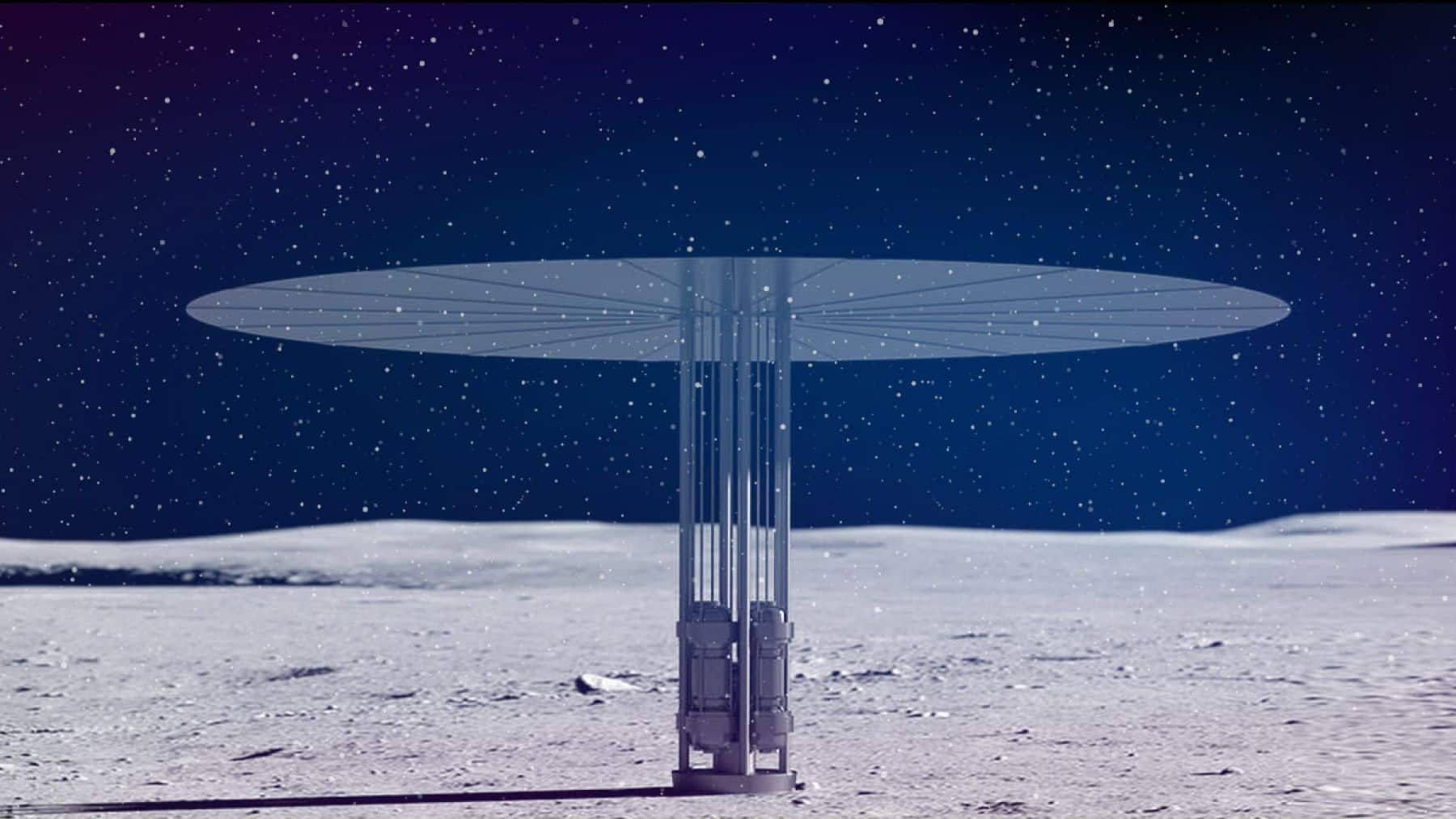
NASA is making major progress toward its mission to build permanent human habitation on the Moon. Nuclear energy fission power stations deployed on the lunar surface form the basis of the Fission Surface Power project, which is scheduled to launch in the early 2030s. The plan seeks to transform lunar exploration and create pathways to Mars missions.
Here’s why solar power won’t work—NASA’s nuclear solution
Power generation requires different approaches when focusing on lunar operations. On the Moon, darkness stretches across the sky for 14 Earth days since it lacks Earth’s pattern of day and night. Light generation from solar power functions effectively while the Moon experiences its short solar period but becomes ineffective when lunar night falls.
NASA’s Fission Surface Power project provides a solution to power generation needs. NASA uses nuclear fission as a power generation method to produce continuous, reliable power that operates without dependence on solar energy. A power system using this configuration aims to produce 40 kilowatts of power, keeping the small lunar base operational and enabling scientific progress.
A decade from launch: NASA’s roadmap to lunar nuclear power
NASA’s Fission Surface Power project implements all elements developed through the Kilopower project, demonstrating that small nuclear reactors work in space conditions. The new system presents features of compactness alongside lightweight construction and resistance to lunar environmental conditions. Using advanced nuclear scientific breakthroughs enables NASA to generate dependable power supplies for lunar exploration projects. The Moon requires stable power to support its scientific activities and enable resource extraction to establish prolonged human facilities and space exploration capacities.
NASA assigns the task of developing this innovative technology through an alliance between the Department of Energy and prominent industry partners and NASA personnel. The collaborations between NASA and its partners serve to perfect reactor designs while ensuring space safety alongside space condition optimization. Fission power will produce electricity through a small functional nuclear reactor that eliminates the need for solar energy during the lengthy two-week lunar night when the sun sets completely. The project presents crucial progress toward building lasting power solutions which enable long-term human residence on the Moon alongside other space missions.
NASA expects its fission power system to become operational on lunar soil during the first half of the 2030s. Spanning twelve months, the system will complete demonstrations to validate performance levels and durability characteristics. The project will demonstrate its extended operation capabilities after passing all verification tests for nine years. This technology represents a base for Mars’s survival because reliable power will be critical for human life support systems. NASA uses nuclear power system development to establish the path for extensive solar system exploration.
Nuclear energy could be the key to surviving on Mars.
Nuclear power provides multiple useful capabilities for lunar exploration activities. The first essential characteristic is that nuclear power supplies an uninterrupted, reliable energy supply for extended space exploration. Nuclear power’s steady operation contrasts with solar power’s since nuclear power operates continuously without any interruption from lunar light patterns.
Permanent shadowed Lunar areas provide suitable locations for installing nuclear reactors since solar power becomes unavailable in these regions. The subject areas have gained special attention because scientists believe they hold water ice, which would be highly valuable for future exploratory missions. Success in implementing the Fission Surface Power project on the Moon will open new possibilities for future Mars mission development.
Mars endures similar space darkness alongside its harsh environment, just like the Moon does. A dependable power system is essential for maintaining human activities and scientific research within the Martian environment. Future Mars exploration will benefit from lunar fission power system technology since this research enables the development of an adaptable and practical power solution. NASA establishes the practical validity of lunar nuclear power plants through their demonstrations because this achievement makes way for Mars exploration and additional space missions.