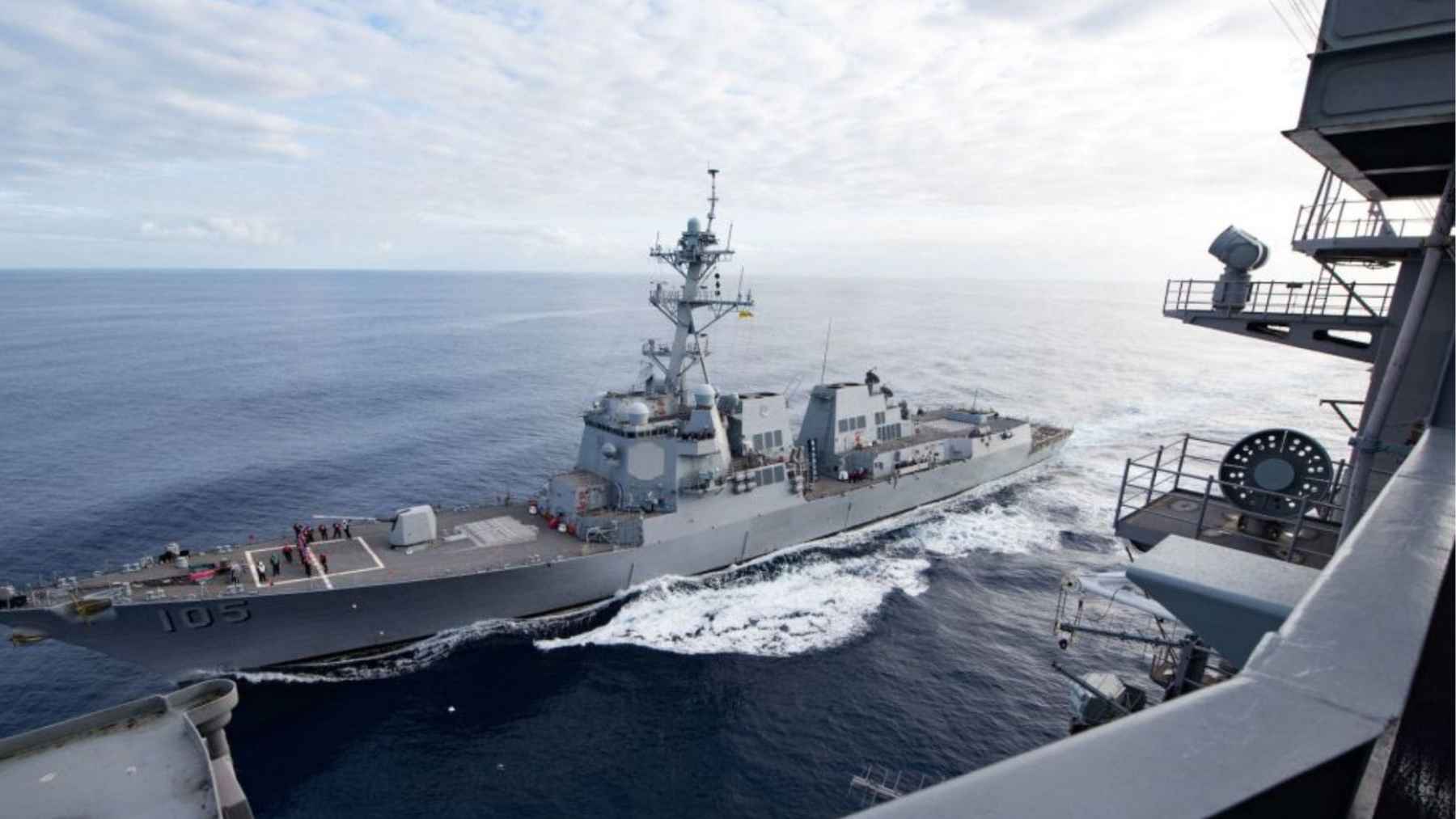
An image of the destroyer USS Dewey streaked with orange rust while in port in Singapore did not show battle damage. It showed something more mundane that suddenly became political. That viral photo pushed a long-ignored maintenance issue into the spotlight.
For years, sailors and engineers in the US Navy lived with so-called running rust, the film of corrosion that creeps down gray hulls between deployments.
Now senior leaders admit that this silent decay is hurting readiness, driving up costs, and undermining the service’s image at a time when every ship is supposed to be ready for rivals like Russia or China. At the end of the day, rust has become the other enemy the fleet can no longer ignore.
How a viral photo forced the Navy to look at rust
Defense outlet The War Zone reported that the Dewey photo reached president Donald Trump, who demanded to know why front-line warships looked battered as they pulled into foreign ports.
Journalist Howard Altman detailed how the image of rust streaks from bow to stern turned an old complaint into a priority for top brass. What had once been brushed off as an ugly but harmless stain suddenly became a symbol of neglect.
Spanish writer R. Badillo went so far as to call rust the “other enemy” of the fleet in the newspaper El Confidencial, capturing a mood shared by many naval observers.
The phrase stuck because it matched what people could see with their own eyes on webcams and social media. If a billion dollar destroyer looks worn out at the pier, what does that suggest about its condition below the waterline.
Inside the service, sailors use the term running rust for those streaks that form when salty water and steel mix on busy decks and bulkheads. On a tourist’s smartphone, those streaks can make a modern destroyer look like a tired harbor hulk. So the optics are bad, but the underlying maintenance story is even more serious.
Why running rust is more than a cosmetic flaw
Corrosion is what happens when metal reacts with oxygen and moisture, creating the flaky reddish material we call rust. Warships live in salty water and often deploy for months, which accelerates that process. If surface rust is not scraped, cleaned, and repainted early, it can creep into welds, seams, and fittings and turn simple touch ups into much heavier repairs.
Vice admiral Thomas Moore of Naval Sea Systems Command has said the Navy spends around ten billion dollars each year on shipyard maintenance and that several billion of that bill is related to corrosion work.
Those numbers give a hint of how much money rust quietly consumes before a single missile is fired or a radar is switched on. For taxpayers, that means more resources going to patching metal instead of adding new ships or upgrading weapons.
Naval analysts also warn that rusty decks and streaked sides make warships look older and less cared for, even when their combat systems are modern. Out in a foreign port, where sailors mix with civilians and allies, a neglected hull can send the wrong message about American power. In a competitive era, appearance and readiness are closely linked.
The engineer leading the fight against corrosion
At the annual symposium of the Surface Navy Association, engineer Mark Lattner from the Naval Systems Engineering Directorate admitted that the service had often chosen to postpone fixes.
He told attendees “We know what to do, but we choose not to do it,” blaming constant crises that seemed more urgent than rust. His new mission is to treat corrosion control as a daily discipline, not an afterthought squeezed in at the end of a long day.
The plan starts with relatively straightforward technology. His team is pushing wider use of tough polysiloxane paints that resist weather and are easier to clean than older coatings, along with better placed drains so water does not sit on steel for hours. In practical terms, that means fewer puddles on deck and fewer streaks running down the side of a ship after every heavy rain.
Engineers also want products that are easier for sailors to use on a pitching deck. Single component paints are replacing multi-part mixtures in some areas so crews have less chance of mixing coatings incorrectly in a rush. The idea is to take work off the sailors’ backs so they can keep up with rust even when tempo is high.

Apps, data and industry join the rust campaign
To track progress, the Navy has created a smartphone app that lets inspectors walk a ship and tap in what they see, from clean steel to heavy staining. The software turns those observations into a numerical grade for each vessel, giving leaders a clearer picture of where rust is getting under control and where it is getting worse. It is one way to turn a subjective eye test into hard data.
Specialist teams now visit ships to train crews on faster, more effective painting techniques borrowed from industry. Contractors help with bigger jobs like installing new drains and applying protective films under tight schedules so warships do not sit idle for months.
Experts say that, for the most part, this mix of sailor effort and outside help is the only realistic way to catch up without breaking deployment plans.
Technology firms are getting involved as well. Google Cloud and Simple Technology Solutions are working with the Navy on artificial intelligence that scans drone images and flags corrosion, aiming to cut the time inspectors spend climbing ladders with clipboards.
Research contests at Naval Surface Warfare Center Port Hueneme Division test new coatings under real sea conditions, while corrosion focused gatherings in the naval engineering community share lessons from ships that spend their lives in salt water.
What rust means for future ships and the people who sail them
For sailors scraping decks in hot sun or freezing spray, rust is not an abstract budget line. It is long hours with grinders and brushes right after standing watch or handling lines in a crowded harbor. Cutting that workload a bit could help morale as much as it helps paint stay on the metal.
For people at home who only see ships on the news, those reddish streaks can look like proof that the fleet is letting its hardware decay.
Engineers say the picture is more complicated, since rust in a salty ocean is impossible to eliminate, but they agree that better prevention can save billions over a vessel’s life. In practical terms, that means more ships ready when a crisis hits instead of sitting in a yard waiting for steel repairs.
To a large extent, the new focus on running rust is about credibility as much as combat power. A fleet that keeps its skin in good shape sends a signal that it can be trusted to maintain the complex systems hidden inside those gray hulls.
The main official work on corrosion prevention and control has been published by the Department of the Navy Corrosion Prevention and Control program.