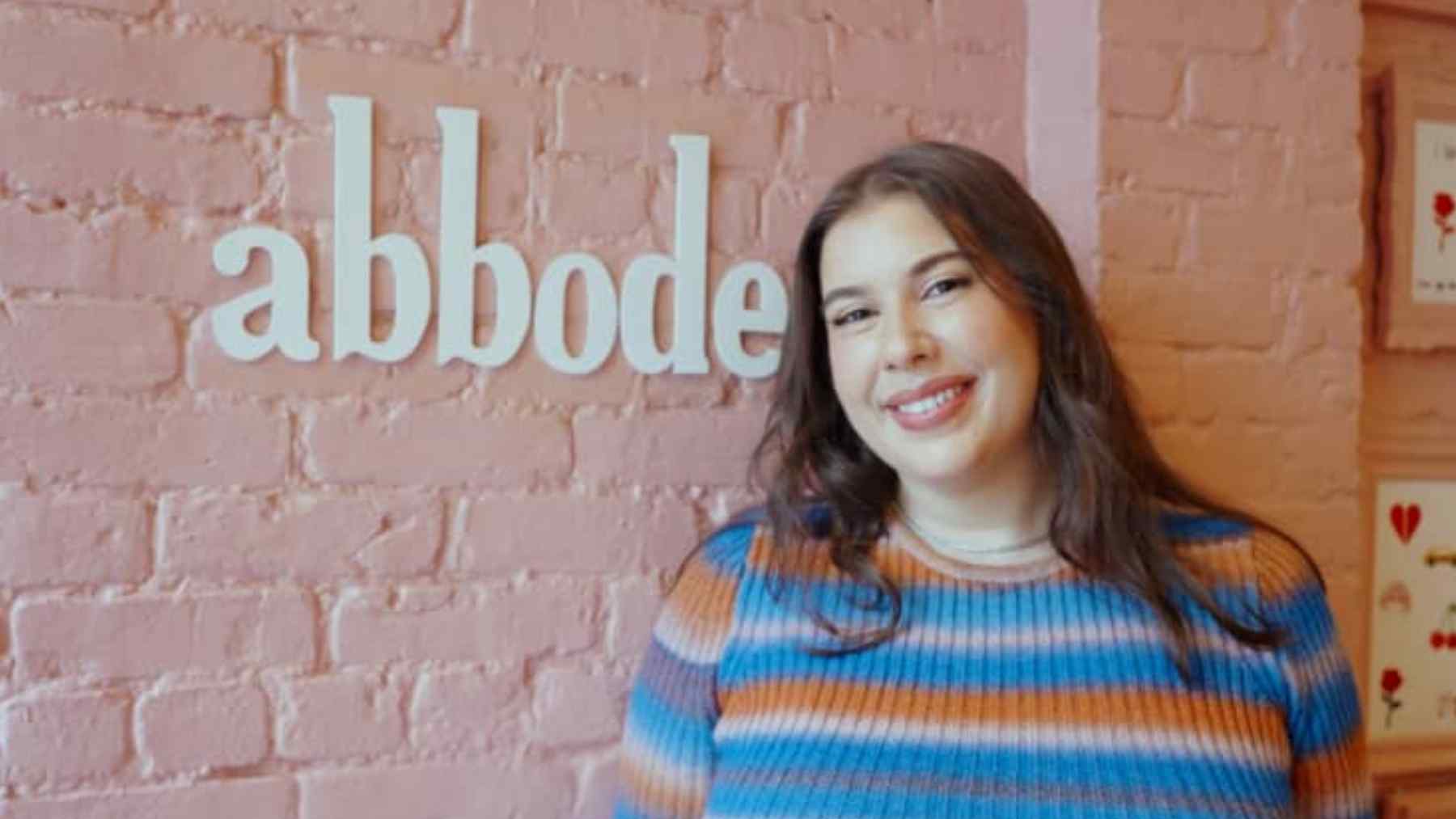
If you have ever walked into a small New York shop and wondered whether it can really pay the rent, you are not alone. Designer Abby Price asked herself the same question when she put $20,000 into a storefront experiment in Manhattan’s Nolita neighborhood. What began as a side business selling dried flowers on Facebook grew into a brick-and-mortar store serving local gift shoppers.
The real surprise, however, came from a $15,000 embroidery machine that sat unused in the basement for months. Once Price dragged it upstairs for a two-day embroidery event in 2023, customers lined up for customized pieces and sales spiked.
Today her company, Abbode, generates about $1.59 million in annual revenue and is betting on embroidery events and partnerships to keep growing.
How did Abbode move from Facebook flowers to a Nolita storefront?
Price launched Abbode in 2019 while studying at Parsons School of Design, selling dried floral arrangements through Facebook to New York customers. During the COVID-19 pandemic, when commercial rents dipped, she used $20,000 from savings and a gift from her parents to secure a small Nolita shop and a few months of rent.
After a six-month test lease, she committed to a larger space in November 2021, doubling both the size of the store and the monthly rent.
| Year | Sales figure | Turning point |
|---|---|---|
| 2023 | $719,000 | First embroidery pop up leads to business pivot |
| 2024 | $1.59 million | Events and custom products expand; L.L.Bean weekend brings in over $100,000 in sales |
| 2025 (projected) | $4 million | Additional workspace, fulfillment center and more brand partnerships planned |
To finance the expansion, she borrowed $60,000 from friends and family and quickly saw strong holiday traffic push monthly sales to around $60,000.
What changed when Abbode finally used the $15,000 embroidery machine?
By early 2022 Price had enough cash flow to buy a 100-pound embroidery machine on impulse and pay it off in $1,000 monthly installments. Without training or floor space, she stored it in the basement while post-holiday sales cooled and the business settled into slower months, a slump so stressful that she ended up in tears in the store bathroom on its second anniversary.
In March 2023 the machine needed professional servicing, so the team hauled it upstairs and turned the moment into a two-day pop-up event, a short in-store promotion. Shoppers could buy Abbode items and add custom stitching at no extra cost, and that first Saturday brought in five times the sales of the previous weekend, leaving the counter covered in sticky notes tracking individual orders.
How big is Abbode’s embroidery business now?
Following that experiment, Price bought more machines, trained staff, and shifted Abbode’s focus so embroidery accounted for about half of store revenue by the end of 2023. Total sales rose from $719,000 that year to roughly $1.59 million in 2024, and internal projections estimate $4 million in 2025 as of September 30.
The snapshot below puts those figures in context and shows how closely sales track key pivots. It summarizes Abbode’s recent financial milestones based on company documents.
Events now generate about 25% of revenue, helped by pop ups with brands like L.L.Bean,Ritz Carlton and Charlotte Tilbury in England, Spain and Italy and a partnership weekend that brought in over $100,000 in sales. To handle demand, Price and co-owner and chief operating officer Daniel Kwak opened a $5,000 per month workspace in Chinatown in July 2024, building out 10 embroidery machines and a team of 25 employees and later adding a fulfillment center, an outside warehouse that completes some orders off-site.
Despite the growth, Kwak says Abbode is roughly at breakeven, meaning sales only slightly exceed total costs. The partners plan to stay bootstrapped, or self funded without outside investors, and to focus on building brand recognition and additional revenue streams before chasing higher profit margins.
High-profile moments support that strategy, including a yellow Abbode T-shirt worn by pop star Sabrina Carpenter during an October 18 performance on NBC’s Saturday Night Live. Price describes her core customer as someone who loves thoughtful gifts, keeps up with trends and cares about small details – a profile she calls the “Abbode girl”.
Why is personalized embroidery resonating with shoppers right now?
Retail analyst Marni Shapiro, co-founder and managing partner of The Retail Tracker, sees strong potential for businesses built around customization, whether embroidery, needlepoint or knitting.
She links that appeal to nostalgia and to a desire for hands-on experiences at a time when politics, the economy and even new technologies like artificial intelligence can feel overwhelming.
Search data from Etsy back that up, with requests for personalized clothing doubling over the last three months and searches for personalized decor rising 240% compared with the same period in 2024.
Price does not view those online sellers as direct competitors, since Abbode offers in-person experiences, and instead compares her brand with mid-sized labels such as Stoney Clover Lane and Mark and Graham that blend retail locations with customization.
What practical lessons can small business owners take from Abbode?
If you run a small business or side hustle, you may be wondering how much of this story you can actually apply to your own situation. The steps below translate Abbode’s experience into moves that other entrepreneurs can adapt.
- Start with a controlled test, such as a short lease or pop-up, so you can learn before committing long-term.
- Watch where customers over-respond, as they did to Abbode’s two-day embroidery event, and be ready to pivot toward that demand.
- Build partnerships with established brands to boost visibility while keeping ownership, as Abbode has done with L.L.Bean, Ritz Carlton and Charlotte Tilbury.
- Reinvest carefully, tracking cashflow and staying as close to bootstrapped as possible, so you have a cushion if spending slows.
- Plan new revenue streams in advance, from licensing deals for sports team logos or characters to collaborations with wholesale partners and retailers that buy in bulk to resell.
Looking ahead, Price aims to secure more licensing agreements and to deepen relationships with wholesale partners that sell those items in volume.
Her longer-term vision is to open Abbode storefronts around the world, while in the short-term she and Kwak plan to keep their own salaries steady and pump most of the cash back into the business.